
Pruning
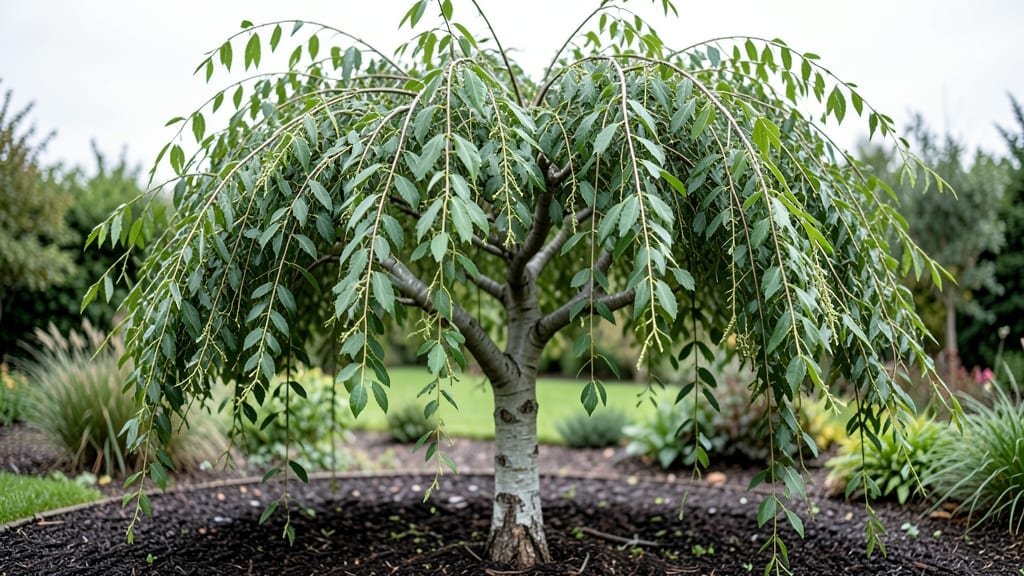
Transform your yard with a fruitless weeping mulberry tree—its graceful, arching branches create a living sculpture without the messy berry cleanup. 🌿 I planted mine last spring, and within months, it became the focal point of my shade garden, offering year-round interest with minimal fuss.
The "fruitless" variety means no birds, no stains, and no cleanup—just pure, elegant form.
This tree thrives in full sun to partial shade and tolerates most soil types, though it prefers well-draining conditions. Water deeply after planting, then let the soil dry slightly between waterings—overwatering is the fastest way to invite root rot.
Pruning in late winter or early spring keeps its weeping habit intact while encouraging dense, lush growth.
With proper care, your tree will grow 6-10 feet tall and spread 8-12 feet wide, creating a stunning, low-maintenance shade feature. The dark green leaves provide year-round interest, and its disease-resistant nature means fewer headaches than many ornamental trees.
Perfect for small yards, urban landscapes, or as a privacy screen—just give it space to spread. Whether you're pruning for shape or simply admiring its graceful form, this tree delivers beauty with almost no trade-offs. Let’s get growing!
📚 In This Guide
- What you need
- Instructions
- Tips and common mistakes
- Wrapping up and next steps
What you need
- ● Pruning shears: Bypass pruners (sharp, clean, and sterilized with rubbing alcohol or a 10% bleach solution) – 1 pair.
- ● Loppers: For thicker branches (1.5"–2" diameter) – 1 pair.
- ● Hand saw: Pruning saw with a fine-tooth blade for stubborn branches – 1.
- ● Gloves: Heavy-duty, cut-resistant gloves (e.g., leather or reinforced fabric) – 1 pair.
- ● Disposable pruning bags: 10–20 gallon size for collecting debris – 2–3 bags.
- ● Rubbing alcohol (70% isopropyl) or bleach solution: For sterilizing tools between cuts.
- ○ Pruning sealant (optional): Wound dressing for large cuts (e.g., Tanglefoot Tree Wound Pruning Seal).
- ● Ladder or step stool: Sturdy, extendable for tall branches – 1.
- ● Marking twine or flags: For tagging branches to remove later – 5–10 feet.
- ● Sharpie or chalk: For labeling cuts (e.g., "remove" or "thin").
- ● Weather check: Prune on a dry, calm day (avoid rain or wind).
- ● Safety glasses: Protects eyes from debris – 1 pair.
- ● Long sleeves/pants: To avoid scratches from thorns or sap.
- ● Water and snacks: Hydration breaks are a must for outdoor work!
- ● Tree health assessment: Inspect the tree for diseased branches (e.g., powdery mildew, cankers) before pruning.
Instructions for pruning a fruitless weeping mulberry tree
Here’s how to shape your weeping mulberry into a graceful, low-maintenance centerpiece while preventing disease.
✂️ Step 1: Time Your Pruning for Optimal Growth
Prune your fruitless weeping mulberry in late winter or early spring, just before new growth begins. This timing ensures you remove dead wood while the tree’s energy focuses on fresh foliage. Avoid pruning in fall—new growth won’t harden off before winter, leaving branches vulnerable to frost damage.
Look for dormant buds swelling along the branches—this is your cue. If you miss the window, wait until late spring after leaves emerge, but avoid heavy pruning then. Mulberries bleed sap when cut in warm weather, which attracts pests and slows healing.
✂️ Step 2: Remove Dead, Diseased, or Crossing Branches First
Start by thinning out dead, diseased, or crossing branches—these compete for resources and create entry points for fungal infections. Use clean, sharp pruning shears to make 45-degree cuts just outside the branch collar (the swollen area where the branch meets the trunk).
If a branch is larger than ½ inch thick, use a pruning saw for a clean cut. Never leave stubs—this invites decay. Remove any branches growing straight upward (they disrupt the weeping habit) and those rubbing against others. You’ll notice the tree’s natural shape emerge as you work.
✂️ Step 3: Shape the Weeping Form by Selective Pruning
To maintain the weeping silhouette, focus on shortening overlong branches while preserving their downward curve. Cut back no more than ⅓ of the branch length at a time—this prevents shock. Aim to keep the canopy open and airy to reduce humidity (which fuels diseases like powdery mildew).
Step back frequently to check balance. The goal is a tiered, cascading effect—longer branches at the top, progressively shorter toward the bottom. Avoid heavy topping (cutting the main trunk)—this encourages dense, weak growth. Instead, prune laterals to guide the tree’s natural form.
🌿 Step 4: Thin Out Interior Branches for Light Penetration
Mulberries thrive with good airflow, so remove 20-30% of the smallest, interior branches to let light reach the center. These branches often grow inward, creating a dark, damp environment where diseases fester. Focus on water sprouts (fast-growing, vertical shoots) and branches growing toward the tree’s core.
Use your shears to make clean cuts at the branch collar. You’ll see a difference immediately—the tree’s structure will look lighter and more open. This step is critical for preventing anthracnose and leaf spot, common issues in dense mulberry canopies.
🪴 Step 5: Clean Up and Apply Preventative Care
After pruning, sterilize your tools with rubbing alcohol to prevent spreading pathogens. Collect and dispose of debris (don’t compost diseased branches). Seal larger cuts with pruning sealant (optional for mulberries, but helpful in wet climates) to speed healing.
Water deeply at the base to help the tree recover, then mulch with 2-3 inches of organic material (like shredded bark) to retain moisture and suppress weeds. Monitor the tree for new growth—healthy shoots should appear within 4-6 weeks. If you notice yellowing leaves or stunted growth, adjust future pruning to be less aggressive.
Tips & tricks for perfect fruitless weeping mulberry pruning
Transforming your weeping mulberry into a thriving, disease-resistant beauty takes more than just timing—it’s about strategic cuts and ongoing care. Here’s how to elevate your pruning game and keep your tree looking its best for years.
Branch Collar Precision: The branch collar—the swollen area where the branch meets the trunk—is your guidepost. When making cuts in Step 2, position your pruning shears just outside this collar, at a 45-degree angle. This ensures proper healing and prevents unsightly stubs that invite decay. I’ve seen too many pruning jobs where people cut too close to the trunk, leaving ugly wounds that never close properly.
Seasonal Timing Nuances: While late winter or early spring is ideal, don’t stress if you miss that window. If you’re pruning in late spring after leaves emerge, focus on removing only dead or diseased branches—avoid heavy shaping cuts that would stress the tree. The key is to never prune when the tree is actively growing in warm weather, as the sap bleeding attracts pests and slows recovery.
Disease Prevention Through Structure: In Step 4, when thinning interior branches, aim to remove 20-30% of the smallest, inward-growing branches. This isn’t just about aesthetics—it’s about creating a sunlit canopy that prevents fungal diseases like anthracnose. I’ve worked with mulberries that looked perfect from the outside but had rotting centers because of poor airflow. Step back frequently to visualize how light will penetrate after your cuts.
Tool Maintenance Secret: After every pruning session, sterilize your tools with rubbing alcohol—this isn’t optional, especially if you’re working with multiple trees. I keep a small bottle of 70% isopropyl alcohol in my pruning kit. Diseased branches can harbor pathogens that jump to healthy trees if your tools aren’t clean. Also, sharpen your shears regularly; dull blades tear wood instead of making clean cuts, which stresses the tree.
Pro Tips for Fruitless Weeping Mulberry Tree
- Transforming your weeping mulberry into a thriving, disease-resistant beauty takes more than just timing—it’s about strategic cuts and ongoing care.
- Branch Collar Precision: The branch collar—the swollen area where the branch meets the trunk—is your guidepost.
- Seasonal Timing Nuances: While late winter or early spring is ideal, don’t stress if you miss that window.
Frequently asked questions
Got questions about your fruitless weeping mulberry tree? You’re not alone! Here are answers to the most common concerns—from pruning timing to troubleshooting issues—so you can keep your tree thriving.
When is the best time to prune a fruitless weeping mulberry tree?
The ideal time is late winter or early spring, just before new growth begins. This helps shape the tree while avoiding stress during dormancy. Avoid heavy pruning in fall, as it can stimulate weak growth before winter. For light maintenance (like removing dead branches), summer is fine—but avoid pruning during extreme heat.
How much can I trim back my weeping mulberry tree?
You can safely remove up to 25-30% of the tree’s foliage in a single session. For dramatic shaping, spread pruning over 2-3 years. Never cut more than 1/3 of the canopy at once, or you risk shock. Focus on thinning out crowded branches to improve airflow and light penetration.
Why does my fruitless weeping mulberry tree have yellow leaves?
Yellow leaves often signal overwatering, nutrient deficiency, or fungal issues. Check the soil—it should be moist but not soggy. If leaves are yellow with brown edges, it’s likely underwatering or salt buildup. For fungal concerns (like powdery mildew), prune for airflow and apply fungicide if needed. Test soil pH (ideal: 6.0–7.5) and amend with compost if deficient.
Can I grow a fruitless weeping mulberry from cuttings?
Yes! Take 4–6 inch semi-hardwood cuttings in late spring/early summer. Dip the cut end in rooting hormone, plant in moist perlite or sand, and keep humidity high (use a plastic bag). Roots typically form in 4–8 weeks. Alternatively, layer branches in spring for natural propagation.
What’s the difference between fruitless and fruiting mulberry trees?
Fruitless varieties
(like ‘Illinois Everbearing’) produce tiny, inedible berries that don’t stain sidewalks or attract pests. Fruiting types yield large, sweet berries but require more maintenance (e.g., cleaning up dropped fruit). Fruitless trees are ideal for urban areas—less mess, same stunning foliage!
Pro Tip:
Use disinfectant (70% alcohol) to clean pruning tools between cuts to prevent disease spread. And always prune on a dry, wind-free day—wet conditions can introduce fungal spores. Happy pruning!
Wrapping up and next steps
Caring for your fruitless weeping mulberry tree doesn’t have to be overwhelming—with the right pruning techniques, you’ll enjoy a lush, disease-resistant beauty year after year! 🌿 The key lies in timing, tools, and consistency, ensuring your tree stays healthy and thrives in your landscape.
Whether you’re trimming for shape, health, or fruitless growth, these steps will set you up for success.
Ready to transform your tree? Start small—pick one season to focus on, gather your tools, and take it step by step. Before you know it, your weeping mulberry will be the envy of the neighborhood! 🌟 Check out our seasonal pruning calendar to plan your next move.