
Pruning
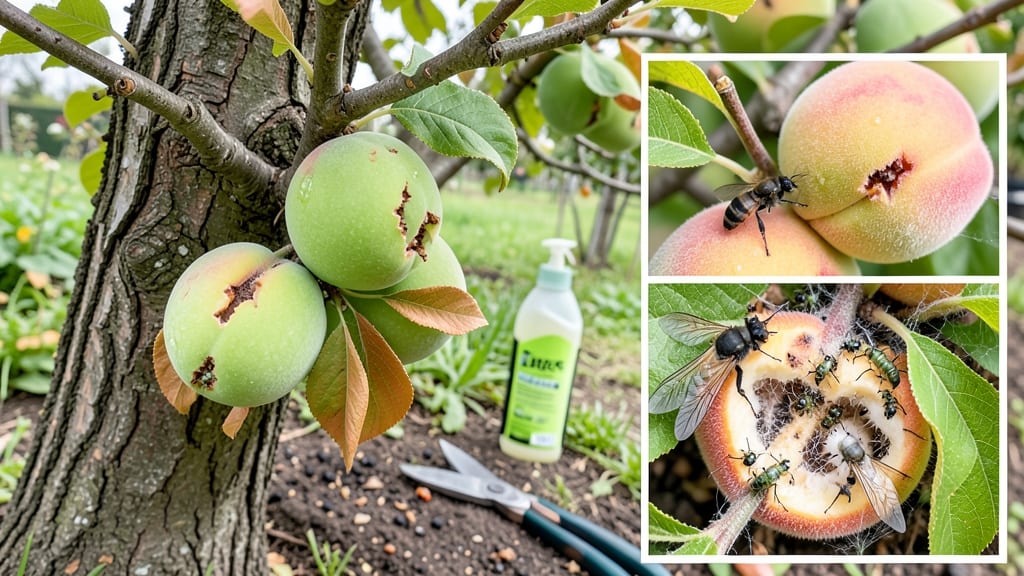
Identifying fruit tree pests early is key to protecting your harvest, as species like aphids, borers, and mites attack leaves, bark, and fruit. Look for chewed foliage, sticky sap residue, or visible larvae to catch infestations before they spread.
Fruit tree pests don't just nibble—they can devastate your harvest if left unchecked. 🌳 These tiny invaders weaken trees by draining nutrients (like aphids) or tunneling into bark (like borers), which creates entry points for diseases.
The damage often starts small—yellowing leaves or tiny holes—but can escalate quickly if you don't act. I've seen entire orchards lose 50% of their fruit yield in just one season because growers missed early warning signs. The good news?
Most pests leave distinct clues, like webbing on leaves or sawdust-like frass near branches.
Seasonal timing matters too.
Some pests, like codling moths, strike during fruit development, while others, like scale insects, thrive in hot, dry weather. 🔥 That's why I recommend checking your trees every two weeks during peak growing seasons—catching them early means you can often resolve the issue with simple organic sprays or targeted pruning instead of harsh chemicals.
💡 In This Article
- How Fruit Tree Pests Damage Trees and Reduce Yields
- Early Detection Signs and Organic Pest Control Methods
How fruit tree pests damage trees and reduce yields
Fruit tree pests wreak havoc through two main mechanisms: nutrient depletion and physical destruction. Sap-sucking insects like aphids and scale insects insert their mouthparts into plant tissues, extracting phloem sap—the tree's food supply.
A single aphid colony can consume up to 100 gallons of sap per acre annually, starving the tree of essential sugars and nutrients.
This leads to stunted growth, yellowing leaves (chlorosis), and reduced fruit development. 🌿 The tree's energy is diverted to producing more sap to compensate, leaving less for flowering and fruiting.
Bark-boring insects like emerald ash borers and peach tree borers take destruction to a deeper level. Their larvae tunnel beneath the bark, disrupting the tree's vascular system—the highways that transport water and nutrients.
These tunnels create stress points that crack under seasonal temperature changes, making the tree vulnerable to fungal infections like Eutypa dieback. The damage often appears as D-shaped exit holes (about 1/8-inch wide) or sawdust-like frass (insect waste) piled near the base of the tree.
In severe cases, the tree can't transport water efficiently, leading to wilting even when soil moisture is adequate.
Mites and thrips cause damage through a different process: physical abrasion and disease vectors. Spider mites, for example, pierce plant cells to feed on their contents, leaving behind stippled or silvered leaves that can't photosynthesize effectively.
Their webbing traps moisture, creating ideal conditions for fungal growth like powdery mildew. Thrips, which are 1-2 millimeters long, scrape cells while feeding, causing distorted or curled leaves that fail to develop properly.
The result? Smaller fruit with poor color and texture, often dropping prematurely. 🍎 What's worse, these pests spread plant viruses like apple mosaic virus, which can persist in the tree for years.
The damage compounds when pests create entry points for secondary infections. For instance, codling moth larvae burrow into apples, creating wounds that invite rot-causing bacteria and fungi. The fruit may appear externally healthy but becomes mushy and inedible inside.
Similarly, bark beetles introduce blue-stain fungi that discolor and weaken wood, making trees more susceptible to windthrow. The economic impact is staggering: 10-30% yield loss is common in infested orchards, with some high-value crops like almonds facing 50%+ losses during severe outbreaks.
Life cycles accelerate the problem. Many pests, like Japanese beetles, have 1-2 generation cycles per year, meaning populations can explode from a few dozen to thousands in just 6-8 weeks.
Female pests often lay hundreds of eggs in protected areas (like leaf curls or bark crevices), ensuring the next generation is already established before you notice the first signs.
Without intervention, a single tree can become a breeding ground that spreads to neighboring plants within a season. 🌱 The key to breaking this cycle? Understanding each pest's preferred host plants and seasonal activity patterns—knowledge that lets you time treatments precisely when they're most effective.
Consider the case of peach leaf curl, caused by a fungus spread by aphids. The fungus overwinters on buds, and when spring rains trigger its growth, the leaves emerge curled, puckered, and unable to photosynthesize.
By the time you see the symptoms, the tree has already lost 30-50% of its photosynthetic capacity for the season. The aphids themselves don't cause this damage—they're merely the delivery system for the fungal spores.
This is why integrated pest management (IPM) works best: targeting the entire ecosystem, not just the visible symptoms.