
Leaf Blower
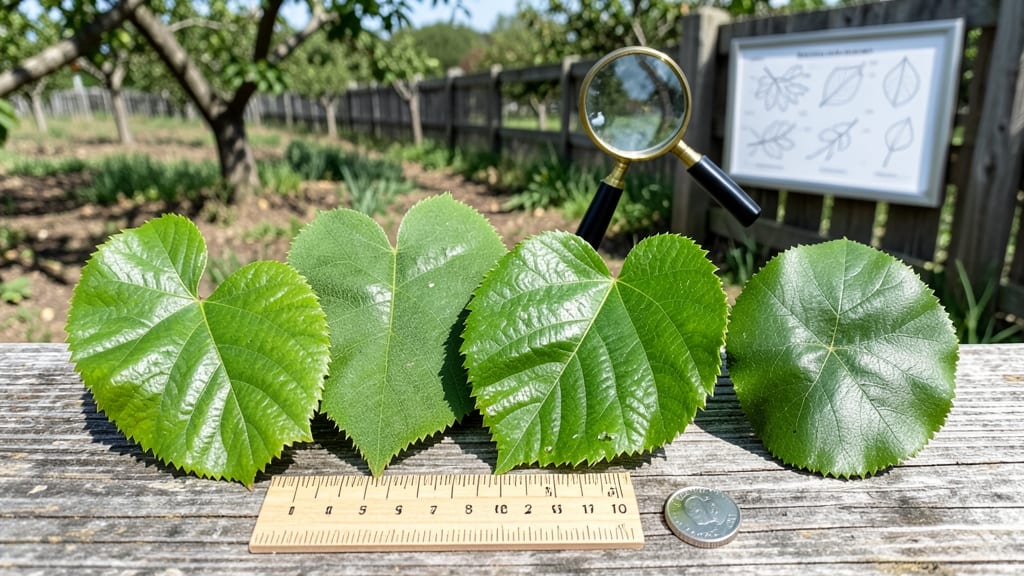
Mastering fruit tree identification by leaf saves you from guessing—and a wrong guess could mean years of pruning the wrong species. 🌿 I’ve spent years memorizing the subtle differences between apple, pear, and even citrus leaves, and the key is in the shape, edges, and veins.
A single leaf can tell you whether that tree is bearing peaches, plums, or something entirely unexpected.
Start with the basics: leaf edges (smooth, serrated, lobed?), vein patterns (prominent or faint?), and size (smaller than your hand or larger?). For example, apple leaves are oval with jagged edges, while pear leaves are pointier with a single sharp tooth.
Citrus leaves, on the other hand, are thick, glossy, and smell like oranges—a dead giveaway. Season matters too; spring leaves are tender, while fall leaves might curl or yellow, altering their shape.
By the end, you’ll spot a persimmon by its lobed, maple-like leaf or recognize a fig by its deeply lobed, almost palm-like shape. No more second-guessing that mysterious tree in your neighbor’s yard—just grab a leaf, compare it to the guide, and you’ll know exactly what’s growing there.
The best part? You’ll start noticing patterns you never saw before.
For tricky cases, apps like LeafSnap or PictureThis can double-check your work, but once you train your eye, you’ll be identifying trees faster than you can snap a photo. Whether you’re pruning, planning an orchard, or just curious, this skill turns a walk in the yard into a detective story.
Nature’s Leaf-Shaped Code Explained
Identifying fruit trees by their leaves isn’t just a gardener’s trick—it’s a biological puzzle shaped by millions of years of evolution. Leaves vary wildly because they’re the result of complex interactions between genetics, environment, and survival strategies. Here’s why nature’s leaf designs are so distinct—and how to decode them.
Leaves aren’t just there for show—they’re highly specialized tools for a tree’s survival. Different shapes, textures, and arrangements evolved to optimize sunlight capture, water retention, and defense against pests. For example:
- Broad leaves (e.g., peach, plum): Maximize photosynthesis in warm climates where sunlight is abundant.
- Needle-like leaves (e.g., pine, juniper): Reduce water loss in dry or cold environments.
- Serrated edges (e.g., apple, cherry): Deter herbivores by making the leaf harder to chew.
💡 Pro Tip: Trees in temperate climates (like most fruit trees) often have deciduous leaves—they shed in winter to conserve energy, making their leaf shapes a seasonal clue.
Every fruit tree species carries a unique genetic code that dictates leaf structure. Key genetic factors include:
| Trait | Why It Matters | Example in Fruit Trees |
|---|---|---|
| Leaf Venation | Determines how nutrients and water travel. Pinnate (feather-like) vs. palmate (hand-like) patterns are hardwired. | Citrus (pinnate) vs. Maple (palmate) |
| Compound vs. Simple Leaves | Compound leaves (multiple leaflets) are often more resilient to damage, while simple leaves are common in stable environments. | Black Locust (compound) vs. Pear (simple) |
| Leaf Margin Shape | Serrated, lobed, or smooth edges are influenced by genes that control cell growth at the leaf’s edge. | Hazelnut (entire margin) vs. Persimmon (lobed) |
🔥 Actionable Insight: If two trees look similar, compare their leaf veins and arrangement on the stem—these are the most genetically stable traits.
Leaves aren’t static—they adapt in real-time to their surroundings. Factors like:
- Climate: Trees in humid regions (e.g., avocado) often have leathery, waxy leaves to prevent water loss. In arid zones (e.g., pomegranate), leaves may be small and hairy.
- Sunlight Exposure: Shade-tolerant trees (e.g., fig) have larger leaves to soak up limited light, while sun-lovers (e.g., peach) develop thicker cuticles to avoid scorching.
- Soil Nutrients: Poor soil? Trees like mulberry may produce smaller, darker leaves to conserve resources.
✨ Field Hack: Compare leaves from the same tree in sun vs. shade—you’ll often see size and color differences within minutes!
Some leaf traits are chemical warfare against insects and pathogens. For instance:
- Hairy or Glandular Leaves (e.g., cherry, plum): Trap pests or secrete sticky resins to deter them.
- Toxic Compounds (e.g., walnut): Leaves release juglone, a natural herbicide that inhibits competing plants.
- Thick Wax Coatings (e.g., citrus): Repel fungi and bacteria by creating a waterproof barrier.
🎯 Identification Clue: If a leaf smells strongly aromatic (like eucalyptus) or has visible glands, it’s likely evolved for defense—common in wild or invasive species.
Not all leaf differences are natural—human breeding has altered them for centuries. For example:
- Dwarf Varieties (e.g., patio citrus): Smaller leaves due to genetic dwarfing.
- Grafted Trees (e.g., apple rootstocks): The scion (top) may have different leaves than the rootstock (bottom).
- Hybridization (e.g., plums × cherries): Leaves often become intermediate in shape between parent species.
💡 Grower’s Note: If you’re identifying a commercial orchard tree, check for tags or labels—breeders often tweak leaves for disease resistance or harvest efficiency.
Quick Fixes for Leafy Confusion
Got tangled in a thicket of similar-looking leaves and can’t tell your apple from your apricot? Don’t worry—this isn’t rocket science! With a few sharp tools (and maybe a magnifying glass), you can decode fruit tree mysteries like a pro.
Below, we’ll tackle the most common stumbling blocks in fruit tree identification by leaf and show you how to clear the fog—fast.
If you’re staring at two trees with leaves that almost match—same shape, same color—don’t panic. Leaf veins, edges, and texture are your secret weapons. Here’s how to tell them apart:
🍎 Step 1: check the leaf margin (edges)
The shape of the leaf’s edge can be a game-changer.
Are they: - Serrated (like a saw): Common in apples, cherries, and plums. - Smooth (entire): Often found on peaches, nectarines, or figs. - Lobed or jagged: Think persimmons or some citrus varieties.
💡 Pro Tip: Run your finger along the edge—if it feels like a tiny teeth row, it’s likely a Rosaceae family tree (apples, pears, etc.).
🌿 Step 2: examine the vein pattern
- Pinnate veins (one central vein with smaller branches): Most common in fruit trees like peaches, plums, and cherries.
- Palmate veins (veins radiate from one point, like a hand): Rare in fruit trees but can appear in figs or mulberries.
🔥 Hot Tip: Hold the leaf up to light—vein patterns pop under backlighting!
🧐 Step 3: compare leaf surfaces
- Hairy or fuzzy? Peach tree leaves often have a slight downy texture.
- Shiny or dull? Citrus leaves (like oranges or lemons) are usually glossy, while apple leaves tend to be matte.
Not all leaves are in perfect condition—some are chewed, wilted, or half-hidden by branches. Here’s how to adapt:
🍂 Step 4: look for bud or stem clues
If the leaf is damaged, check the buds or stem:
- Apple/Pear trees: Buds are often plump and pointed.
- Cherry/Plum trees: Buds are smaller and rounder.
- Citrus trees: Stems are thorny (if young).
✨ Magic Trick: Snap a photo of the bud cluster—it’s often the missing puzzle piece!
📏 Step 5: measure and compare
Grab a ruler (or your phone’s measuring app) and note:
- Leaf length/width ratio (e.g., peach leaves are longer than wide).
- Arrangement (alternate vs. opposite leaves—citrus is usually alternate).
📊 Data Hack: Keep a leaf ID cheat sheet in your pocket. Jot down key traits as you go!
Once you’ve cracked the code, make it stick with these easy habits:
📅 Step 6: track seasonal changes
Leaves evolve! Take notes on:
- Spring: New leaves are often lighter green and softer.
- Fall: Colors shift—reddish leaves might hint at hawthorn or crabapple.
🌡️ Temperature Tip: Cooler climates can make leaves smaller or darker—adjust expectations!
📸 Step 7: build a digital reference library
- Snap photos of leaves with your phone.
- Use apps like PictureThis or LeafSnap to cross-check.
- Join gardening forums (like r/whatsthisplant on Reddit) for crowd help.
🎯 Goal: In 30 days, you’ll recognize half your neighborhood’s fruit trees just by their leaves!
| Problem | Fix | Prevention Tip |
|---|---|---|
| Mistaking poison ivy for a fruit tree | Remember: "Leaves of three, let it be!" Poison ivy has three leaflets. | Never touch unknown vines—when in doubt, don’t touch! |
| Confusing oak leaves with fruit tree leaves | Oaks have lobes (like fingers); most fruit trees don’t. | Stick to simple leaf shapes first. |
| Overlooking thorns | Thorns on stems = citrus, hawthorn, or blackberry. | Always check the stem before assuming. |
Need an instant gut check? Ask:
- Is the leaf smooth or toothy? (Smooth = peach/nectarine; toothy = apple/cherry).
- Does it smell like citrus? (If yes, you’re near an orange, lemon, or lime).
- Are there thorns? (If yes, it’s not an apple or pear).
If you’re still stuck, ask a local nursery—they’ve seen it all! With practice, you’ll go from "Huh?" to "Ah, that’s a persimmon!" in no time. 🌳✨
Frequently asked questions
Can I identify fruit trees by leaves in winter when they're bare?
You can still make educated guesses! Look for bud shapes and bark texture—apple buds are plump and pointed, while cherry buds are smaller and round. Citrus trees often have distinctive thorny branches even without leaves. For tricky cases, check the leaf scars where old leaves attached—they reveal vein patterns.
What's the fastest way to tell an apple tree from a pear tree by leaf?
Compare the leaf edges: apple leaves have jagged, saw-like teeth while pear leaves have single sharp points (like tiny triangles). Also check the leaf base—apple leaves attach with a rounded base, while pears have a pointed base. Hold them up to light to see these differences clearly.
Why do some leaves look different on the same tree?
Sun exposure causes variations—leaves in full sun often become smaller and thicker with darker green color, while shade leaves stay larger and lighter. Also, young leaves (spring) are softer and lighter than mature ones. This is normal and doesn't mean you have two different trees!
Are there any poisonous trees that look like fruit trees?
Yes! Poison ivy (three leaflets) and poison oak (lobed leaves) can mimic fruit trees. Always check for three leaflets on poison ivy. Black walnut leaves also resemble hickory but have compound leaflets. When in doubt, avoid touching unknown plants—especially with bare hands.
How do I know if a leaf sample is from a young or mature tree?
Young trees often have larger, softer leaves with lighter green color. Mature trees develop smaller, tougher leaves with more pronounced vein patterns. Also check the bark texture—young trees have smoother bark while mature ones develop ridges or cracks. The fruit size can also give clues!