
Fertilization
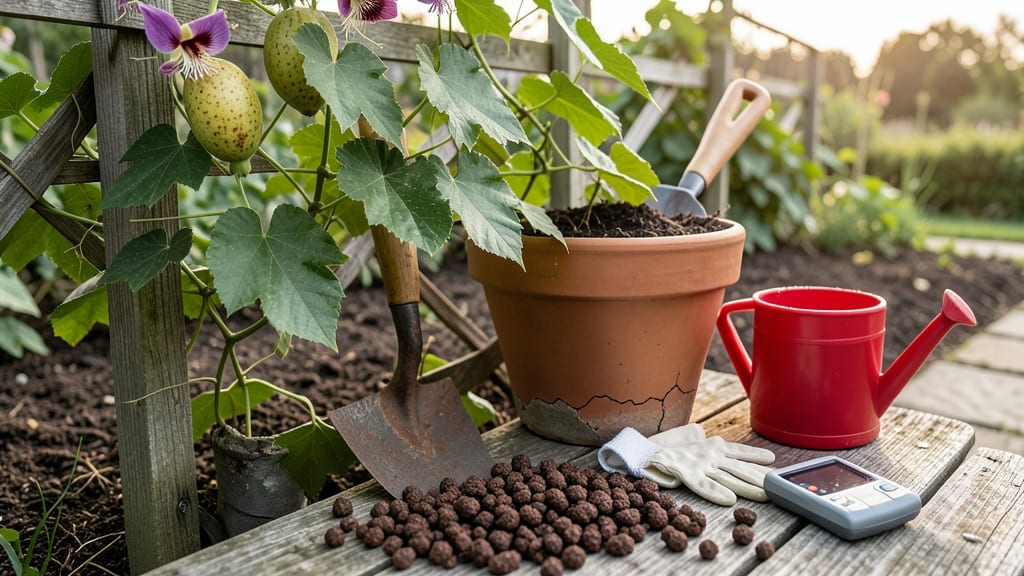
Fertilizing passion fruit vines demands precision—not just any fertilizer, but the right blend at the right time to transform them into fruit-producing powerhouses. 🌱 I’ve learned the hard way that too much nitrogen sends vines into a leafy frenzy while starving your harvest, and too little means tiny, bland fruit. The secret? A balanced approach that shifts with each growth stage, from leafy green to flowering to fruiting. Start with a soil test—passion fruit thrives in well-draining, slightly acidic soil (pH 6.0–7.0). Amend with compost or aged manure before planting, then switch to a balanced 10-10-10 or 8-3-9 fertilizer when vines are established. Organic options like fish emulsion or banana peel tea work too, but synthetic blends give faster, more predictable results during fruiting. The key is timing: light applications every 4–6 weeks in growing season, then a potassium boost when flowers appear. By mid-season, you’ll see the difference—vines heavy with jewel-toned fruit, not just lush foliage. The first harvests are always the sweetest, but consistent feeding keeps them coming all year. Over-fertilizing? Yellow leaves and burned roots are your warning signs. Less is more here: slow, steady feeding beats heavy-handed bursts. Works for both tropical and subtropical climates—just adjust for rainier seasons (fertilize after heavy rains to avoid runoff). Now, let’s get those vines fed the right way.
📚 In This Guide
- What you need
- Instructions
- Tips and common mistakes
- Wrapping up and next steps
What you need
- ● Balanced fertilizer (10-10-10 or 8-8-8): 1–2 lbs per 100 sq ft (or follow label instructions). Look for one with micronutrients like zinc and iron.
- ● Organic compost or well-rotted manure: 2–3 gallons per vine (chicken, cow, or worm castings work great!).
- ● Citrus or fruit-specific fertilizer: 1 lb per vine (high in nitrogen for early growth, then switch to potassium-rich for fruiting).
- ● Slow-release fertilizer granules: ½ cup per vine (applied every 3–4 months for steady nutrition).
- ● Epsom salt (magnesium sulfate): 1 tbsp per gallon of water (for magnesium deficiencies—common in passion fruit!).
- ● Garden gloves: 1 pair (to protect your hands from sharp vines and chemicals).
- ● Pruners or sharp shears: 1 pair (for trimming dead growth and improving air circulation).
- ● Watering can or hose with spray nozzle: 1 (for even water distribution post-fertilizing).
- ● Measuring scoop or scale: 1 (to ensure precise fertilizer amounts).
- ○ pH testing kit: 1 (optional but helpful—passion fruit thrives in slightly acidic soil (6.0–7.0)).
- ● Mulch (straw, wood chips, or pine needles): 2–3 inches (to retain moisture and regulate soil temperature).
- ● Well-draining soil (amend with perlite or sand if clay-heavy).
- ● Established passion fruit vines (at least 6–12 months old for best results).
- ● Access to clean water (for diluting fertilizers or rinsing tools).
- ● Sunny location (passion fruit vines need 6+ hours of direct sunlight daily).
Instructions for fertilizing passion fruit vines
Here's how I've learned to feed these hungry vines for maximum fruit production.
🌱 Step 1: Prepare the Soil Before Planting
Passion fruit vines thrive in well-draining soil rich in organic matter. Before planting, I mix compost or well-rotted manure into the soil to a depth of 12 inches. This ensures the roots have access to nutrients from the start. The ideal soil pH for passion fruit is between 6.0 and 7.0, so test your soil and amend if necessary—lime raises pH, while sulfur lowers it.
I also add a slow-release fertilizer like 10-10-10 or 8-3-9 at planting time, following the package instructions. This gives the vines a steady supply of nutrients as they establish their root systems. Avoid over-fertilizing at this stage—too much nitrogen can lead to excessive leaf growth at the expense of fruit production.
💧 Step 2: Feed During Active Growth
Once your vines start showing new growth, typically 4-6 weeks after planting, it's time to begin regular feeding. I use a balanced liquid fertilizer, like 7-7-7 or 10-10-10, diluted to half strength. Apply this every 2-3 weeks during the growing season, which runs from early spring through late summer in most climates.
Watch for signs of deficiency: yellowing leaves suggest nitrogen deficiency, while weak stems or small fruit indicate phosphorus or potassium shortages. If you notice these, adjust your fertilizer blend accordingly. For example, switch to a higher-phosphorus fertilizer like 5-10-10 if fruit development stalls.
☀️ Step 3: Boost Flowering and Fruiting
When your vines begin producing flowers, switch to a fertilizer with a higher phosphorus content, like a 5-10-5 or 3-12-6 blend. Phosphorus encourages flowering and fruit set, which is critical for passion fruit vines. Apply this every 3-4 weeks during the flowering and fruiting season, which typically runs from late spring through early fall.
I also add a calcium supplement, like crushed eggshells or gypsum, to prevent blossom-end rot, a common issue in passion fruit. Mix it into the soil around the base of the plant or apply it as a foliar spray. You'll see the most vibrant flowers and the heaviest fruit set when the vines are well-fed during this stage.
✂️ Step 4: Maintain Through Dormancy
In cooler climates, passion fruit vines go semi-dormant in winter. During this time, reduce feeding to once every 6-8 weeks with a low-nitrogen fertilizer, like 2-4-2. This helps the vines conserve energy for the next growing season. In tropical climates, where vines remain active year-round, continue feeding lightly with a balanced fertilizer every 4-6 weeks.
I also mulch around the base of the plant with compost or organic matter to protect the roots and retain moisture. This slow-release organic matter continues to feed the vines as it breaks down, reducing the need for frequent synthetic fertilizers.
🌿 Step 5: Post-Harvest Care and Renewal
After harvesting, give your vines a balanced fertilizer to replenish nutrients lost during fruit production. I use a fish emulsion or seaweed extract at half strength to provide a gentle boost. This helps the vines recover and prepares them for the next cycle of growth and fruiting.
Prune any dead or diseased growth at this time to improve air circulation and reduce stress on the plant. You'll notice new shoots emerging within a few weeks—this is your signal that the vines are ready to begin the cycle anew.
Tips & tricks for perfect passion fruit vine fertilization
These precision strategies will help you maximize fruit production while avoiding common pitfalls that waste nutrients.
Soil Preparation Insight: When mixing compost or well-rotted manure to a depth of 12 inches in Step 1, focus on creating a loose, crumbly texture rather than compacting the soil. Passion fruit roots need oxygen, and dense soil can suffocate them. I like to use a garden fork to gently aerate the soil before adding organic matter—this creates channels for roots to grow deeper. The 12-inch depth is critical because passion fruit vines develop extensive root systems that need access to nutrients throughout their growing season.
Seasonal Fertilizer Strategy: In Step 2, when you begin regular feeding 4-6 weeks after planting, consider using a liquid fertilizer with micronutrients like iron and magnesium. These trace elements are often lacking in standard blends but are essential for vibrant foliage and fruit development. I've found that adding a chelated iron supplement every other feeding during active growth prevents the yellowing between leaf veins that signals iron deficiency. This is especially important in sandy soils where nutrients leach away quickly.
Flowering Phase Optimization: During Step 3, when switching to higher-phosphorus fertilizers like 5-10-5 or 3-12-6, time your applications with the flowering cycle. Passion fruit flowers typically open in the morning, so apply phosphorus fertilizers in the late afternoon of the day before flowering begins. This gives the plant time to absorb the nutrients before they're needed for flower development. I also recommend pairing phosphorus applications with a light foliar spray of seaweed extract—this combination has given me noticeably higher fruit set in my own vines.
Winter Care Nuance: In Step 4, when maintaining through dormancy, the 6-8 week feeding interval assumes typical winter conditions. However, if you experience unusually warm winters, consider reducing this to 4-6 weeks to prevent nutrient depletion. Watch for new growth as your cue—if you see buds forming before your scheduled feeding, it's time to fertilize. The low-nitrogen 2-4-2 blend is perfect for this stage because it supports root health without encouraging excessive top growth that could be damaged by late frosts.
Pro Tips for Fertilizing Passion Fruit Vines
- These precision strategies will help you maximize fruit production while avoiding common pitfalls that waste nutrients.
- Soil Preparation Insight: When mixing compost or well-rotted manure to a depth of 12 inches in Step 1, focus on creating a loose, crumbly texture rather than compacting the soil.
- Seasonal Fertilizer Strategy: In Step 2, when you begin regular feeding 4-6 weeks after planting, consider using a liquid fertilizer with micronutrients like iron and magnesium.
Frequently asked questions
Got questions about keeping your passion fruit vines thriving with the right nutrition? Here are some of the most common queries—and their answers—from gardeners just like you!
When is the best time to fertilize passion fruit vines?
For year-round production, fertilize passion fruit vines every 4-6 weeks during the growing season (spring through fall). In cooler months, reduce to once every 8-12 weeks or pause if growth slows. Young vines (under 1 year) need lighter feeding—start with half-strength fertilizer to avoid burning delicate roots.
What’s the difference between organic and synthetic fertilizers for passion fruit?
Both work, but organic fertilizers (like compost or fish emulsion) improve soil long-term and mimic natural nutrient release. Synthetic fertilizers (e.g., 10-10-10) offer precise, fast-acting nutrients but require more frequent applications. For heavy fruiting, many growers combine both—organic for soil health and synthetic for quick fixes during flowering.
Why are my passion fruit leaves yellowing after fertilizing?
Yellow leaves often signal over-fertilization (too much nitrogen) or root burn from concentrated salts. Flush the soil with water to dilute excess nutrients, and switch to a balanced fertilizer (e.g., 8-8-8 or 6-6-6). If roots are damaged, trim affected areas and avoid fertilizing for 2-3 weeks while the plant recovers.
Can I use coffee grounds or banana peels as fertilizer for passion fruit?
Coffee grounds
add nitrogen (great for foliage) and acidify soil slightly, while banana peels provide potassium (key for fruit development). Bury them 1-2 inches deep near the base of the vine, or compost them first for slower, safer nutrient release. Pair these with a phosphorus-rich fertilizer (like bone meal) to boost flowering.
How do I adjust fertilization for passion fruit in hot vs. cold climates?
| Climate | Adjustments | Why? |
|---|---|---|
| Hot/Dry | Use water-soluble fertilizers (e.g., fish hydrolysate) and fertilize early morning or late evening to reduce evaporation. | Prevents nutrient loss and leaf burn from heat stress. |
| Cold/Humid | Switch to slow-release organics (like worm castings) and fertilize only when soil is above 60°F (15°C). | Avoids root rot and nutrient runoff in soggy soil. |
What if my passion fruit vine isn’t fruiting despite regular fertilizing?
Check these first:
- Light levels: Passion fruit needs 6+ hours of direct sun daily.
- Pollination: Hand-pollinate flowers with a brush if bees are scarce.
- Nutrient imbalance: Test soil for low phosphorus (P)—use a bloom booster like 5-10-5.
- Age/stress: Young vines or those recovering from pests may need 1-2 years to fruit.
If the issue persists, a soil test can pinpoint deficiencies!
Wrapping up and next steps
Fertilizing your passion fruit vines is the secret to unlocking their full potential—yielding sweet, abundant harvests that reward your green thumb efforts! 🌱 By understanding the right nutrients, timing, and techniques, you’ve got everything you need to keep your vines thriving year-round.
Now’s the perfect time to roll up your sleeves and put this knowledge into action!
Start by monitoring your vines weekly and adjusting your feeding plan as needed. Keep a garden journal to track growth, fruit production, and any adjustments—this will help you refine your approach for even better results next season.
Happy gardening, and may your passion fruit patch be as fruitful as your dedication! 🍈✨