
Fertilization
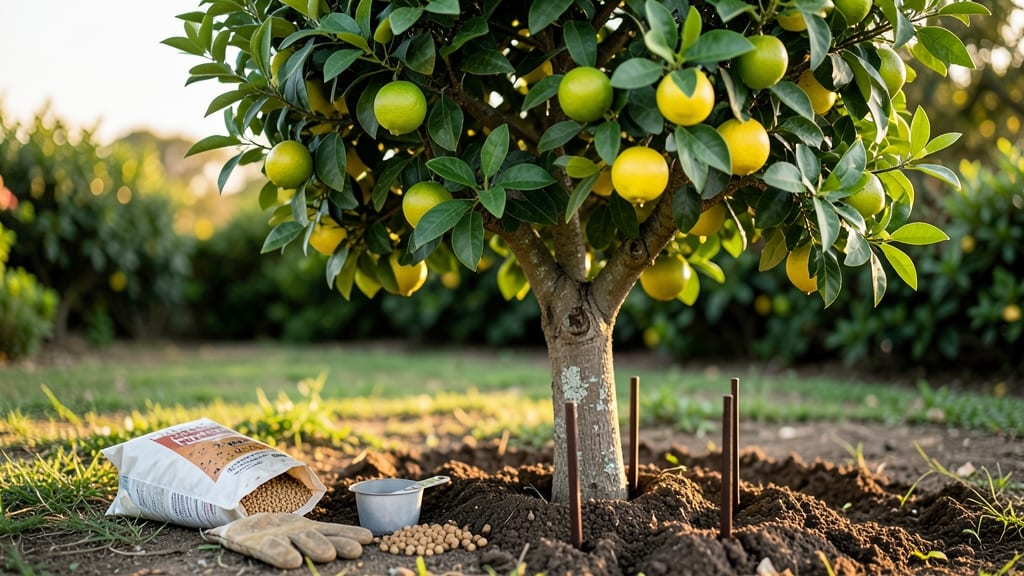
Fertilizer spikes for fruit trees deliver nutrients straight to the roots where they matter most. 🌳 After struggling with uneven growth in my apple trees, I discovered these slow-release spikes transform feeding from a guessing game to a precise science—no more wasted fertilizer or leaf burn.
The beauty of spikes is their simplicity: just push them into the soil near the drip line, and they release nutrients over months.
Unlike granular fertilizers that wash away or liquids that evaporate, spikes stay put, feeding your tree exactly when it needs it—spring flush, summer fruiting, and winter root growth. You’ll see stronger branches, thicker canopies, and fruit that’s sweeter and more abundant.
My peach tree went from sporadic blooms to a heavy harvest in just two seasons, and the best part? No messy cleanup or risk of overfeeding. Works for citrus, avocados, and stone fruits too. Here’s how to use them without a single guess.
📚 In This Guide
- What you need
- Instructions
- Tips and common mistakes
- Wrapping up and next steps
What you need
- ● Fertilizer spikes: Slow-release spikes (e.g., Osmocote or Espoma): 1 spike per 6–12 inches of tree trunk diameter (check product guidelines).
- ○ Optional: Organic spikes (e.g., Alfalfa or Compost-based) for eco-friendly growth.
- ● Drill or spike driver: Cordless drill with a 1/4-inch drill bit (for spikes) or a dedicated spike inserter tool.
- ● Measuring tape: To gauge tree trunk diameter and spacing between spikes.
- ● Gloves: Heavy-duty gardening gloves to protect your hands from sharp spikes or rough bark.
- ● Watering can or hose: With a gentle spray nozzle to hydrate the tree post-application.
- ● Tree wound dressing: (e.g., Tanglefoot Tree Wound Pruning Sealer) to seal minor drill holes if needed.
- ● pH test kit: To check soil acidity (ideal range: 6.0–7.0 for most fruit trees).
- ● Labeling tags: To mark application dates and spike types.
- ● Knee pad or stool: For comfort when working near the ground.
Step-by-step guide to using fertilizer spikes for fruit trees
Here's how I apply fertilizer spikes for consistent, healthy fruit production—no guesswork involved.
🌱 Step 1: Choose the Right Spikes for Your Tree Type
Fertilizer spikes come in formulas tailored to different tree needs. For young fruit trees, use high-nitrogen spikes to encourage leaf and root growth. Mature bearing trees need balanced spikes (10-10-10 or 12-12-12 ratio) to support both fruit production and overall health. Citrus trees often require low-nitrogen, high-potassium spikes to prevent bitter fruit.
Check the spike packaging for your tree's specific stage—spikes labeled "for bearing trees" contain higher phosphorus to boost flowering and fruiting. I always double-check my tree's age against the spike recommendations to avoid over-fertilizing, which can burn roots or produce excessive foliage at the expense of fruit.
✂️ Step 2: Apply Spikes at the Right Time of Year
The best time to install fertilizer spikes is early spring, just as new growth begins but before buds swell. This timing ensures nutrients are available when the tree needs them most. For established trees, a second application in late spring (around bloom time) provides extra support during fruit development.
Never apply spikes in winter or fall—cool soil slows nutrient release, and the tree won't use them efficiently. I mark my calendar with the last frost date and set reminders to apply spikes 4-6 weeks after that date, giving the tree time to wake up but not too much time to grow before nutrients arrive.
💧 Step 3: Install Spikes Evenly Around the Drip Line
Spread spikes in a 12-inch circle around the tree's drip line—the edge of the tree's canopy where water drips to the ground. For small trees, use 4 spikes; for mature trees, increase to 6-8 spikes. Drive each spike 2-3 inches deep into moist soil at the base, angling slightly outward to maximize root contact.
Don't place spikes too close to the trunk—this can concentrate nutrients and damage the bark. I use a small garden trowel to create shallow holes first, then gently press the spikes in. Water the area thoroughly after installation to activate the spikes and help nutrients dissolve into the soil.
☀️ Step 4: Water Deeply After Application
Water the tree deeply (1-2 inches of water) immediately after installing spikes to dissolve the fertilizer and carry nutrients into the root zone. Use a soaker hose or drip irrigation to avoid disturbing the spikes. Repeat watering every 7-10 days for 4 weeks to ensure consistent nutrient uptake.
Watch for signs of proper watering—soil should feel moist 6 inches down after each watering. Yellowing leaves or wilting can signal either overwatering or underwatering. If leaves appear burnt or crispy, you've over-fertilized; if they're pale and sparse, the tree needs more nutrients or better water penetration.
🌿 Step 5: Monitor and Adjust for Seasonal Needs
After the initial application, observe your tree's growth patterns. If new leaves appear bright green and healthy within 4-6 weeks, the fertilizer is working. For trees with heavy fruit loads, apply a third set of spikes in mid-summer to prevent nutrient depletion. Always follow package instructions for spacing and quantity.
I keep a simple journal noting when I apply spikes and how the tree responds—this helps me adjust future applications. For example, if my peach tree produces fewer peaches after a summer application, I know to reduce the next dose. The key is balance: too little means slow growth, too much means wasted money and potential harm.
Tips & tricks for perfect fruit tree fertilization
These simple strategies will help you get the most out of your fertilizer spikes—and keep your fruit trees thriving year after year.
Tree Age Matters: The instructions mention using high-nitrogen spikes for young trees and balanced formulas for mature ones, but here's the thing: don't guess about your tree's age. Check the trunk diameter—trees under 2 inches in diameter at chest height are still young. For trees between 2-4 inches, you can split the difference and use a mix of high-nitrogen and balanced spikes. This gradual approach prevents nutrient shock as your tree matures.
Seasonal Timing Secret: That 4-6 week window after last frost is crucial, but don't stress if you miss it. For established trees, you can safely apply spikes up to 2 weeks after buds swell without harming the tree. The key is to avoid applying spikes when the tree is dormant (winter) or when it's already heavily fruiting (late summer). I've found that a simple soil thermometer helps—spikes work best when soil temps are consistently above 50°F.
Installation Technique: When creating those 2-3 inch deep holes for spikes, I've learned that a simple screwdriver works better than a trowel for precision. Angle the spikes slightly outward—this creates a natural funnel for water to carry nutrients directly to the root zone. For larger trees, consider using a garden auger to make the holes more efficiently. The goal is to disturb the soil as little as possible while ensuring good root contact.
Watering Wisdom: Those 1-2 inches of water after application might seem like a lot, but here's what nobody tells you—most people underestimate how much water their trees actually need. Use a rain gauge to measure exactly 1-2 inches, and apply it slowly over 20-30 minutes to prevent runoff. For sandy soils, you may need to water twice as much to reach that 6-inch depth. I keep a moisture meter handy to check soil conditions before watering.
Pro Tips for Fertilizer Spikes For Fruit Trees
- These simple strategies will help you get the most out of your fertilizer spikes—and keep your fruit trees thriving year after year.
- Tree Age Matters: The instructions mention using high-nitrogen spikes for young trees and balanced formulas for mature ones, but here's the thing: don't guess about your tree's age.
- Seasonal Timing Secret: That 4-6 week window after last frost is crucial, but don't stress if you miss it.
Frequently asked questions
When is the best time to apply fertilizer spikes to fruit trees?
Apply fertilizer spikes in early spring (just as buds swell) and late summer (after harvest). Avoid winter applications—the tree’s dormant phase means it won’t absorb nutrients. For citrus or subtropical trees, split applications between spring and fall instead. Always water the area well after inserting spikes for optimal uptake!
How do I know if my fruit tree needs fertilizer spikes?
Watch for these signs: yellowing leaves, stunted growth, or poor fruit production. Scratch the bark—if it’s thin or peeling, the tree’s malnourished. Test soil pH (ideal: 6.0–7.0 for most fruit trees). If results show low nutrient levels, spikes can quickly replenish what’s missing without overloading the tree.
Are fertilizer spikes more expensive than granular fertilizer? Are they worth it?
Spikes cost more upfront ($10–$20 per 50-count bag), but they’re convenient and precise. Granular fertilizer (5–10 lbs for $5–$15) requires spreading and watering, while spikes deliver nutrients directly to roots with minimal effort. For heavy feeders like peach or apple trees, spikes save time and reduce waste—worth the investment for busy gardeners!
What if I accidentally over-fertilize with spikes? Can I harm my tree?
Over-fertilizing is rare with spikes, but burn risks can occur if soil is dry or spikes are too close to roots. Stop applying if leaves turn brown or crispy. Flush the soil with water to dilute excess nutrients. To prevent this, follow package rates and water thoroughly after insertion. If in doubt, start with half the recommended dose.
Can I use fertilizer spikes on newly planted fruit trees?
Wait 6–12 months before fertilizing young trees (unless soil tests show deficiencies). Newly planted trees focus energy on root establishment. After the first year, use low-nitrogen spikes (like 10-10-10) to encourage root growth. Avoid high-phosphorus spikes—they can stunt root development if overused.
What’s an alternative if I don’t want to use spikes?
Try slow-release granules (like Osmocote) or organic options such as compost, worm castings, or fish emulsion. For targeted feeding, side-dress with a 2-inch layer of compost around the drip line. Mulch (wood chips or straw) also improves soil health over time—just avoid piling it against the trunk.
Will fertilizer spikes improve fruit quality or just size?
Spikes boost both! Balanced nutrients (nitrogen, phosphorus, potassium) enhance flavor, color, and shelf life. For example, potassium-rich spikes (like 12-12-17) reduce fruit drop and improve sweetness. Pair spikes with regular pruning and proper watering to maximize quality. Think of them as a vitamin boost for your tree’s harvest!
Wrapping up and next steps
Giving your fruit trees the right nutrients with fertilizer spikes is like giving them a year-round boost—think of it as their personal growth hack! 🌱 With the right timing, placement, and blend, you’ll see stronger roots, bigger blooms, and that coveted harvest you’ve been dreaming of.
The key is consistency and observation, so don’t hesitate to tweak your approach based on what your trees need.
Ready to take the next step? Start by testing your soil this season and keep a journal of your tree’s progress. Small adjustments now will lead to big rewards down the road—happy growing! 🌳✨