
Light Requirements
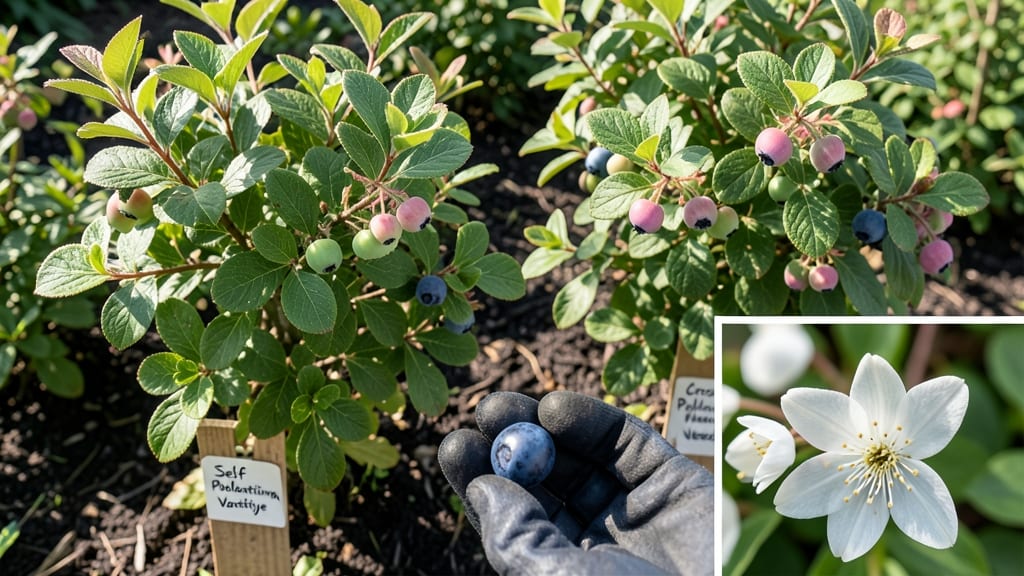
You need two blueberry bushes to get fruit only if planting self-unfruitful varieties like 'Bluecrop' or 'Duke' that require cross-pollination from a different cultivar. Some self-fertile types (e.g., 'Top Hat' or 'Peach Sorbet') produce fruit alone, but pairing bushes boosts yield and variety.
Whether you need two blueberry bushes depends entirely on the types you choose. 🌿 Self-unfruitful varieties—like the popular 'Bluecrop'—rely on pollen from a different bush to set fruit, while self-fertile types (such as 'Top Hat') produce fruit independently.
Even if you plant self-fertile bushes, pairing them with other varieties can double your harvest by extending the blooming season and increasing genetic diversity. For example, combining early-season 'Jersey' with late-season 'Chester' ensures fruit throughout summer.
This distinction matters because pollination isn't just about quantity—it's about timing. Bees and wind transfer pollen most effectively when multiple bushes bloom simultaneously, creating a network that maximizes fruit set. In colder climates, staggered varieties also help mitigate frost risks, as some bushes may bloom earlier or later than others.
If space is limited, dwarf varieties like 'Peach Sorbet' work well in containers but still benefit from a compatible neighbor.
💡 In This Article
- Blueberry Cross-Pollination Science: How Varieties Interact
- Best Blueberry Bush Pairings for Maximum Yield
Blueberry cross-pollination science: how varieties interact
The reason some blueberry bushes need companions comes down to genetics and pollen compatibility. Self-unfruitful varieties like 'Bluecrop' produce flowers that can't fertilize themselves—their pollen and ovules are genetically incompatible, requiring pollen from a different cultivar to set fruit.
This incompatibility is controlled by a single gene called S-locus, which determines self-recognition in plants. When two bushes with different S-locus genes bloom simultaneously, bees and wind transfer pollen, enabling fertilization and fruit development.
Self-fertile types like 'Top Hat' have overcome this genetic barrier through natural mutations, allowing them to produce fruit alone. However, their yields typically peak when paired with other varieties because cross-pollination increases genetic diversity and fruit quality.
For instance, 'Top Hat' produces small, sweet berries, but pairing it with 'Duke' (a self-unfruitful variety) can result in larger, more uniform fruit with improved flavor profiles. The pollen transfer process is most efficient when bushes bloom within 7-10 days of each other, as bees prefer fresh pollen sources.
Climate plays a crucial role in pollination success. In colder regions, late frosts can damage early blooming varieties, while warmer areas may experience pollen wastage if blooming periods don't overlap. For example, 'Earliblue' blooms 2-3 weeks earlier than 'Bluecrop,' creating a staggered pollination window that extends the harvest season.
This timing strategy also helps mitigate weather risks—if one variety's flowers get damaged by frost, the other may still produce fruit. Wind becomes the primary pollinator in areas with fewer bees, making dense plantings of compatible varieties even more critical.
Here's what happens at the cellular level: When compatible pollen lands on a stigma, it germinates and grows a pollen tube down the style to the ovary, where fertilization occurs. This process takes about 24-48 hours in optimal conditions.
If pollen isn't transferred within this window, the flower drops without setting fruit. The result? A bush that looks beautiful with blossoms but produces little to no harvest—a common frustration for gardeners who don't understand cross-pollination requirements.
Consider these key factors when evaluating varieties:
- Pollen compatibility: Check variety tags for "self-fertile" or "self-unfruitful" labels
- Blooming overlap: Aim for varieties with 7-14 day blooming windows
- Climate suitability: Northern varieties (e.g., 'Patriot') need cold winters to set fruit
- Pollinator access: Plant bushes where bees can easily navigate between them
The sensory payoff of proper pollination is dramatic: successful cross-pollination results in berries that are 20-30% larger and have more intense flavor development, with sweeter, less tart profiles.
The difference between a solitary 'Top Hat' bush and one paired with 'Bluecrop' is like comparing a single note to a full chord—suddenly, you're getting the complete blueberry experience.