
Propagation
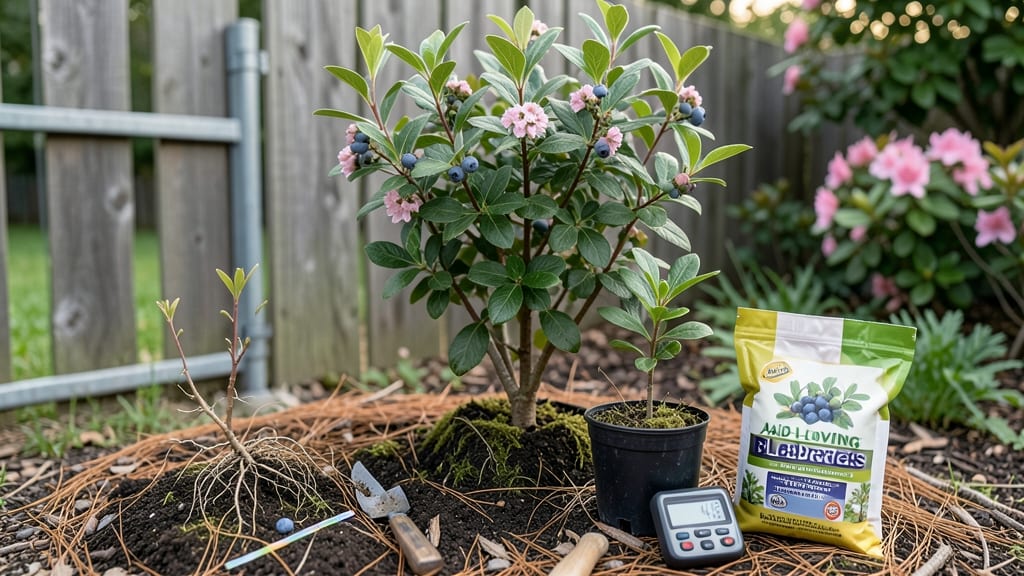
You can grow blueberries from the fruit, but the process demands patience and precision: carefully remove seeds from fully ripe berries, subject them to cold stratification for 60-90 days in moist sand, then plant in acidic, well-draining soil while maintaining consistent moisture. Seedlings may take months to sprout and years before producing fruit.
Blueberry seeds are naturally dormant, which means they won't sprout without a period of cold treatment to break this cycle. 🌱 This stratification mimics winter conditions, tricking the seed into thinking it's time to grow. The key is using fresh berries—older seeds lose viability quickly.
Once stratified, planting in soil with a pH between 4.5 and 5.5 ensures proper nutrient uptake, while consistent moisture prevents drying out. Even with perfect conditions, germination can take 3-6 months, and it may be 3-5 years before you see actual fruit.
For best results, I recommend collecting seeds from organic blueberries to avoid chemical residues that might inhibit growth. 💡 If you're impatient, consider grafting nursery-grown blueberry plants onto your seedlings later—this can accelerate fruit production by several years.
The reward of homegrown blueberries makes the wait worthwhile, but be prepared for a long-term gardening commitment.
💡 In This Article
- Blueberry Seed Germination Science and Requirements
- Step-by-Step Guide to Growing Blueberries from Seeds
Blueberry seed germination science and requirements
The biological process behind blueberry seed germination begins with dormancy, a natural state where seeds delay sprouting until conditions are ideal. Blueberry seeds contain a hard outer shell that resists water absorption, and their embryos are underdeveloped at harvest.
This dormancy is broken through a process called stratification, where seeds experience cold, moist conditions that mimic winter. During stratification, hormones within the seed shift from dormancy-promoting abscisic acid to growth-stimulating gibberellins, signaling the seed it's safe to germinate.
Cold stratification requires 60-90 days at temperatures between 34-40°F in moist sand or peat moss. The moisture level should stay consistently damp but not soggy—think of a wrung-out sponge.
Fresh seeds from fully ripe berries have the highest viability, with germination rates around 30-50%, while dried or stored seeds may drop to 10-20%. The soil pH plays a critical role too: blueberries thrive in acidic soil (pH 4.5-5.5), which mimics their natural bog habitats.
Without this acidity, seedlings struggle to absorb essential nutrients like iron and manganese, leading to yellowing leaves or stunted growth.
What most gardeners don't realize is how quickly seed viability declines after harvest. Seeds extracted from berries left at room temperature for just 24 hours show a 20% drop in germination potential, while seeds dried out completely may never sprout.
The hard seed coat also needs to soften slightly during stratification—this process is called scarification, and it allows water to penetrate.
Without it, even stratified seeds may fail to germinate. 🌱 For best results, use seeds within 1-2 weeks of harvest and avoid washing them, as the natural oils on the seed coat help prevent fungal growth during stratification.
Comparing fresh versus dried seeds reveals stark differences in germination success. Fresh seeds from organic berries (like Rabbiteye or Southern Highbush varieties) often sprout within 8-12 weeks of stratification, while dried seeds may take 16-24 weeks or not at all.
The key is maintaining 90% humidity during stratification—any lower, and the seeds dry out; any higher, and mold risks increase. Even with perfect conditions, only about 1 in 3 seeds will successfully germinate, which is why many gardeners start with dozens of seeds to ensure a few viable seedlings.
Once stratified, the seeds must transition smoothly into planting. The soil temperature should be at least 60°F when sowing, as cooler soil slows root development.
Plant seeds 1/4 inch deep in well-draining, acidic soil mixed with 10-20% peat moss or pine bark to maintain the proper pH. Without this acidity, seedlings may grow but produce little to no fruit, as blueberry flowering requires specific nutrient balances that only acidic soil provides. 💫 The first true leaves appear after 4-8 weeks, but don't expect fruit for 3-5 years—patience is the biggest challenge in this process.