
Light Requirements
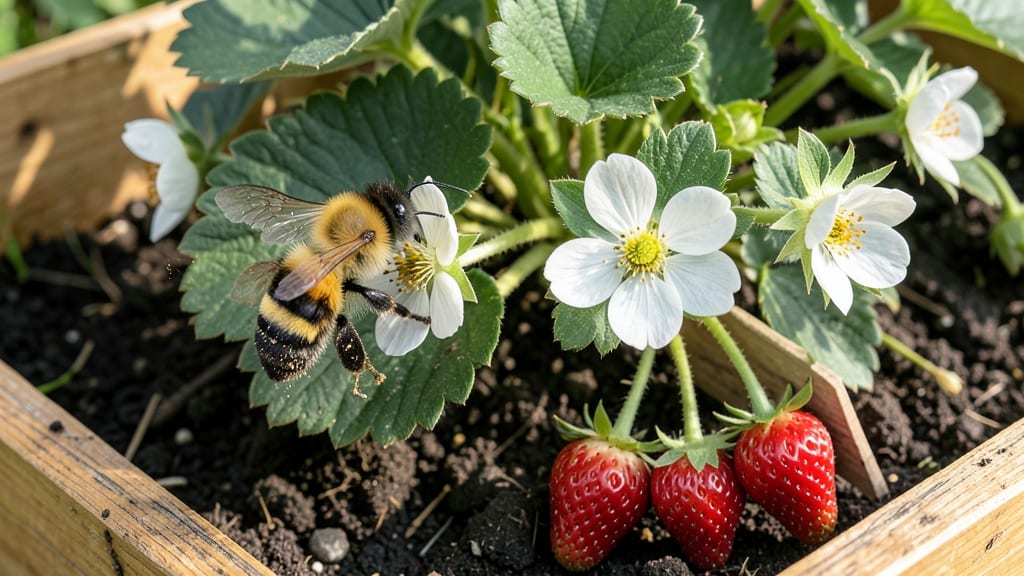
Strawberries do not need pollinators to produce fruit because they are self-fertile, meaning their flowers can self-pollinate without insects or wind. However, cross-pollination often improves fruit quality and yield.
This unique trait comes from strawberries' flower structure, where the stamens (male parts) and pistils (female parts) mature at the same time. 🌸 When the flower opens, pollen naturally transfers between parts, allowing fertilization to occur without bees or wind.
While self-pollination works, cross-pollination from neighboring plants can lead to larger berries and higher sugar content—something gardeners often notice in mixed strawberry varieties.
What's fascinating is how this self-sufficiency makes strawberries ideal for small gardens or containers. You don't need to attract bees to get a harvest, though I've found that gently shaking plants on sunny days can encourage accidental cross-pollination.
This works especially well with everbearing varieties, which produce fruit multiple times per season.
💡 In This Article
- How Strawberry Flowers Self-Pollinate Naturally
- Boosting Strawberry Fruit Production Without Pollinators
How strawberry flowers self-pollinate naturally
Strawberry flowers have a clever built-in system for self-pollination that begins with their unique structure. Each flower contains both male stamens (which produce pollen) and female pistils (which receive pollen) in close proximity.
When the flower opens, the stamens release pollen directly onto the stigma of the pistil, thanks to a process called autogamy. This happens naturally as the flower matures, with no need for external agents like bees or wind to transfer pollen between plants.
The timing of this process is precise: strawberry flowers typically open in the morning and close by afternoon, creating a 24-48 hour window for self-pollination. During this time, gravity plays a role—pollen grains are heavy enough to settle onto the stigma below, especially when flowers are upright.
The plant's natural movement from wind or gentle rain can also help distribute pollen within the flower. This mechanism is so efficient that strawberries can produce fruit even in isolated environments where pollinators are absent.
What makes this even more fascinating is the flower's anatomy. Strawberry flowers have five white petals that create a protective cup around the reproductive parts. Inside, the stamens are positioned just above the pistil, creating a direct pathway for pollen to fall onto the receptive stigma.
This design eliminates the need for external pollinators while still ensuring fertilization occurs. The result is fruit production that's reliable and consistent, regardless of local bee populations.
However, there's a catch: while self-pollination works perfectly for fruit development, it doesn't always produce the highest-quality berries. When pollination occurs within the same flower, the genetic diversity is limited.
This is where cross-pollination comes in—when pollen travels between different plants, it can create berries with larger size and higher sugar content. The natural variation in berry quality you see in home gardens often comes from this accidental cross-pollination between neighboring plants.
For gardeners, this means you can grow strawberries successfully even in small spaces or containers where pollinators rarely visit. The plant's self-sufficiency makes it one of the most adaptable fruits for home cultivation.
That said, if you want to maximize berry quality, creating conditions that encourage cross-pollination—like planting multiple varieties nearby—can make a noticeable difference in your harvest.
Here's what you should know about the process: the entire self-pollination mechanism relies on the flower's perfect timing and structure. When conditions are ideal—with consistent temperatures between 60-85°F and adequate moisture—the flowers will reliably produce fruit without any intervention.
This natural efficiency is why strawberries thrive in gardens worldwide, from urban balconies to large-scale farms.