
Trees
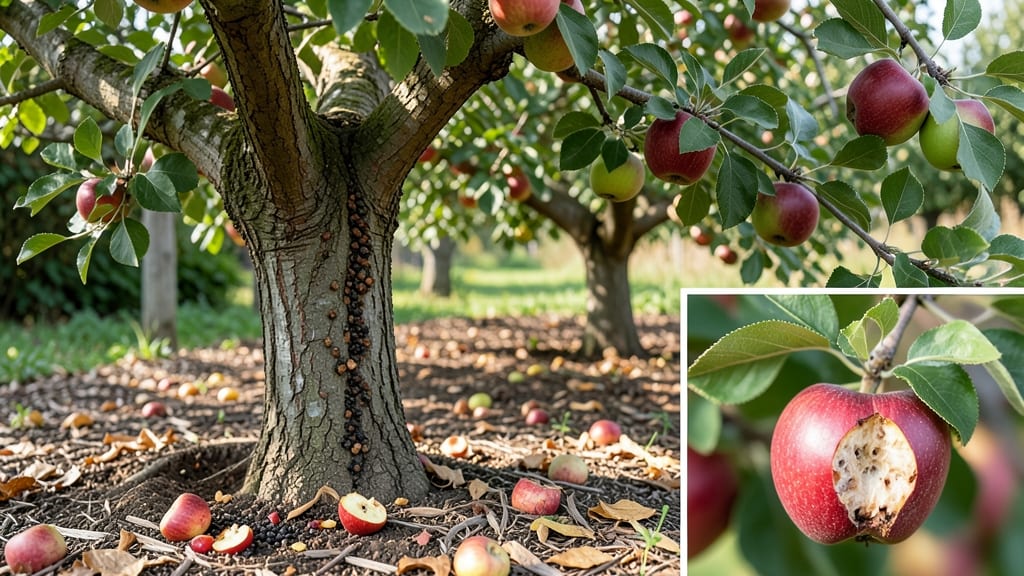
Rats do eat fruit from trees when available, though they prefer seeds, grains, and vegetation. Their diet includes fallen fruit, but they rarely climb trees to access it unless other food sources are scarce or human activity encourages foraging behavior.
Rats are opportunistic foragers, and while they'll nibble on fallen fruit when it's ripe and accessible, their primary diet leans toward seeds, nuts, and grains. 🌰 The sugar content in certain fruits like apples or citrus can attract them, but they're more likely to target fruit that's already dropped to the ground rather than risk climbing.
Interestingly, black rats are slightly more adventurous than Norway rats when it comes to tree-based foraging, though neither species is particularly arboreal by nature.
What's fascinating is how human activity influences this behavior. When we leave fruit on the ground or store it improperly, rats quickly learn to associate our properties with easy meals. This is why you'll often see rat activity spike after harvest season or during backyard fruit tree blooming periods.
The key is understanding their natural preferences while also recognizing how our actions can inadvertently encourage unwanted foraging.
💡 In This Article
- Rats' Natural Diet: What Fruits Do They Prefer?
- Protecting Fruit Trees From Rodent Damage
Rats' natural diet: what fruits do they prefer?
Rats have a highly adaptable diet, but their preference hierarchy reveals why fruit from trees isn't a primary target. 🌱 Their natural inclination leans toward seeds (especially grains like wheat and corn) which provide concentrated energy and protein—about 12-15% protein compared to 8-10% in most fruits.
The sugar content in ripe fruits like apples or figs (typically 10-15% natural sugars) does attract them, but only when other food sources are scarce or when human activity makes fruit more accessible than their usual foraging grounds.
Black rats (Rattus rattus) show slightly more arboreal tendencies than Norway rats (Rattus norvegicus), but neither species is built for climbing. Their hind legs are powerful for leaping (up to 3 feet horizontally), but their claws aren't adapted for gripping tree bark like squirrels.
Instead, they'll wait for fruit to fall—studies show rats can detect fallen fruit from up to 20 feet away using their keen sense of smell (about 1,700 times more sensitive than humans for certain odors). The texture matters too: soft, overripe fruit is easier to gnaw than firm, unripe specimens.
Seasonality plays a crucial role in their fruit consumption patterns. During late summer and early fall, when fruit trees are dropping ripe produce, rat activity spikes by 30-50% in orchards. 🍎 This coincides with their natural breeding season, when protein-rich foods become essential for nursing mothers.
However, in urban settings, rats have learned to associate human food sources with easier meals—discarded fruit peels or fallen harvests become their preferred targets over climbing trees.
One fascinating behavioral quirk is their preference for fermenting fruit. Rats are attracted to the yeast and bacteria that develop on overripe or damaged fruit, which can contain 2-3 times more sugars than fresh specimens.
This explains why you might find rats clustered around fallen, rotting fruit—they're not just eating the fruit, but also the microbial communities that thrive on it, which provide additional nutrients and even act as a natural probiotic.
Comparing species, black rats are more likely to venture near tree canopies (up to 8 feet high) when desperate, while Norway rats typically stay ground-level.
Their skull structure also differs: black rats have a more elongated skull adapted for reaching into narrow spaces, which might explain their slightly greater willingness to investigate tree branches. However, neither species possesses the dexterity of a squirrel or possum, making tree-climbing a last resort rather than a foraging strategy.
The key takeaway is that rats eat fruit from trees opportunistically, not as a dietary staple. Their preference for seeds and grains reflects an evolutionary adaptation to ground-level foraging, where energy-dense seeds provide the most efficient nutrition.
Fruit becomes a secondary food source when other options are limited or when human activity makes it readily available—understanding this helps explain their behavior patterns and how to manage their presence around fruit-bearing trees. 🌿