
Vegetables
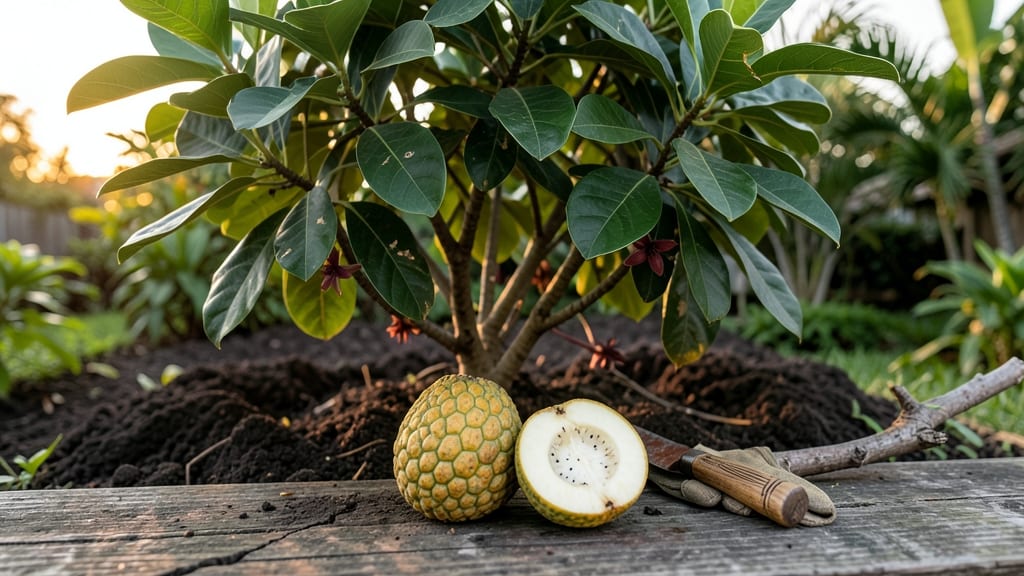
Custard-like fruits offer a luscious, almost creamy mouthfeel with delicate sweetness, thriving in warm climates. The standout varieties include sapodilla, soursop, and custard apple, each bringing distinct flavors and cultivation needs.
These tropical delights get their signature texture from natural compounds like latex (in sapodilla) and fibrous pulp (in soursop), which break down into silky smoothness when ripe. 🌿 For example, the custard apple's flesh dissolves like pudding when fully mature, while soursop's segments release juices that mimic a tangy custard.
Growing them requires patience—sapodillas need 3-5 years to bear fruit, and all three prefer well-draining soil with consistent moisture.
What makes them special isn't just the texture but how they transform dishes. A single spoonful of sapodilla can sweeten desserts without added sugar, while soursop's tartness brightens savory marinades. I've found that blending custard apple into smoothies creates a naturally thick, velvety base without dairy.
💡 In This Article
- How Tropical Fruits Achieve Their Creamy Texture
- Growing and Harvesting Creamy Tropical Fruits at Home
How tropical fruits achieve their creamy texture
The velvety texture of custard-like fruits stems from their unique cellular structure and biochemical composition. Sapodilla, for instance, contains natural latex compounds that break down during ripening, creating a grainless, almost pudding-like consistency.
This latex interacts with the fruit's starch content—typically around 18-22%—to form a smooth, cohesive pulp when fully ripe. The starch granules swell and soften, while the latex acts like a natural emulsifier, binding moisture and fat-soluble compounds for that signature creaminess.
Soursop takes a different approach with its fibrous yet juicy structure. The fruit's segments are packed with 10-15% soluble fiber that dissolves upon chewing, releasing tart, custard-like juices. What's fascinating is how the fruit's pectin content—around 0.8-1.2%—helps stabilize these juices without making the texture gummy.
When blended, soursop's fibers create a naturally thick, tangy puree that mimics the body of a custard sauce. 🌟 The key difference here is that soursop's creaminess comes from liquid release rather than structural breakdown like sapodilla.
Custard apple achieves its legendary texture through enzymatic activity during ripening. The fruit's flesh contains amylase enzymes that convert starches into simpler sugars and dextrins, which dissolve into a silky matrix.
At peak ripeness, the flesh's moisture content reaches 80-85%, with the remaining solids forming a delicate network that traps air bubbles—this is what gives it that almost "melt-in-your-mouth" quality.
What's remarkable is how these enzymes work in tandem with the fruit's natural fats (0.5-1.0%) to create a mouthfeel that's both rich and light simultaneously.
Temperature plays a crucial role in texture development. All three fruits must ripen at 70-75°F for optimal enzyme activity. Below 65°F, sapodilla's latex hardens, while custard apple's enzymes slow dramatically, resulting in a grainy texture.
The starch-to-fiber ratio becomes the defining factor—sapodilla's 3:1 ratio gives it that ultra-smooth quality, while soursop's 2:1 ratio creates a more fibrous yet juicy experience. This is why even when unripe, these fruits have distinct personalities in the mouth.
What most people don't realize is how these textures change post-harvest. Once picked, sapodilla's latex continues to soften for up to 7 days at room temperature, while soursop's fibers actually become more tender when stored at 55-60°F for 3-5 days.
Custard apple, however, reaches peak texture within 24-48 hours after picking—delaying consumption can make it watery. This post-harvest behavior explains why these fruits are often sold slightly underripe in markets and why home growers must time their harvesting precisely.
Consider these key texture mechanisms when selecting varieties:
- Latex-driven: Sapodilla (grainless, pudding-like)
- Fiber-driven: Soursop (juicy, tangy segments)
- Enzyme-driven: Custard apple (silky, melt-in-mouth)
Understanding these differences helps you choose the right fruit for your culinary needs—whether you want a smooth dessert base or a vibrant sauce component. 💫