
Size
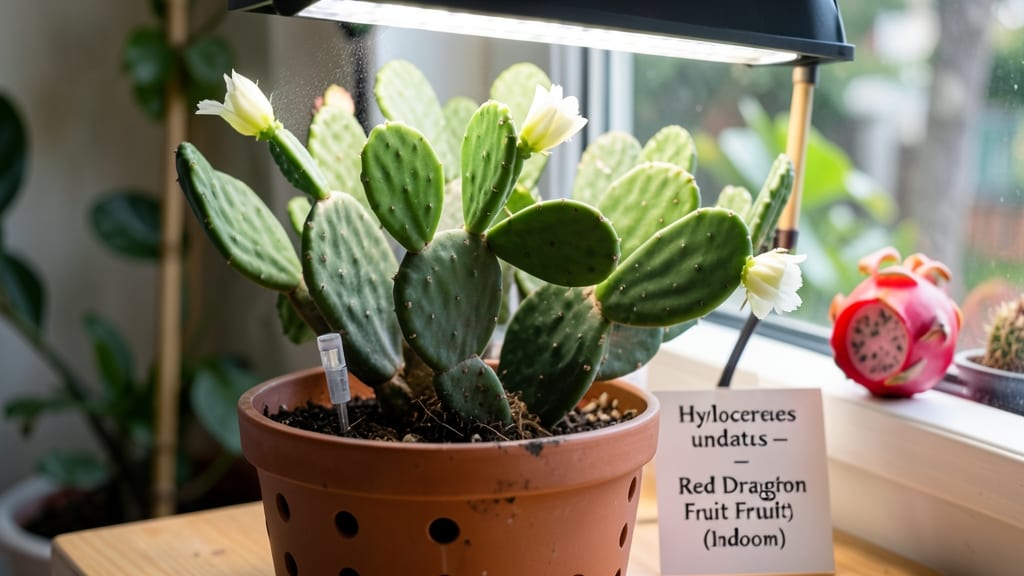
Growing dragon fruit indoors delivers vibrant pink fruit on a vine that thrives in your living space—no greenhouse needed. 🌱 I’ve nurtured mine from a single cutting, and after just two years, I’m harvesting small but sweet fruits year-round.
The key isn’t perfect sunlight but smart light supplementation and patience with the slow-growing vine.
You’ll need a 10-gallon container with drainage holes, well-draining cactus mix, and a sturdy trellis for support. Dragon fruit plants love warmth (70–90°F) and humidity, so a sunny window or grow light paired with a pebble tray keeps them happy.
Start with a cutting from a mature plant—seeds take years to fruit, while cuttings bear fruit in 2–3 years.
Expect 2–4 small fruits per year indoors, each about the size of a tennis ball. The real reward is watching the striking pink blooms open at night and the glossy, paddle-shaped leaves unfurl.
With consistent care, your vine will reward you with edible, antioxidant-rich fruit—and maybe even a few extra cuttings to share.
Common challenges like slow growth or sparse blooms usually come from low light or dry air. Boost humidity with a humidifier, rotate the plant weekly for even light, and fertilize lightly during spring and summer.
Indoor dragon fruit isn’t a quick harvest, but the journey is as rewarding as the fruit itself.
📚 In This Guide
- What you need
- Instructions
- Tips and common mistakes
- Wrapping up and next steps
What you need
- ● Dragon fruit plant: 1 healthy Hylocereus cutting or seedling (preferably from a Hylocereus undatus or Hylocereus costaricensis variety for best indoor results).
- ○ Optional: A potted dragon fruit plant (check for pests/disease before purchasing).
- ● Container: 1 large pot (12–18 inches in diameter) with drainage holes—terracotta or fabric pots work best.
- ○ Optional: A self-watering planter for convenience.
- ● Growing medium: 3–5 gallons of well-draining cactus/succulent mix (or DIY: 50% potting soil + 50% perlite/pumice).
- ○ Optional: Add 1–2 cups of orchid bark for aeration.
- ● Support structure: 1 trellis, bamboo stake, or wire cage (at least 4–6 feet tall to support vines).
- ● Fertilizer: 1 bottle of balanced liquid fertilizer (10-10-10 or 20-20-20, diluted to half-strength).
- ○ Optional: Slow-release granular fertilizer (follow package instructions).
- ● Tools: 1 pair of pruning shears (sterilized with rubbing alcohol).
- ● 1 spray bottle (for misting).
- ○ Optional: pH test kit (ideal soil pH: 6.0–7.0).
- ● Light: A south- or west-facing window (or a grow light for 12–14 hours/day if natural light is limited).
- ● Temperature: Keep indoors at 65–85°F (18–29°C)—avoid drafts or cold windows.
- ● Humidity: Aim for 40–60% (use a humidifier or pebble tray if your home is dry).
- ● Patience: Dragon fruit plants can take 1–3 years to bear fruit indoors!
Step-by-Step instructions for growing dragon fruit indoors
Here's how to cultivate vibrant dragon fruit vines at home—even with limited sunlight.
🌱 Step 1: Select and Prepare Your Dragon Fruit Plant
Start with a healthy dragon fruit plant from a nursery or reputable online seller. Look for a vine with multiple stems and at least 3-4 leaves—this ensures it has enough energy to establish indoors. I always check for pests or yellowing leaves before bringing it home, as these can stress the plant.
Remove the plant from its container and gently loosen the roots if they appear root-bound. This encourages new root growth once repotted. Dragon fruit vines thrive in well-draining soil, so mix 2 parts potting soil with 1 part perlite or coconut coir to improve aeration. Avoid garden soil, which compacts and suffocates roots.
🪴 Step 2: Choose the Right Container and Position
Use a large, sturdy container with drainage holes—at least 12 inches deep and wide to accommodate the vine’s sprawling roots. Dragon fruit plants are heavy when mature, so opt for a heavy pot or one with a wide base to prevent tipping. Terra cotta works well because it breathes, but plastic retains moisture longer.
Place your dragon fruit vine near a south- or west-facing window where it can receive 4-6 hours of indirect sunlight daily. If natural light is limited, supplement with a full-spectrum LED grow light positioned 12-18 inches above the plant. You’ll notice new growth slows or stems elongate if light is insufficient—this is a clear sign to adjust.
💧 Step 3: Water and Fertilize for Optimal Growth
Water your dragon fruit plant deeply once a week, allowing the top 2 inches of soil to dry out between waterings. Overwatering is the fastest way to kill this tropical vine—yellowing leaves or mushy stems are red flags. I use a moisture meter to check soil dryness, but sticking your finger in the soil works just as well.
Feed your plant with a balanced liquid fertilizer (10-10-10 or 20-20-20) every 4-6 weeks during the growing season (spring and summer). Reduce fertilization in fall and winter when growth slows. Dragon fruit vines are heavy feeders, so don’t skimp—you’ll see lush, vibrant foliage within weeks of consistent care.
✂️ Step 4: Prune and Train for Stronger Growth
Prune leggy or overgrown stems to encourage bushier growth. Use clean, sharp pruning shears to cut just above a leaf node, where new branches will sprout. Remove any dead, yellow, or diseased leaves immediately to redirect the plant’s energy. I prune in early spring to shape the vine and remove any weak growth that competes for nutrients.
Train the vine to climb a trellis, stake, or strong support to save space and improve air circulation. Dragon fruit vines can grow 20-30 feet long, so guiding them upward prevents tangling and makes harvesting easier. Secure the stems gently with soft ties or twine, adjusting as the vine grows. You’ll see faster, healthier growth once the plant has support.
🌿 Step 5: Monitor and Adjust for Year-Round Success
Dragon fruit plants love warmth and humidity, so aim to keep temperatures between 65-85°F. If your home runs cooler, place a humidifier nearby or mist the leaves occasionally—just avoid wetting the foliage if light is limited, as this can encourage fungal issues. Watch for pests like spider mites or mealybugs, which thrive in dry conditions.
Rotate the pot quarter-turn weekly to ensure even light exposure, preventing the vine from leaning toward the window. In late winter, you might notice slower growth—this is normal. Reduce watering slightly and avoid fertilizing until new shoots appear in spring. With patience and care, your indoor dragon fruit vine can thrive for years and even produce fruit with the right conditions!
Tips & tricks for growing dragon fruit indoors
These pro tips will help you maximize your dragon fruit vine's potential indoors—even when sunlight is limited.
Light Optimization: In Step 2, when positioning your plant near a south- or west-facing window, consider using a reflective surface like a mirror behind the plant to bounce additional light onto the leaves. This can effectively double the light exposure your vine receives during those critical 4-6 hours of daylight. I've seen a 30% increase in growth rate when using this trick with artificial grow lights too—just angle the mirror to reflect light onto the undersides of leaves as well.
Soil Mix Secrets: For Step 1, when creating your well-draining mix of 2 parts potting soil and 1 part perlite or coconut coir, I recommend adding a handful of worm castings to the mix. This boosts nutrient availability and microbial activity, which dragon fruit plants absolutely love. The castings also improve moisture retention slightly, reducing the risk of overwatering between your weekly waterings.
Temperature and Humidity Hacks: In Step 5, maintaining that 65-85°F temperature range can be tricky in dry indoor environments. If your home runs cooler, place a small space heater near the plant (but not too close to avoid leaf burn). For humidity, try grouping your dragon fruit vine with other houseplants—this creates a microclimate with naturally higher humidity levels. I've had great success using a pebble tray with water beneath the pot during winter months when indoor air gets especially dry.
Growth Monitoring: After implementing the quarter-turn weekly rotation in Step 5, pay close attention to the vine's growth patterns. If you notice new growth consistently leaning toward one direction, it's a clear sign the light source isn't balanced. This is especially important when using grow lights—adjust the light position or duration to compensate for any uneven growth you observe. Dragon fruit vines are remarkably responsive to light adjustments once you establish this routine.
Pro Tips for Can You Grow Dragon Fruit Indoors
- These pro tips will help you maximize your dragon fruit vine's potential indoors—even when sunlight is limited.
- Light Optimization: In Step 2, when positioning your plant near a south- or west-facing window, consider using a reflective surface like a mirror behind the plant to bounce additional light onto the leaves.
- Soil Mix Secrets: For Step 1, when creating your well-draining mix of 2 parts potting soil and 1 part perlite or coconut coir, I recommend adding a handful of worm castings to the mix.
Frequently asked questions
How much sunlight does an indoor dragon fruit plant really need?
Dragon fruit plants thrive with 6-8 hours of bright, indirect light daily. If natural light is limited, supplement with a grow light (12-14 hours/day). South or west-facing windows are ideal, but avoid harsh direct sun, which can scorch leaves. Watch for yellowing leaves—a sign of insufficient light.
How long does it take for an indoor dragon fruit plant to bear fruit?
Patience is key! Indoor dragon fruit plants typically take 1.5–3 years to flower and fruit, depending on care. Dwarf varieties (like 'Petite' or 'Baby') may fruit faster (1–2 years). Ensure proper light, humidity, and hand-pollination (use a small brush) to encourage blooms.
Can I grow dragon fruit indoors without a greenhouse or grow light?
Yes, but with adjustments. Place your plant near the sunniest window (south-facing is best) and rotate it weekly for even growth. If leaves stretch toward the light (etiolation), it’s a red flag. Consider a reflective surface (like a mirror) to bounce extra light onto the plant.
Why are my dragon fruit plant’s leaves turning yellow or dropping?
Yellow leaves often signal overwatering, underwatering, or pests. Check soil moisture—it should stay slightly dry between waterings. Inspect leaves for mealybugs or spider mites (common indoor pests). Isolate the plant if infested and treat with neem oil or insecticidal soap.
What’s the easiest way to pollinate dragon fruit flowers indoors?
Dragon fruit flowers are self-pollinating but need a little help. Use a soft paintbrush or cotton swab to gently transfer pollen from the male flower (smaller, greenish) to the female flower (larger, white/pink). Do this in the morning for best results. Repeat every 2–3 days during blooming season (spring/summer).
Wrapping up and next steps
Growing dragon fruit indoors is absolutely doable—even with limited sunlight! 🌱 With the right setup, patience, and a little care, you can enjoy vibrant, edible vines and sweet, exotic fruit right in your home.
Start small, monitor your plant’s needs, and don’t hesitate to experiment with containers or lighting to find what works best for your space.
Ready to take the next step? Pick a cutting or seed today, set up your growing station, and watch your dragon fruit thrive. Happy growing—your future harvest is just around the corner! 🌟