
Pruning
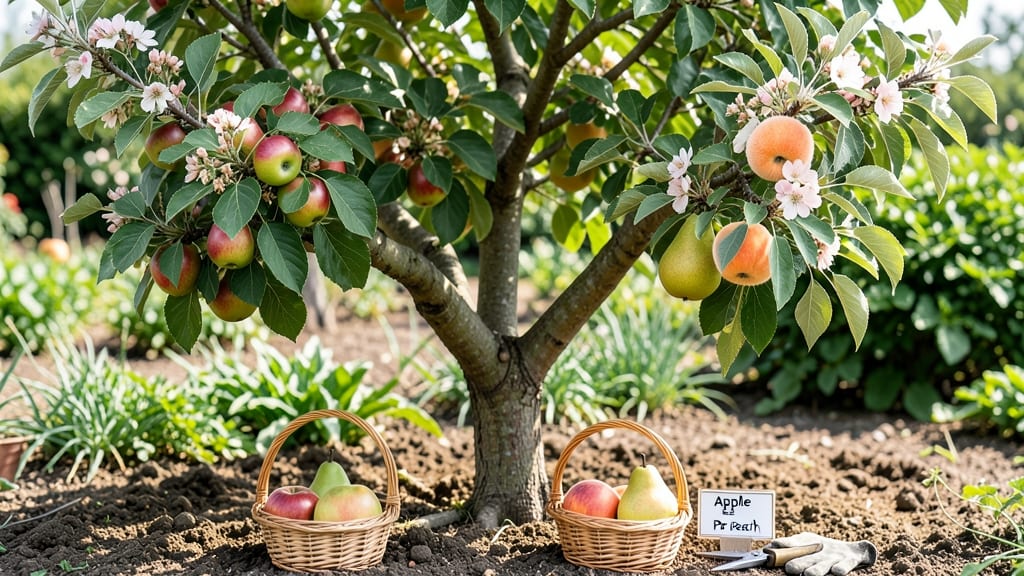
Three fruit trees in one trunk means three times the harvest in the same space. 🌳 I planted my first 3-in-1 tree last spring, and by summer, I had apples, pears, and cherries growing where a single traditional tree would have fit.
These space-saving marvels aren’t just clever—they’re a game-changer for small yards, patios, and even large containers.
The secret lies in their grafting technique: three different scions are carefully joined onto a single rootstock, creating one tree with three distinct varieties. You’ll need well-draining soil, full sun, and a spot with at least 6 feet of clearance—though dwarf varieties can thrive in just 3 feet.
Pruning is simpler than with traditional trees, but timing matters to avoid stressing the grafts.
By year two, you’ll be harvesting all three fruits at slightly different times, extending your season and giving you variety without the space. The first year is mostly about establishing strong roots, but with proper care, these trees produce for decades. Imagine fresh fruit from one tree instead of three!
Perfect for urban gardens, rooftops, or even large pots. Just remember: these trees need regular watering, especially in their first growing season, and occasional monitoring for signs of graft rejection. With the right approach, you’ll have a fruitful, space-efficient centerpiece that keeps giving back.
📚 In This Guide
- What you need
- Instructions
- Tips and common mistakes
- Wrapping up and next steps
What you need
- ● 3-in-1 fruit tree sapling (e.g., apple, pear, and cherry grafted on one rootstock—ensure it’s disease-resistant and suited to your climate).
- ● High-quality potting soil (5-10 gallons, well-draining, and rich in organic matter).
- ● Container or raised bed (minimum 15-gallon capacity for small spaces; ensure drainage holes are present).
- ● Slow-release fertilizer (balanced 10-10-10 or organic options like composted manure).
- ● Mulch (wood chips or straw, 2-3 inches thick to retain moisture).
- ● Pruning shears (bypass type, sharp and sterilized).
- ○ Grafting tools (optional, if you’re propagating your own 3-in-1 tree—includes a grafting knife and tape).
- ● Garden gloves (to protect hands from thorns and sap).
- ● Watering can or hose with a gentle spray nozzle (for consistent hydration).
- ● Support stakes or trellis (if growing in a container or small space).
- ● Access to full sun (6-8 hours daily)—critical for fruit production!
- ● Knowledge of your USDA hardiness zone (ensure your tree thrives in your climate).
- ● Patience—3-in-1 trees take 3-5 years to bear fruit, but the wait is worth it!
Step-by-step instructions for planting a 3-in-1 fruit tree
Here's how to grow a space-saving trifecta of fruit—apples, pears, and cherries—on a single tree.
🪴 Step 1: Select and Prepare the Rootstock and Grafted Varieties
Choose a dwarfing rootstock like B.9 or M.9 to ensure manageable size, then select three compatible fruit varieties—one apple, one pear, and one cherry. I recommend disease-resistant selections like 'Liberty' apple, 'Bartlett' pear, and 'Stella' cherry. Order bare-root whips from a reputable nursery and store them in a cool, dark place until planting.
Before planting, soak the bare roots in lukewarm water for 4-6 hours to rehydrate them. This jumpstarts root growth and reduces transplant shock. While soaking, prepare the planting hole—twice as wide and 12 inches deep—to accommodate the root system and improve drainage.
🌱 Step 2: Plant the Rootstock and Attach Grafted Scions
Place the rootstock in the hole at the same depth it was growing previously, then firm the soil around it to eliminate air pockets. Water deeply to settle the roots. For the grafted scions, use a clean, sharp grafting knife to make a 45-degree cut on both the rootstock and scion, ensuring the cambium layers align perfectly.
Secure the graft with rafting tape or a small rubber band, then cover the union with grafting wax to seal it and prevent drying. I like to wrap the entire grafted area with plastic wrap temporarily to maintain humidity while the scions take. Plant the three varieties in a triangle formation around the rootstock, spacing them 6 inches apart for balanced growth.
☀️ Step 3: Mulch, Water, and Provide Support
Spread 3 inches of organic mulch (like wood chips) around the base, keeping it 6 inches away from the trunk to prevent rot. Water thoroughly until the soil is 6 inches deep and evenly moist. A 5-gallon bucket of water should suffice for the first soaking.
Install a sturdy 6-foot stake next to the tree and secure it with soft ties to prevent wind damage. Position a drip irrigation line at the base to deliver 1 inch of water weekly during dry spells. Avoid overhead watering—it spreads disease and wets the grafted unions.
✂️ Step 4: Prune for Structure and Monitor Growth
After 6-8 weeks, inspect the scions for new growth. Remove any suckers (vigorous shoots below the graft) immediately—they drain energy from the tree. Prune the central leader to encourage a balanced canopy, cutting back any branches that grow at sharp angles.
Watch for bud break in spring—this is when the grafted varieties will show their first true leaves. Thin out competing branches to prioritize the strongest scions. By year two, you should see fruit buds forming on all three varieties, proving the grafting worked.
🌿 Step 5: Maintain Through Harvest and Beyond
Fertilize in early spring with a balanced 10-10-10 formula, applying ½ cup per year of tree age. Thin fruit clusters to 6-8 inches apart to ensure larger, higher-quality harvests. Hand-pollinate if bees are scarce—use a small brush to transfer pollen between flowers.
Harvest apples and pears in late summer to early fall, and cherries in mid-summer. Store them in a cool, humid environment (like a root cellar) to extend shelf life. With proper care, your 3-in-1 tree will produce three distinct fruit varieties for decades—all in the space of a single trunk.
Tips & tricks for perfect 3-in-1 fruit tree planting
Grafting three fruit varieties onto one tree takes precision—but these insider tips will help you avoid common pitfalls and maximize your harvest.
Rootstock Selection: The dwarfing rootstock (like B.9 or M.9) is your foundation, so choose wisely. These rootstocks produce trees that stay under 10 feet tall, perfect for small gardens. I've found that B.9 rootstocks mature slightly faster than M.9, which can be a game-changer if you're eager for fruit. Make sure your nursery sources rootstocks that are certified disease-free—this is non-negotiable for long-term success.
Grafting Precision: That 45-degree cut on both rootstock and scion is critical—it maximizes cambium layer contact, which is where the healing and bonding occur. I like to use a sharp grafting knife and make the cut just before planting to keep the surfaces fresh. If you're nervous about your cutting skills, practice on scrap wood first. The goal is smooth, clean surfaces that fit together like puzzle pieces.
Post-Grafting Care: The temporary plastic wrap around your grafts is a lifesaver, especially in dry conditions. It creates a humid microclimate that helps the scions establish roots faster. Remove it after 7-10 days once you see new growth emerging from the graft union. This prevents rot while maintaining the moisture the graft needs to heal properly. Don't skip this step—it's what separates successful grafts from failed ones.
Watering Strategy: That first deep watering with a 5-gallon bucket is just the beginning. After planting, maintain consistent moisture at 6 inches deep—this encourages strong root development. I've seen many gardeners overwater initially, thinking more is better, but the key is steady moisture, not saturation. Consider installing your drip irrigation line immediately to automate this critical step and prevent fluctuations in soil moisture.
Pro Tips for 3 In 1 Fruit Tree
- Grafting three fruit varieties onto one tree takes precision—but these insider tips will help you avoid common pitfalls and maximize your harvest.
- Rootstock Selection: The dwarfing rootstock (like B.9 or M.9) is your foundation, so choose wisely.
- Grafting Precision: That 45-degree cut on both rootstock and scion is critical—it maximizes cambium layer contact, which is where the healing and bonding occur.
Frequently asked questions
Got questions about maximizing your 3-in-1 fruit tree? You’re not alone! Here are answers to the most common ones—from pruning tips to space-saving hacks.
How do I know which fruits my 3-in-1 tree will produce?
Most 3-in-1 fruit trees combine classic pairings like apple + pear + plum or peach + nectarine + almond. Check the label or seed packet—it’ll list the trio! If unsure, research the rootstock used (e.g., _MM106_ supports apples, pears, and quinces). Pro tip: Contact the nursery for specifics if the label is vague.
When should I prune my 3-in-1 tree for best fruit yield?
Prune twice a year:
- Late winter/early spring (before buds swell): Remove dead wood and shape the tree for airflow. Focus on open-center growth to balance all three fruit types.
- Summer (after harvest): Light pruning to encourage new branches—critical for 3-in-1 trees since they share resources. Avoid heavy cuts; these trees are delicate!
Can I grow a 3-in-1 tree in a pot, or do I need a garden?
Yes! 3-in-1 trees thrive in containers if you choose dwarf varieties (e.g., Columnar or Semi-Dwarf rootstock). Use a 15–20 gallon pot with drainage, and repot every 2–3 years. For potted trees:
- Place in full sun (6+ hours/day)
- Water deeply 2–3x/week (daily in summer)
- Fertilize with citrus/fruit-specific blend in spring and fall.
Warning: Potted trees may produce smaller fruit but are perfect for balconies or patios!
Why isn’t my 3-in-1 tree fruiting after 2 years?
Patience is key! 3-in-1 trees often take 3–5 years to bear fruit due to their complex grafting. Common fixes:
- Check sunlight: Move to a sunnier spot if leaves are pale.
- Adjust pruning: Over-pruning stresses the tree. Aim for 20–30% annual cuts max.
- Soil test: Acidic soil (pH 6.0–7.0) helps. Amend with compost if needed.
- Pollination: Hand-pollinate with a brush if bees are scarce (critical for cross-pollinated varieties).
If no progress after 3 years, consult a local agricultural extension office—they can diagnose rootstock issues.
What’s the best climate for a 3-in-1 fruit tree?
3-in-1 trees adapt to USDA Zones 5–9
- Cool climates (Zones 5–7): Opt for apple/pear/plum combos—they handle frost better.
- Warm climates (Zones 8–9): Choose peach/nectarine/almond or citrus hybrids (if available).
- Heat tips: Provide afternoon shade in Zones 9+ to prevent sunburn on fruit.
Winter care: Mulch heavily in Zones 5–6 to protect roots from freeze-thaw cycles.
Wrapping up and next steps
Growing a 3-in-1 fruit tree is your golden ticket to maximizing space and harvests—whether you’re a backyard gardener or an urban dweller with limited room. 🌱 By mastering pruning techniques, selecting the right varieties, and staying patient, you’ll enjoy three types of fruit from a single tree, all while boosting its health and productivity.
The secret? Consistency and care—your efforts will pay off in delicious, homegrown rewards!
Ready to take the next step? Start small:
- Pick one variety to experiment with this season (like apple, pear, and quince!).
- Grab your pruners and get hands-on—review our pruning guide for a refresher.
- Join a local gardening group or forum to share your progress and swap tips!