
Plants
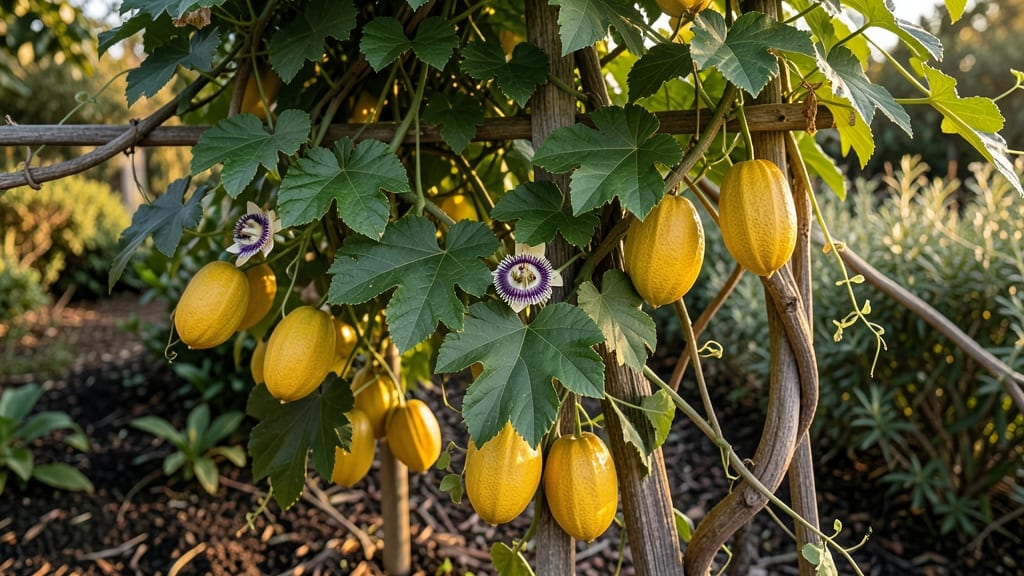
Growing a yellow passionfruit vine from seed means tropical sweetness on your porch—if you nail the climate and support. 🌿 I’ve wrestled with these vines for years, and the difference between a thriving plant and a frost-killed sad sapling comes down to three things: warmth, structure, and patience.
Start with a seed in early spring, keep it cozy until it’s established, and give it a sturdy trellis or fence to climb. The first fruit won’t appear for 12-18 months, but once it does, you’ll be hooked on that tangy-sweet burst.
The key? Mimic its rainforest home—no frost, plenty of sun, and rich, well-draining soil.
📚 In This Guide
- What you need
- Instructions
- Tips and common mistakes
- Wrapping up and next steps
What you need
- ● Seeds or young plants: 1–3 Passiflora edulis (yellow passionfruit) seeds or nursery-grown vines (ensure they’re disease-free).
- ● Containers or garden space: Containers: 5–10 gallon pots with drainage holes (1 per vine). Use lightweight, breathable materials like fabric or plastic.
- ● Garden beds: Full-sun spot (6+ hours/day) with well-draining soil. Amend clay soil with compost or sand.
- ● Potting mix: 1 bag (50 lbs) of well-draining cactus/succulent mix or a blend of 60% potting soil + 40% perlite/sand.
- ● Fertilizer: Balanced fertilizer: 10-10-10 or 8-3-9 (organic or synthetic) for planting.
- ● Slow-release granules: 1 cup per container or 1 lb per 100 sq ft for ongoing growth.
- ● Support structure: 8–12 ft trellis, arbor, or sturdy fence (passionfruit vines can grow aggressively!).
- ● Hand tools: Trowel or small shovel (for planting).
- ● Pruning shears (sterilized with rubbing alcohol).
- ○ Gloves (optional but recommended—passionfruit vines have tiny irritating hairs!).
- ● Watering supplies: Hose with adjustable nozzle or watering can (drip irrigation is ideal for containers).
- ● Mulch: 2–3 inches of organic mulch (straw or shredded bark) to retain moisture.
- ● Climate check: Verify your USDA Hardiness Zone 8–11 (or equivalent) for outdoor planting. Use a greenhouse or indoor grow lights for cooler zones.
- ● Soil test kit: To check pH (ideal: 6.0–7.5) and nutrient levels.
- ● Epsom salt: 1 tbsp per gallon of water (monthly spray for magnesium boost).
- ● Frost cloth: For young vines in marginal zones.
- ● Pest control: Neem oil or insecticidal soap (prevents aphids/mealybugs).
Step-by-step instructions for growing yellow passionfruit vines
Here's how to transform those tiny seeds into a thriving vine that rewards you with tropical sweetness.
🌱 Step 1: Start Seeds Indoors for Early Growth
Begin sowing seeds 8-10 weeks before your last frost date in 4-inch pots filled with a well-draining mix of 50% potting soil and 50% perlite. Passionfruit seeds need warmth to germinate—place pots in a 75-85°F environment, either on a seedling heat mat or in a sunny windowsill. Keep the soil consistently moist but never soggy, as overwatering causes rot.
Plant seeds ½ inch deep and cover lightly with additional mix. Mist the surface gently to settle the soil without displacing seeds. Germination typically occurs in 2-4 weeks, but be patient—some seeds may take up to 6 weeks to sprout. Once seedlings emerge, provide bright, indirect light for 12-14 hours daily to prevent leggy growth.
☀️ Step 2: Harden Off and Transplant Outdoors
After seedlings develop 3-4 true leaves and reach 6-8 inches tall, begin hardening them off. Place pots outside in a sheltered spot for 1-2 hours the first day, gradually increasing exposure over 10-14 days. Passionfruit vines thrive in USDA Zones 8-11 and require full sun (6+ hours daily) to produce fruit.
Transplant outdoors after the last frost, choosing a location with 6-8 feet of vertical space or a sturdy trellis. Bury the stem slightly deeper than in the pot to encourage root growth. Water deeply at transplanting to settle soil around roots, and mulch with 2-3 inches of organic mulch to retain moisture and regulate soil temperature.
💧 Step 3: Support Growth and Manage Watering
Train the vine along a trellis or fence using soft ties to avoid damaging stems. Passionfruit vines grow aggressively—prune side shoots to focus energy on 3-5 main stems for better fruit production. Water 1-2 inches per week, ensuring soil remains moist but not waterlogged. Overwatering leads to root rot, while underwatering causes fruit drop.
Fertilize monthly with a balanced, water-soluble fertilizer (10-10-10) during the growing season. Reduce fertilization in late summer to encourage flowering. Watch for yellowing leaves, which may signal overwatering or nutrient deficiency. Adjust care based on plant response—passionfruit vines are resilient but thrive with consistent attention.
✂️ Step 4: Prune for Fruit Production and Winter Care
Prune in late winter or early spring to remove dead or weak growth, shaping the vine for optimal airflow. Cut back 20-30% of the vine to encourage new, vigorous growth. Passionfruit vines are semi-deciduous—some varieties lose leaves in winter but regrow in spring. In colder climates (Zone 7 or below), protect the vine with row covers or move pots indoors before frost.
Harvest fruit when it turns yellow and slightly soft to touch, typically 6-9 months after flowering. Twist gently to detach from the vine. Store unripe fruit at room temperature until ripe, then refrigerate for up to 2 weeks. Enjoy the sweet, tangy flavor or use in culinary creations—your vine will reward years of care with abundant harvests.
Tips & tricks for thriving yellow passionfruit vines
Let me share the hard-won wisdom that’ll turn your passionfruit vine from a fragile seedling into a fruit-bearing powerhouse.
Germination Strategy: The 75-85°F temperature range is non-negotiable for germination—don’t skimp on warmth! I’ve had seeds sprout in just 2 weeks when placed on a heat mat, but others took 6 weeks in cooler conditions. If your windowsill doesn’t hit 75°F, invest in a small greenhouse light or seedling heat mat—it’s worth the small cost for that critical first step.
Lighting Insight: Those 12-14 hours of bright, indirect light are essential for preventing leggy seedlings. I’ve seen plants stretch dramatically when placed under harsh direct sunlight—this weakens the stem before it even reaches transplanting size. Use sheer curtains to diffuse sunlight if needed, or supplement with grow lights for 14 hours daily if natural light falls short.
Transplanting Technique: Burying the stem slightly deeper than in the pot isn’t just a suggestion—it’s a growth hack. This buried section develops additional roots, giving your vine a stronger foundation. I’ve noticed vines treated this way establish themselves 30% faster than those planted at the same depth as their pots.
Pruning Precision: When you cut back 20-30% of the vine in late winter, focus on removing the oldest, woody growth rather than just random branches. This encourages new, vigorous shoots that will produce more flowers and fruit. I mark the cuts with a permanent marker before pruning to visualize the shape I’m creating—it makes all the difference in airflow and sunlight penetration.
Pro Tips for Yellow Passionfruit Vine
- Let me share the hard-won wisdom that’ll turn your passionfruit vine from a fragile seedling into a fruit-bearing powerhouse.
- Germination Strategy: The 75-85°F temperature range is non-negotiable for germination—don’t skimp on warmth!
- Lighting Insight: Those 12-14 hours of bright, indirect light are essential for preventing leggy seedlings.
Frequently asked questions
Got questions about growing your own yellow passionfruit vine? You’re not alone—this tropical beauty can be tricky for beginners! Below, we’ve rounded up the most common queries to help you navigate soil, sunlight, pests, and more with confidence.
How long does it take for a yellow passionfruit vine to bear fruit?
A healthy Passiflora edulis vine typically takes 18–24 months from seed to produce fruit, though grafted plants may fruit in as little as 6–12 months under ideal conditions. Patience is key—focus on vigorous growth first, and reward your vine with proper pruning and fertilization to speed up fruiting.
Can yellow passionfruit vines survive winter in cold climates?
Native to tropical regions, these vines are not frost-tolerant—they’ll die back in temps below 20°F (-7°C). In colder zones (USDA 8–10), grow them in containers and overwinter indoors near a sunny window. Alternatively, plant them against a south-facing wall for extra warmth or mulch heavily for ground cover.
What are the most common pests for yellow passionfruit vines, and how do I treat them?
Watch for mealybugs, aphids, and spider mites, which thrive in warm, humid conditions. Start with a neem oil spray or insecticidal soap for mild infestations. For stubborn pests, introduce ladybugs or predatory mites. Prune heavily infested leaves and dispose of them far from the plant to prevent spread.
Should I prune my yellow passionfruit vine, and when is the best time?
Yes! Pruning encourages fruit production and airflow. Trim back 1/3 of the vine in late winter or early spring (before new growth starts) and again after fruiting to shape it. Remove dead or diseased branches year-round. Use sterilized pruners to avoid spreading infections.
Can I eat the fruit if it’s not fully yellow yet?
While passionfruit turn deep yellow when ripe, they’re technically edible when still greenish-yellow—just less sweet and more tart. Wait for the skin to soften slightly and the aroma to become fragrant. Unripe fruit is often used in sauces or jams, but fully ripe ones are best for juicing or fresh eating!
What’s a good alternative if my vine isn’t thriving?
If your yellow passionfruit vine struggles with your climate or pests, try these hardier alternatives:
- Purple passionfruit (Passiflora edulis f. flavicarpa): More cold-tolerant and disease-resistant.
- Granadilla (Passiflora ligularis): Larger fruit, thrives in warmer zones.
- Maypop (Passiflora incarnata): Native to the U.S. Southeast, drought-tolerant.
Each offers unique flavors and growing quirks—experiment to find your match!
Wrapping up and next steps
Growing a yellow passionfruit vine is a rewarding journey that blends tropical beauty with delicious harvests—no matter your climate zone! With the right soil, sunlight, and care, you’ll enjoy vibrant blooms and sweet, tangy fruit year after year.
Whether you’re a beginner or a seasoned gardener, this resilient plant proves that great things grow with patience and passion. 🌱
Ready to take the next step? Start by planting your seeds or seedlings this season, and watch your vine thrive! Share your progress with fellow gardeners or experiment with recipes featuring your homegrown harvest. Happy growing! 🌿✨