
Size
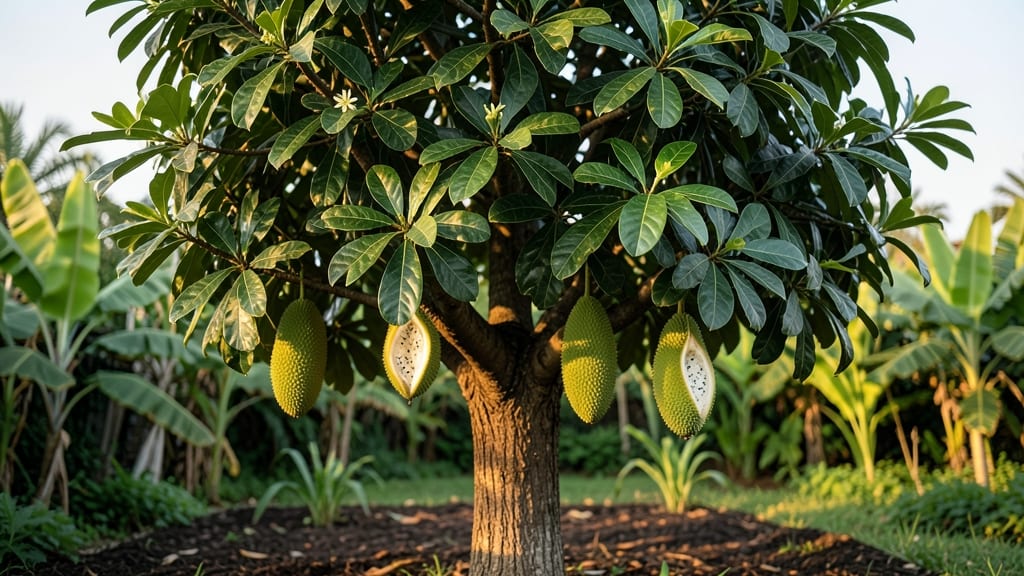
Soursop fruit grows naturally in tropical regions, primarily across Central and South America, the Caribbean, and parts of Southeast Asia. It thrives in warm, humid climates with well-drained soil and requires full sun exposure for optimal growth.
Soursop trees originally flourished in the dense rainforests of the Amazon basin, where they evolved alongside other tropical fruits like papaya and mango. 🌿 Their journey to the Caribbean began with Spanish explorers and colonists, who introduced the fruit to islands like Puerto Rico and Jamaica.
Today, you'll find thriving soursop groves in Florida's subtropical zones and even parts of Africa, thanks to careful cultivation techniques that mimic its native conditions.
The fruit's love for warmth and moisture means it struggles outside 70–85°F ranges—any cooler, and growth slows dramatically. Humidity levels above 60% are ideal, while frost is a death sentence for these delicate trees.
I've seen home growers in California succeed by planting soursop in containers and moving them indoors during winter, proving adaptability with the right care.
💡 In This Article
- Native Habitats and Historical Spread of Soursop Trees
- Climate and Soil Requirements for Growing Soursop
Native habitats and historical spread of soursop trees
The soursop tree's natural habitat traces back to the Amazon rainforest, where its ancestors thrived in the understory of dense, humid forests. 🌿 These trees evolved to grow in partial shade beneath taller canopy trees, receiving filtered sunlight while benefiting from the forest's high humidity and consistent warmth.
The fruit's scientific name, Annona muricata, reflects its spiky exterior and tropical origins—"muricata" meaning "bristly" in Latin, describing the distinctive fruit surface.
Spanish explorers and colonists first introduced soursop to the Caribbean during the 16th century, planting seeds in Puerto Rico, Jamaica, and Trinidad.
The fruit's sweet-tart flavor made it an instant hit, and by the 18th century, it had spread to Florida and Hawaii through trade routes. 🌴 Today, the Caribbean remains a powerhouse for soursop production, with countries like Puerto Rico and the Dominican Republic exporting the fruit globally.
Interestingly, the fruit's natural distribution mirrors that of other tropical fruits like guava and passionfruit, all of which share similar climate preferences.
What makes soursop's spread unique is its adaptability to slightly drier conditions compared to its rainforest cousins. While it still requires high humidity, it can tolerate brief periods of lower moisture levels—around 50-60%—unlike more delicate tropical fruits.
This resilience allowed it to establish itself in coastal regions where rainfall patterns vary more seasonally. The fruit's seeds also germinate easily, making it simpler to cultivate than some other tropical species.
In Southeast Asia, particularly in countries like Thailand and the Philippines, soursop was introduced much later—primarily in the 20th century—through agricultural exchanges. These regions now produce some of the largest soursop fruits, often weighing over 5 pounds, thanks to ideal growing conditions that include volcanic soil rich in minerals.
The fruit's ability to thrive in both the Americas and Asia highlights its remarkable genetic flexibility, though its flavor profile can vary slightly depending on the growing region.
One fascinating aspect of soursop's historical spread is how it became tied to local cultures.
In the Caribbean, it's known as "guanábana," while in Brazil, it's called "graviola." 🌍 Each region developed unique preparations—from juices in Puerto Rico to ice cream in Thailand—demonstrating how this fruit adapts not just climatically but culturally.
The tree's slow growth rate (taking 3-5 years to bear fruit) meant that early cultivators had to be patient, a trait that contributed to its revered status in many tropical communities.
The fruit's natural distribution also explains why you won't find wild soursop trees outside tropical zones. Without human intervention, the seeds struggle to germinate in cooler climates, and the trees can't survive frost.
This geographic limitation is why soursop remains a specialty fruit—its rarity outside tropical regions adds to its allure, much like how durian is prized for its limited growing areas.