
Propagation
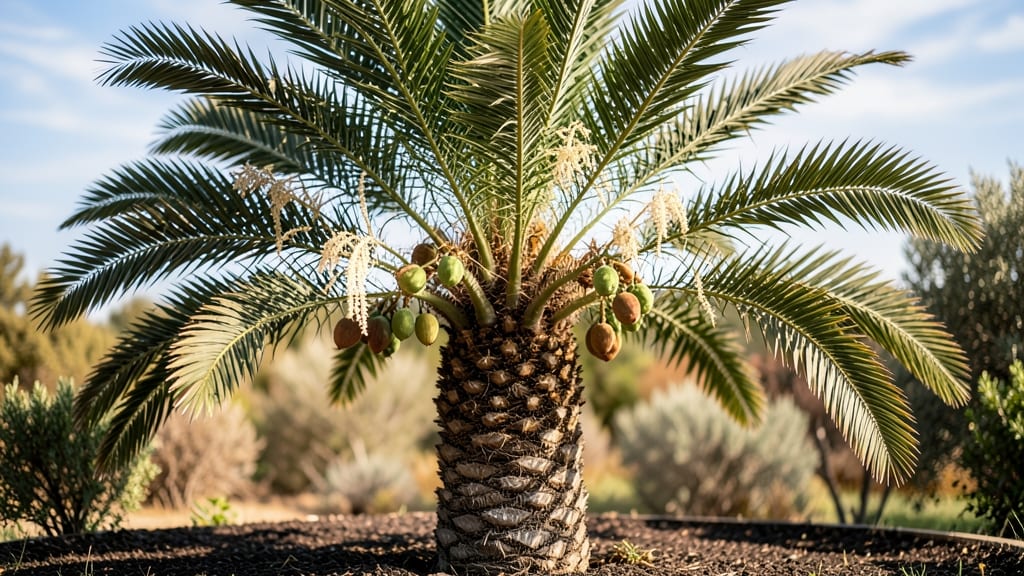
Dates come from fruit where date palm trees' creamy yellow blossoms undergo pollination, forming clusters of woody pits that mature into sweet, edible dates within 3-6 months.
These sweet treats start life as tiny flowers that grow in dense clusters along the palm's fronds. 🌿 The female flowers develop into the familiar date fruit after successful pollination—whether by wind, insects, or human intervention.
What's fascinating is how these hard pits transform into the soft, chewy dates we know, thanks to warm climates and consistent watering. The ripening process can take several months, with the fruit changing color from green to amber or brown as it matures.
Understanding this journey helps explain why dates thrive in desert climates—they've evolved to survive with minimal water while producing energy-rich fruit. This natural process also reveals why commercial date farming often requires careful pollination management, as natural pollinators may not always be sufficient.
The result? A fruit that's both delicious and deeply connected to its environment's unique growing conditions.
💡 In This Article
- How Date Palm Flowers Transform Into Edible Dates
- Growing Date Palms: From Seed to Fruit Harvest
How date palm flowers transform into edible dates
The date palm's journey begins with its striking creamy yellow flowers that emerge in dense clusters called "spathes." These flowers contain both male and female parts, though they're arranged separately—male flowers grow at the top while female flowers develop lower down.
The pollination process is critical: wind, insects, or human intervention transfers pollen from male to female flowers, triggering fruit formation. Without pollination, those vibrant blossoms would simply wither away without producing anything edible.
After successful pollination, the female flowers swell into hard, woody pits that resemble small dates. These immature fruits contain high levels of tannins, giving them a bitter taste that makes them inedible at this stage.
Over 3-6 months, these pits gradually soften as their chemical composition changes—tannins break down while natural sugars like glucose and fructose accumulate. The fruit's color shifts from green to amber or deep brown as it matures, signaling its readiness for harvest.
This transformation requires consistent warmth (80-100°F) and moderate water, which is why dates thrive in desert climates like the Middle East and North Africa.
The ripening process involves complex biochemical changes. As the fruit matures, its cell structure breaks down slightly, creating that signature chewy yet tender texture we associate with dates. The sugar content can reach 60-70% of the fruit's dry weight, explaining their intense sweetness.
What's fascinating is how different varieties develop distinct flavors—some remain soft and caramel-like while others develop a firmer, almost candied texture. This variation occurs because different date palm species (like Medjool or Deglet Noor) have unique genetic profiles that influence their ripening patterns and final composition.
Environmental factors play a crucial role in this transformation. Dates need at least 12 hours of sunlight daily to develop properly, which is why they're often grown in arid regions where water is scarce but temperatures are consistently high.
Too much water can dilute the fruit's natural sweetness and weaken its structure, while insufficient water leads to smaller, less flavorful dates.
The palm tree itself acts as a water regulator—its deep root system extracts moisture from deep underground while its waxy leaves minimize evaporation, creating the perfect microclimate for fruit development.
What most people don't realize is that dates go through multiple ripening stages before reaching the grocery store. Harvesters often pick them when they're still firm and green, then store them in controlled environments where they continue ripening.
This post-harvest process allows for more precise timing—dates can be sold at different stages of ripeness to suit various culinary uses.
The final texture and flavor profile depend heavily on when they're harvested and how they're stored, with some varieties developing a velvety mouthfeel while others maintain a slightly grainy texture.
Consider these key stages in the transformation:
- Pollination: Male flowers release pollen that fertilizes female flowers (3-5 days after flowering)
- Immature Stage: Hard, bitter pits form (first 2 months)
- Ripening Phase: Softening begins as sugars accumulate (3-5 months)
- Harvest Readiness: Color change to amber/brown signals peak sweetness (6 months)
The entire process is a remarkable example of how plants have adapted to thrive in harsh environments while producing some of the world's most beloved fruits. 🌟