
Trees
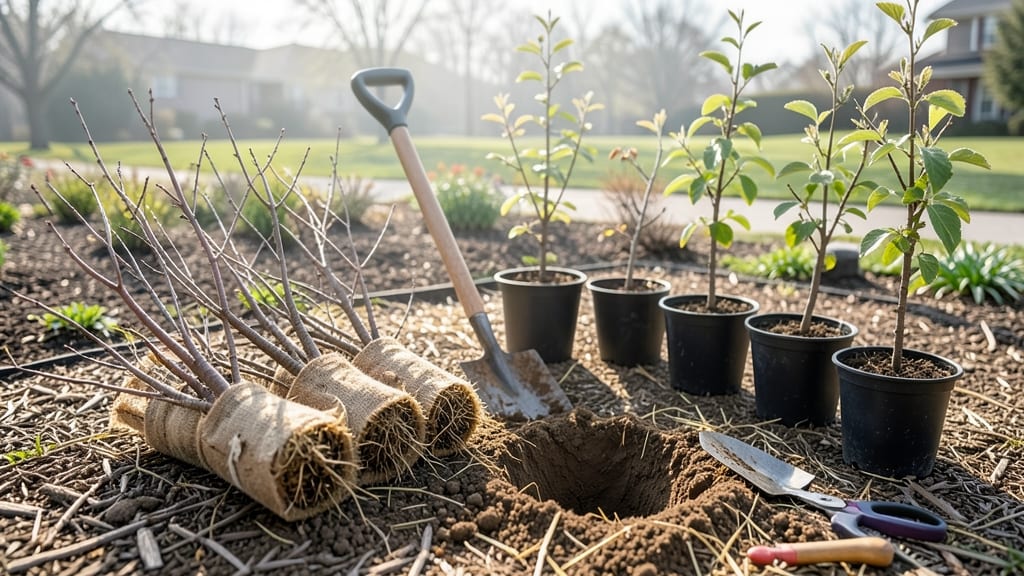
Planting fruit trees in Wisconsin at the right time means the difference between a thriving orchard and a frost-killed sapling 🌱—and the best window is narrower than you might think.
Wisconsin’s unpredictable climate can make or break your fruit tree planting success—but timing it right ensures strong root growth before winter’s harsh freeze. One wrong move, and you’re staring at a 6-foot vine with no fruit to show for it.
Southern Wisconsin’s Zone 5b can start as early as late March, while northern Zone 4b may wait until May. The key? Soil temperature—not just air temperature—and knowing when your last frost date actually is.
Below, I break down the exact planting timeline by zone, the best varieties for Wisconsin’s short season, and how to adjust for late frosts so your trees take root before winter hits.
Wisconsin fruit tree planting timeline by hardiness Zone (5-6)
Wisconsin’s USDA hardiness zones 5a-6b create unique challenges for fruit tree planting, where late spring frosts and harsh winters demand precise timing. In Zone 5a (northern WI), average last frost dates range from May 15-30, while Zone 6b (southern WI) sees frosts ending by April 20-May 5.
Planting too early risks frost damage, but delaying weakens root establishment before winter.
For bare-root trees, the ideal window spans late fall (October-November) through early spring (March-April) when trees are dormant. Container-grown trees offer flexibility, allowing planting up to June 1, though summer heat stress becomes a risk after that.
My strategy? Test soil temperature—it should reach 40°F+ for root growth to begin.
Here’s the critical comparison of planting windows by fruit type and zone, including dormancy periods and frost risk analysis:
| Fruit Type | Zone 5a Planting Window | Zone 6b Planting Window | Dormancy Period | Frost Risk |
|---|---|---|---|---|
| Apples (e.g., Honeycrisp) | Oct 15-Nov 15 or April 15-May 10 | Oct 1-Nov 1 or April 1-May 5 | Nov 1-Mar 15 | High (late May) |
| Cherries (Sweet/Tart) | Oct 1-Nov 15 or April 1-May 1 | Sep 15-Nov 1 or March 15-April 15 | Nov 15-Feb 15 | Very High (late April-May) |
| Peaches/Nectarines | April 15-May 10 (bare root only) | March 20-April 15 | Nov 15-Mar 1 | Extreme (late frosts) |
| Berries (Blueberries, Raspberries) | April 15-May 30 (container preferred) | March 20-April 30 | Nov 1-Apr 1 | Moderate (early May) |
| Plums | Oct 15-Nov 15 or April 1-May 1 | Sep 20-Nov 1 or March 15-April 15 | Nov 1-Mar 15 | High (late April) |
*Frost risk based on 30-year averages for WI zones. Adjust dates 1-2 weeks later for container-grown trees.
For Zone 5a gardeners, I recommend prioritizing fall planting (October-November) for apples and plums—the cooler soil temperatures reduce transplant shock. In Zone 6b, early spring planting (March-April) works well for peaches, but always monitor soil temperature—roots need 45°F+ to establish.
Peaches and nectarines are the most frost-sensitive, so I plant them only in Zone 6b and use frost cloth during bloom. Cherries also need protection, but their late dormancy gives them a slight edge over apples.
Pro tip: Plant near a south-facing wall to create a microclimate that warms up 2-3°F faster than open areas.
Berries like blueberries and raspberries thrive with spring planting (April-May) because their shallow root systems benefit from established soil warmth. I’ve found that container-grown berries planted in June still produce fruit the following year if given consistent watering and mulch to retain moisture.
After planting, mulch heavily (4-6 inches) with straw or wood chips to insulate roots during Zone 5a winters, where temperatures can drop to -20°F. In Zone 6b, a 3-inch mulch layer suffices. Remember: Water deeply before first freeze—hydrated roots survive winter better than dry ones.
For container-grown trees, extend your planting window until June 1, but choose dwarf varieties to reduce heat stress. I’ve had success with Honeycrisp apples in containers, though they’ll need winter protection like burlap wraps and row covers in Zone 5a.
Timing isn’t just about the calendar—it’s about soil conditions. Use a soil thermometer to confirm 40°F+ before planting. In my Zone 5b garden,
How to adjust planting dates for Wisconsin’s unpredictable spring frost
Wisconsin’s late spring frosts can devastate young fruit trees if planted too early. Even Honeycrisp apples or Montmorency cherries need time to establish roots before winter. The key is balancing soil warmth with frost risk—a tricky equation in Wisconsin’s USDA Zones 5a-6b.
Most gardeners aim for late April to early May, but this varies by microclimate. Southern Wisconsin (Zone 6) may see 2-3 weeks earlier planting than northern areas (Zone 5). Using soil thermometers ($15 at garden centers) helps track when temperatures hit 45°F+—the ideal range for root growth.
⚠️ WARNING: Late Frost Damage Planting too early risks frost injury to tender new growth. Wisconsin’s average last frost dates range from May 15 (south) to June 1 (north), but late frosts can occur until mid-May.
For stone fruits (peaches, plums), delay planting until after Memorial Day—they’re especially frost-sensitive. Container-grown trees offer flexibility to adjust planting dates if early springs arrive.
Microclimates play a huge role. South-facing slopes warm faster than low-lying areas, while urban heat islands can add 2-3°F extra warmth. Plant near buildings or fences to create a warmer microclimate—just avoid spots where cold air pools at night.
Test your site for 3 consecutive days with a minimum thermometer to confirm safety.
Container-grown trees give you 30-60 days of planting flexibility. Unlike bare-root trees, they’re not dormant, so you can delay until soil is consistently warm (test with your finger—6 inches deep should feel like a warm bath).
For dwarf varieties, this means planting in late May may still yield full-size harvests the following year.
Protect young trees with frost cloth if planting early. Cover new growth (not the whole tree) during forecasted frosts below 28°F. For peach and plum trees, wrap the trunk with burlap to prevent sunscald later in the season.
Mulch heavily (3-4 inches) with straw or wood chips to insulate roots during temperature swings.
Monitor the National Weather Service’s Wisconsin frost forecasts and use local garden clubs (like the Wisconsin Horticultural Society) for real-time updates. If you miss the ideal window, fall planting (September-October) is a backup—just ensure 6 weeks before first frost for root establishment.
With these strategies, your fruit trees will thrive despite Wisconsin’s unpredictable springs. 🌳