
Trees
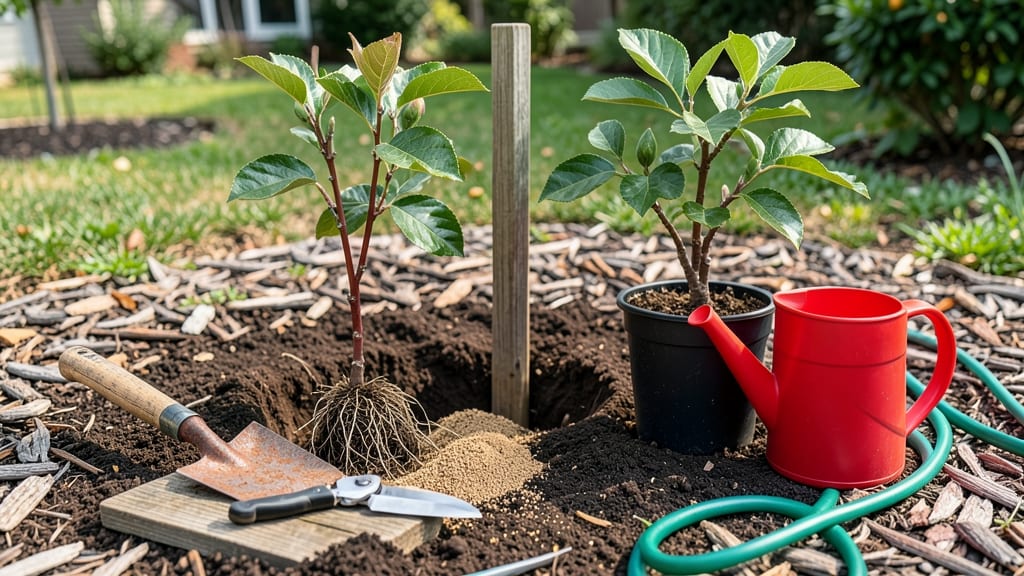
Planting fruit trees in Arkansas at the right time ensures strong root growth before summer’s heat hits—typically between late February and March for bare-root trees or October to November for container-grown varieties.
Get it wrong, and you’re staring at stunted trees or fruit that never ripens. Arkansas’ humid climate and late frosts make timing the game-changer between a thriving orchard and years of frustration.
This guide breaks down the exact planting windows by Arkansas region, from the cooler Ozarks to the hotter Delta, plus soil prep tips to beat Arkansas’ clay-heavy soil and humidity.
You’ll learn which varieties—like the Arkansas Black apple or Elberta peach—thrive here, how to adjust for microclimates, and when to plant for the fastest harvest.
Optimal Arkansas fruit tree planting windows by month (Zone 7b guide)
Arkansas' Zone 7b climate creates unique challenges for fruit tree planting, with late frosts and humid summers demanding precise timing. Unlike northern states, Arkansas' southern counties can plant up to 3 weeks earlier than northern regions. Understanding these windows ensures root establishment before summer heat or winter freezes strike.
The best planting windows depend on whether you're using bare-root or container-grown trees. Bare-root trees thrive when dormant (late winter/early spring), while container-grown trees offer flexibility for fall planting. Below, I break down the month-by-month strategy tailored to Arkansas' variable frost dates and soil conditions.
| Tree Type | Best Planting Window (Zone 7b) | Key Arkansas Considerations | Soil Prep Tip |
|---|---|---|---|
| Peach/Peach Trees | Late February–March (bare-root) November (container) |
Avoid early planting if late frosts predicted; southern Arkansas can plant 2–3 weeks earlier. | Amend clay soil with sand/compost (1:1 ratio) to prevent root rot. |
| Apple Trees | February–March (bare-root) October–November (container) |
Northern Arkansas may need frost cloth until mid-April; choose 'Arkansas Black' for disease resistance. | Test soil pH (6.0–6.5) and add lime if needed. |
| Fig Trees | March–April September–October |
Heat-tolerant but needs well-drained soil; Arkansas’ clay-heavy soils may require raised beds. | Mix gravel into planting hole for drainage. |
| Persimmon Trees | February–March (bare-root) November (container) |
Native to Arkansas; thrives in poor soil but needs full sun. | No soil amendments needed unless extremely compacted. |
| Pecan Trees | February–March (bare-root) November (container) |
Southern Arkansas’ longer growing season suits pecans; northern areas may need winter protection. | Plant in deep, loose soil (pecan roots grow 6+ feet deep). |
For bare-root trees, the dormant season (late winter) is ideal because roots are established but not actively growing. In Arkansas, this typically means February–March for most varieties.
However, container-grown trees can be planted throughout the growing season, including fall, as long as they have 6+ weeks to establish roots before winter.
Arkansas' variable frost dates complicate timing. Northern counties (e.g., Bentonville) often see last frosts in April, while southern counties (e.g., El Dorado) may have warmer winters. Always check the National Weather Service or local Cooperative Extension Service for frost predictions before planting early-blooming varieties like peaches.
Fall planting (October–November) is a smart alternative for container-grown trees. The cooler temperatures reduce transplant shock, and trees benefit from winter rains to establish roots.
However, avoid planting too late—roots need 4–6 weeks to grow before freezing temperatures arrive. In Zone 7b, this usually means no later than November 15.
Soil preparation is non-negotiable in Arkansas, where clay-heavy soils dominate. Before planting, amend the soil with organic matter (compost or aged manure) to improve drainage and aeration.
For peach and apple trees, a slightly acidic pH (6.0–6.5) is ideal, while figs and persimmons tolerate neutral to slightly alkaline soil. Test your soil 6 weeks before planting to allow time for amendments.
Mulching is another critical step for Arkansas’ hot summers. Apply 3–4 inches of mulch (wood chips or straw) around the tree’s base, keeping it 6 inches away from the trunk.
This helps retain moisture and regulate soil temperature, which is especially important during Arkansas’ dry spells or heatwaves. Replenish mulch annually to maintain effectiveness.
If you miss the optimal windows, don’t panic. Container-grown
How Arkansas microclimates affect fruit tree planting (north vs. south county differences)
Arkansas’ diverse geography creates distinct microclimates that dramatically impact fruit tree success. In the cooler Ozark foothills, late frosts linger until mid-April, while the hot Delta regions can experience 100°F+ heat by June.
These differences mean your planting timing, variety choices, and soil prep must adapt to thrive.
Northern Arkansas gardeners in Benton County enjoy longer growing seasons thanks to cooler summers, but must contend with poor drainage in many areas. Meanwhile, southern Arkansas offers extended heat tolerance—ideal for figs and pomegranates—but requires heavy soil amendments to combat clay-heavy soils.
Understanding these regional nuances ensures your orchard thrives.
Northern Arkansas (Ozarks, Benton County)
✅ Pros
- Later last frost (avg. April 15)
- Cooler summers extend growing season
- Lower humidity reduces fungal diseases
❌ Cons
- Shorter season—choose early-bearing varieties
- Poor drainage in many areas; amend with compost
- Limited heat-tolerant options for southern fruits
Central Arkansas (Little Rock, Pulaski County)
✅ Pros
- Balanced climate for most fruit trees
- Rich river valley soils in many areas
- Local nurseries stock Arkansas-adapted varieties
❌ Cons
- Humidity increases disease risk (fire blight)
- Late spring frosts possible; monitor forecasts
- Urban spaces may limit tree size options
Southern Arkansas (Delta, Crittenden County)
✅ Pros
- Longer growing season—plant heat-lovers like figs
- Warmer winters reduce winter damage risk
- Well-drained sandy loam in some areas
❌ Cons
- Extreme heat stress—young trees need shade
- Higher pest pressure (peach tree borers)
- Clay soils dominate—requires heavy amendments
For northern Arkansas, focus on early-season varieties like Arkansas Black apples and Elberta peaches. These handle the cooler springs while still producing reliable yields. In central Arkansas, prioritize disease-resistant rootstocks and mulching strategies to combat humidity-related issues like fire blight.
Southern Arkansas gardeners should plant heat-tolerant varieties such as Celeste figs or Oso Grande pomegranates in well-amended beds. Mix compost and sand into clay soils to improve drainage, and consider drip irrigation to prevent heat stress. Afternoon shade cloth can protect young trees during Arkansas’ brutal summer afternoons.
Regardless of region, test your soil pH (aim for 6.0–6.5 for most fruit trees) and adjust with lime or sulfur as needed. Mulch heavily with wood chips to retain moisture and regulate soil temperature—a critical adjustment for Arkansas’ variable climate. 🌱