
How To
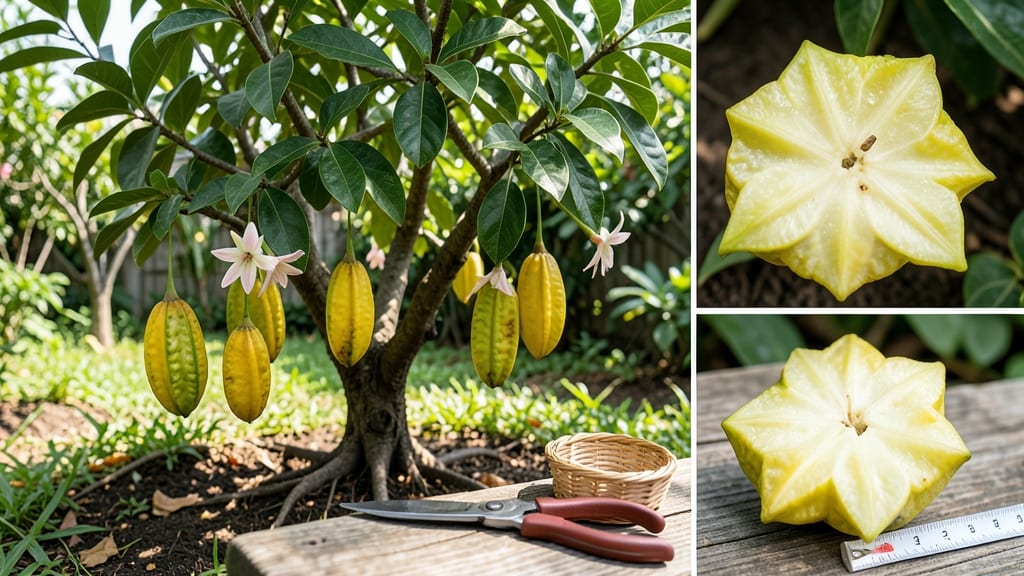
To pick starfruit at the perfect time, watch for color shifts from green to yellow-green or pale yellow 🍈 — this signals peak sweetness and juiciness.
Picking too early means tart, underripe fruit, while waiting too long risks mealy texture and wasted harvests. The difference between a bland bite and a burst of tropical flavor often comes down to one simple test most gardeners overlook.
In General (Tropical/Subtropical Regions) where starfruit thrives year-round, timing depends on your climate zone and variety. A mature tree in USDA Zone 10-12 may produce fruit every 6-12 months, but knowing the exact moment to harvest ensures you never miss the window.
Below, I’ll walk you through color cues, texture checks, and seasonal timing—plus what happens if you pick too soon or too late. By the end, you’ll never second-guess your harvest again.

Starfruit ripeness by color: visual guide to harvest timing
Starfruit ripeness is all about color cues—those green-to-yellow shifts tell you exactly when to harvest. Unlike many fruits, starfruit doesn’t soften dramatically, so visual clues are your best guide.
In tropical climates like Florida or Hawaii, fruit ripens year-round, while subtropical zones (like Southern California) see peak harvests in late spring to fall.
Start by checking the fruit’s base color. Fully green starfruit is unripe and tart, while a mix of yellow-green or pale yellow means it’s ready. The sun-exposed side often yellows first—a natural sign of ripening.
If you’re in a cooler subtropical zone, expect color changes to take 2-4 weeks longer than in tropical heat.
| Ripeness Stage | Color Indicators | Texture & Feel | Harvest Window | Climate Notes |
|---|---|---|---|---|
| Unripe | Deep green, uniform | Hard, light for size | Avoid picking | Common in early spring (subtropical) |
| Early Ripening | Yellow-green patches | Firm but slightly yielding | Pick in 3-5 days | Tropical zones: year-round |
| Fully Ripe | Pale yellow, glossy | Heavy, smooth skin | Harvest immediately | Subtropical: late spring-fall |
| Overripe | Dull yellow, wrinkled | Soft, mushy spots | Avoid—low quality | Common in humid summers |
In tropical regions, starfruit often ripens faster due to heat, so check fruit every 3-5 days once color changes begin. The ‘Golden Star’ variety turns yellow more quickly than ‘Arka Sahan’, which stays green longer. Always twist the fruit gently—if the stem detaches cleanly, it’s ready.
Regional variations matter: In Florida’s heat, fruit may ripen in 6-8 weeks after flowering, while Southern California’s cooler nights slow ripening to 8-10 weeks. Use a fruit ripeness chart (like the one above) to track progress. Pro tip: Morning harvests preserve sweetness longer.
Never pick starfruit based on size alone—small but yellow fruit is ripe, while large green fruit is still tart. The ‘Five Star’ variety (common in home gardens) often shows asymmetrical yellowing, so inspect all sides.
If you’re unsure, cut one open: ripe starfruit has crisp, translucent flesh with minimal fiber.
Overripe starfruit develops a dull, wrinkled skin and a fermented smell—a sign it’s past peak. In humid climates, overripening happens faster, so harvest 2-3 days earlier than the color suggests. Store ripe starfruit in the fridge for 1-2 weeks to slow softening.
For gardeners in USDA Zones 9-10, aim to harvest between June and October for the sweetest fruit. If your tree is young (3 years old), expect smaller yields, but color cues remain the same. Always use clean pruning shears to avoid disease when harvesting.
Remember: Color + texture + climate are your ripeness trio. A yellow-green starfruit in Florida’s heat is ready now, but the same color in Arizona’s dry air may need another week. Adjust your timing based on local weather patterns.
🍈
Texture and taste tests: the ultimate starfruit ripeness check
Starfruit ripeness isn’t just about color—it’s a multi-sensory experience. The perfect fruit yields to gentle pressure, releases a subtle sweet aroma, and delivers a burst of juicy flavor when sliced.
But many gardeners overlook these tactile clues, leading to underripe (tart) or overripe (mushy) fruit. Let’s break down the three key tests I use to guarantee a perfect harvest every time.
First, examine the stem attachment. A ripe starfruit’s stem should detach easily with a slight twist—no stubborn resistance. If it clings tightly, the fruit needs more time. This test is especially critical for homegrown varieties, where flavor development varies by climate.
Pair this with a visual aroma check: Hold the fruit near your nose and sniff. A ripe starfruit emits a faintly sweet, tropical scent—think citrus meets honeydew.
⚠️ WARNING: Common Mistake Alert!
Next, perform the fingerpress test. Gently press the fruit’s side near the stem. A ripe starfruit should feel firm but slightly yielding, like a ripe avocado. If it’s rock-hard, it’s underripe—wait 3–5 days.
If it dents easily, it’s overripe. Pro tip: Compare both sides—uneven firmness often signals uneven ripening, common in shady tree branches.
Taste is the final judge. Cut a small section near the stem end (the sweetest part). A ripe starfruit has crisp, juicy flesh with a balanced sweet-tart flavor. The seeds should be plump and white, not brown or shriveled.
If the flesh tastes bland or overly sour, the fruit wasn’t ready. Overripe fruit may have a mildly bitter aftertaste and excess juice.
Timing matters most in humid climates, where starfruit ripens faster. I’ve seen fruit go from firm to mushy in 48 hours during Florida’s summer. Store unripe starfruit at room temperature to ripen slowly, or refrigerate ripe fruit to extend freshness by 3–5 days.
Avoid ethylene-producing fruits (like bananas) nearby—they speed up ripening and can cause uneven softening.
Mastering these tests ensures your starfruit harvest is consistently sweet and crisp. Start with the stem test, then confirm with aroma and pressure. Soon, you’ll be picking fruit at its peak flavor—every time. Happy harvesting! 🍈