
How To
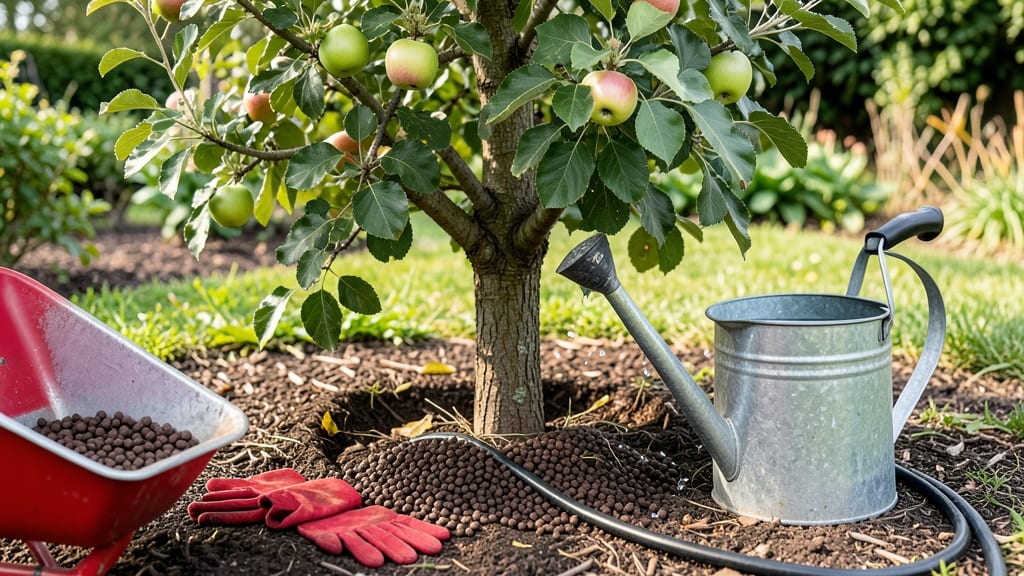
To fertilize fruit tree at the right time means the difference between a burst of blossoms and a tree that struggles to fruit 🍎—and the best window starts earlier than you think.
Fertilizing your fruit trees at the wrong time can stunt growth, reduce yields, or even harm the tree—so timing is everything for a bountiful harvest. Early spring is your first chance, but fall mistakes can set you back for years.
I’ll walk you through the exact months to feed, what to avoid, and how to read your tree’s signals.
Most gardeners focus on spring, but the real game-changer is knowing when to pause—like skipping fall fertilization to protect new growth from frost. We’ll break down the seasonal schedule, including climate tweaks for USDA Zone 6 and beyond, so you never over- or under-feed again.
By the end, you’ll have a clear plan for peak growth, whether you’re nurturing a young sapling or a mature orchard. Ready to turn your fruit tree into a high-yielding powerhouse?
Optimal fertilization timeline for fruit trees by season
Timing your fruit tree fertilization is just as important as choosing the right fertilizer. Applying nutrients at the wrong time can disrupt the tree's natural growth cycle, leading to poor flowering, reduced fruit production, or even tree stress.
The key is to fertilize when the tree is actively growing but before major energy demands like flowering or fruiting. This seasonal approach ensures your tree gets the nutrients it needs without overloading it at critical times.
Most fruit trees follow a three-season fertilization schedule: a heavy feed in early spring, a moderate feed in late spring/early summer, and no fertilization in fall or winter.
This aligns with the tree's natural growth patterns—root development in spring, flowering and fruiting in summer, and dormancy in fall/winter. Let's break down the best times and why they matter for each stage of your fruit tree's life cycle.
🌱 Why seasonal timing matters: Early spring fertilization jumpstarts root growth, while summer applications support fruit development. Fall and winter fertilization can stimulate late-season growth that won't harden off before frost, leaving trees vulnerable to cold damage.
| Season | Fertilization Window | Purpose | Fertilizer Type | Notes |
|---|---|---|---|---|
| Late Winter/Early Spring | February-March (Zones 6-8) | Stimulate root growth and bud break | Balanced (10-10-10) or organic | Apply when buds swell but before leaves emerge |
| Late Spring | May-June | Support flowering and fruit set | Low-nitrogen (5-10-10) or fruit-specific | Avoid high nitrogen after petal fall |
| Summer | July-August | Maintain growth for fruit development | Light application of balanced fertilizer | Use slow-release to prevent overstimulation |
| Fall | None (September-November) | Tree enters dormancy | None | Avoid fall fertilization to prevent late growth |
| Winter | December-February | Tree is dormant | None | Focus on soil prep instead |
For young fruit trees (1-3 years old), you can fertilize more frequently—every 4-6 weeks during the growing season—to support rapid root and canopy development. Use a balanced fertilizer (10-10-10) and apply it in a ring around the tree's drip line, keeping it 6-12 inches from the trunk.
For mature trees (4+ years), reduce frequency to 2-3 times per year and switch to a low-nitrogen formula (5-10-10) after the first year to prioritize fruit production over leafy growth.
One common mistake is fertilizing newly planted fruit trees too heavily. In the first year, focus on root establishment rather than fruit production. Apply a light dose of fertilizer (half the recommended amount) at planting time and again in early spring.
This gives young roots time to adapt without overwhelming the tree. Over-fertilizing can lead to salt buildup in the soil, which damages roots and reduces water uptake.
Climate plays a big role in timing. In warmer climates (Zones 9-11), fruit trees may have two growing seasons—spring and fall.
In these areas, you can add a light fertilization in late summer (August-September) to support fall growth, but stop by October to allow the tree to harden off before winter.
In cooler climates (Zones 3-5), focus on early spring fertilization and avoid any late-season applications that could encourage tender growth before frost.
Always water your fruit tree deeply before and after fertilizing to help nutrients penetrate the soil and prevent root burn. Aim for 1-2 gallons of water per application, applied slowly to the root zone.
This is especially critical in dry climates or during hot summer months, when fertilizer salts can concentrate near the surface and harm roots. Mulching with 2-4 inches of organic mulch (like wood chips or straw) after fertilizing helps retain moisture and regulates soil temperature.
Pay attention to your tree's growth
Best fertilizer types and application methods for different fruit tree varieties
Choosing the right fertilizer type and application method depends entirely on your fruit tree variety. Citrus trees thrive with organic matter like compost, while apple trees benefit from balanced synthetic blends. Let's break down the best options for your specific trees.
For citrus trees, I recommend organic fertilizers like citrus-specific blends or composted manure.
These trees are sensitive to salt buildup from synthetic fertilizers, which can damage their roots over time. Peach and plum trees, on the other hand, respond well to slow-release granules or fish emulsion for steady nutrient release.
- Improves soil health long-term
- Reduces salt buildup risk
- Better for citrus and stone fruits
- Slower nutrient release
- Requires frequent applications
- More labor-intensive to apply
- Fast nutrient availability
- Precise NPK ratios for needs
- Easier to measure and apply
- Can cause salt burn in sensitive trees
- Requires proper watering to prevent buildup
- Less soil improvement over time
When applying fertilizer to apple trees, I use a balanced 10-10-10 synthetic blend in early spring and again after harvest. For peach trees, I switch to organic compost tea every 6 weeks to prevent bacterial spot disease, which thrives in high-nitrogen soils.
For application methods, I always spread granular fertilizers evenly in a 12-inch band around the tree's drip line.
Water thoroughly after application to activate nutrients and prevent leaf burn. Slow-release pellets are my go-to for evergreen fruit trees like figs, as they provide steady nutrition without the risk of over-fertilization.
Remember, young fruit trees need half the fertilizer of mature trees to avoid root burn. Always follow the package instructions and adjust based on your tree's growth stage and soil test results. A little patience goes a long way in building strong, productive fruit trees!
For container-grown fruit trees, I use water-soluble fertilizers every 2-3 weeks during the growing season. These trees have limited root space, so frequent light feedings work best. Always flush the soil with water after fertilizing to prevent salt accumulation in the root zone.