
Pruning
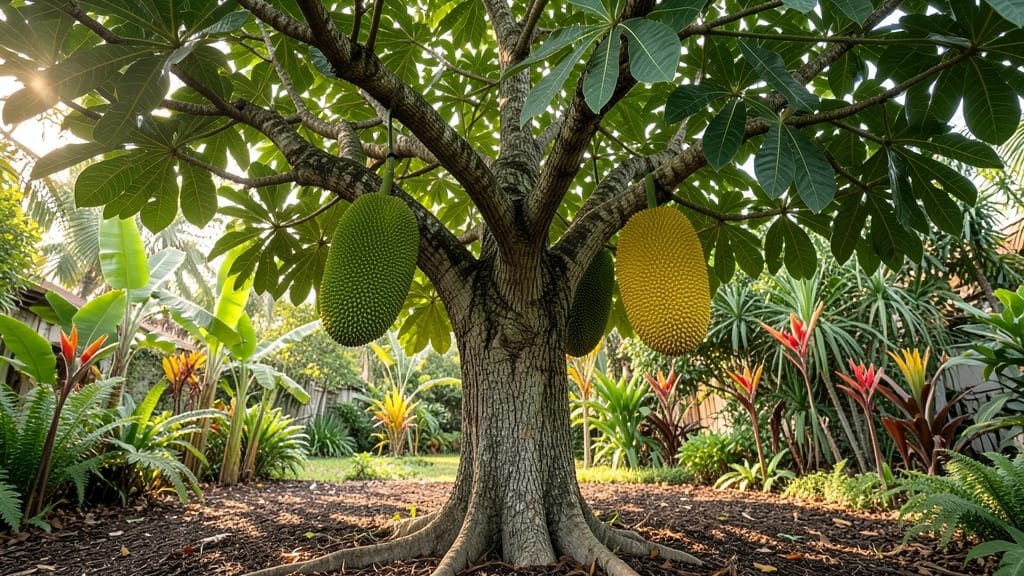
When referring to jackfruit in Spanish, you'll most commonly hear jaca, though fruta de pan (breadfruit) appears in some regions, particularly in Central America and the Caribbean.
This tropical fruit's name reflects its cultural journey across Spanish-speaking regions. 🌍 The term jaca originated from Portuguese jaca, which itself came from Malay jak through colonial trade routes. Meanwhile, fruta de pan literally translates to "breadfruit," highlighting its starchy, potato-like texture when cooked.
In practice, jaca dominates in Latin America and Spain, while fruta de pan pops up more in areas with strong Caribbean influences.
What's fascinating is how this naming reflects broader linguistic patterns. For example, in Mexico and Central America, jaca is nearly universal, while in Puerto Rico or the Dominican Republic, you might hear both terms used interchangeably.
This linguistic diversity makes jackfruit a great case study in how food names evolve through history and geography.
💡 In This Article
- Why Jackfruit’s Spanish Name Varies by Region
- How to Pronounce and Use ‘Jaca’ Correctly in Spanish
Why jackfruit’s Spanish name varies by region
The linguistic diversity behind jackfruit's Spanish names—jaca and fruta de pan—stems from centuries of colonial trade and cultural exchange. The term jaca traces back to Portuguese jaca, which originated from Malay jak, introduced through maritime routes during the 16th century.
Meanwhile, fruta de pan (breadfruit) emerged from its culinary similarities to breadfruit (Artocarpus altilis), a starchy staple in Caribbean and Pacific island cuisines. This dual naming reflects how Spanish-speaking regions adapted foreign foods to their existing linguistic frameworks.
Geography plays a critical role in these variations. In mainland Latin America—particularly Mexico, Colombia, and Venezuela—jaca dominates due to Portuguese colonial influence and direct trade with Southeast Asia.
However, in Caribbean nations like Puerto Rico and the Dominican Republic, fruta de pan persists because of historical ties to breadfruit cultivation in the region.
Even within countries, dialects create nuances: in Costa Rica, you might hear jaca in urban areas but fruta de pan in rural coastal communities where breadfruit is more familiar.
The difference isn’t just semantic—it’s cultural. Jaca carries a more exotic, tropical connotation, while fruta de pan emphasizes its practical, starchy qualities.
For instance, in Puerto Rican mofongo, jackfruit (jaca) is often used as a substitute for breadfruit, but the dish might still be called mofongo de jaca to align with local Spanish. This blending shows how food names evolve to fit culinary traditions rather than strict linguistic rules.
Historical records reveal another layer: Spanish explorers initially described jackfruit as pan de árbol ("tree bread") due to its dense, potato-like texture when cooked. Over time, this evolved into fruta de pan in regions where breadfruit was already established.
Meanwhile, jaca spread through trade networks, becoming the default term in areas with less Caribbean influence. Today, the coexistence of both names highlights how language and cuisine shape each other across borders.
What’s fascinating is how these names reflect broader linguistic patterns. For example, in Andean Spanish, jaca might be pronounced with a softer "j" (like h) due to regional phonetics, while in Caribbean Spanish, the "r" in fruta de pan could be rolled or dropped entirely.
These pronunciation shifts further distinguish the fruit’s identity in different cultural contexts. The key takeaway? Jackfruit’s Spanish names aren’t just labels—they’re snapshots of history, trade, and adaptation.
For food enthusiasts, this linguistic diversity offers a window into how cultures adopt and reinterpret ingredients. Whether you’re cooking with jaca in a Mexican tamale or fruta de pan in a Puerto Rican stew, the name you use tells a story about the region’s culinary heritage. 🌍