
Plants
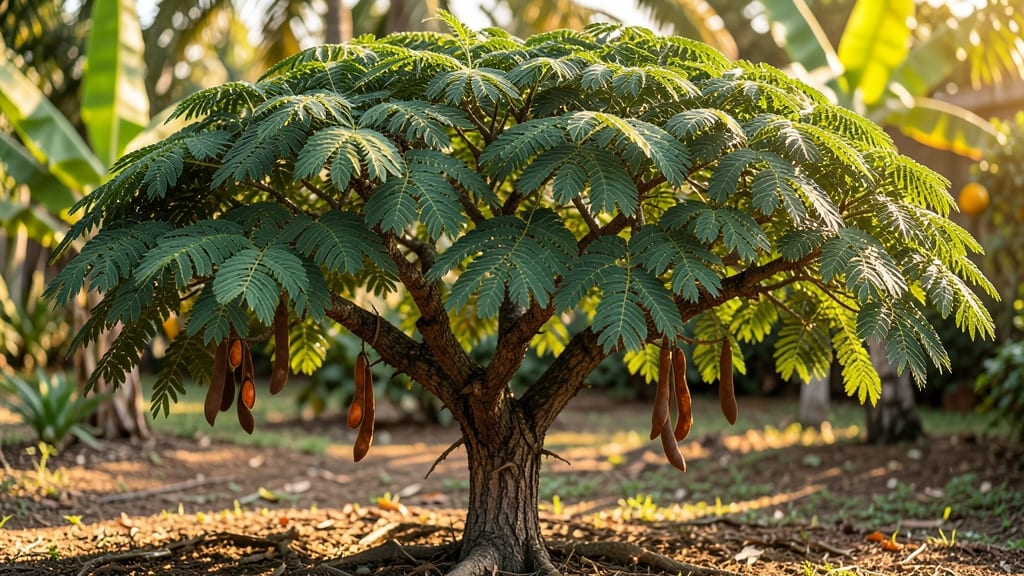
Tamarind fruit looks like a long, brown, pod-like structure—typically 3 to 6 inches—that has a rough, leathery outer shell. When you cut it open, you'll find a sticky, tangy pulp wrapped around large, hard brown seeds, with the flesh turning deep amber when fully ripe and hardening as it dries.
Tamarind pods grow in clusters and start green before turning brown as they mature. 🌱 The outer shell is thick enough to protect the sweet-tart pulp inside, which is why many cultures prefer using dried tamarind—the natural drying process concentrates its flavor.
When fresh, the pulp is soft and translucent, but once dried, it shrinks into a dense, almost waxy block that can be soaked or grated for cooking.
What's fascinating is how the seeds play a role in tamarind's culinary use. 💡 The large, glossy brown seeds aren't typically eaten but are often removed before cooking, leaving behind the prized pulp.
In markets, you'll sometimes find tamarind sold as whole pods, dried blocks, or even as a paste—each form highlights different aspects of its unique appearance and texture.
💡 In This Article
- Tamarind Fruit Anatomy: Pod, Seed, and Pulp Structure
- How to Identify Ripe vs. Unripe Tamarind for Harvesting
Tamarind fruit anatomy: pod, seed, and pulp structure
The tamarind pod's distinctive shape begins as a slender, curved cylinder that resembles a large, elongated bean—typically measuring 3 to 6 inches in length and 1 to 1.5 inches in diameter.
When unripe, the pod appears bright green with a smooth, almost waxy surface, but as it matures, it develops a rough, papery texture and transitions to a deep brown or reddish-brown hue.
This color shift isn't just cosmetic; it signals the pulp's sugar content is converting into complex carbohydrates, intensifying its tangy-sweet profile.
Inside the pod, the real magic happens with the pulp and seeds. The flesh starts as a gelatinous, translucent amber when fresh, clinging tightly to 3 to 12 large, glossy brown seeds that run the length of the pod.
These seeds are surprisingly hard—almost like small pebbles—and contain up to 40% of the pod's weight. The pulp itself is a complex matrix of fibers and mucilage, which gives it that signature sticky texture.
When fully ripe, the pulp's pH drops to around 2.5 to 3.5, explaining its sharp tang that balances perfectly with sweetness in dishes like Thai curries or Mexican candies.
The drying process transforms the tamarind's appearance dramatically. As moisture evaporates, the pulp shrinks and hardens into a dense, waxy block that can be grated or soaked to reconstitute. This natural dehydration isn't just for preservation—it concentrates the flavors by 30-50%, making dried tamarind a flavor powerhouse.
The seeds remain intact during drying, acting as natural dividers that keep the pulp in segments when the pod is split open. This segmented structure is why dried tamarind often looks like it's been cut into irregular chunks rather than a uniform paste.
Botanically, tamarind pods grow in clusters of 10 to 30 along the tree's branches, hanging like nature's own spice pods. The tree itself (Tamarindus indica) can live for centuries, and its pods only ripen after 6 to 8 months of growth.
This slow maturation explains why tamarind trees are often called "the tree of life"—they're incredibly resilient and produce fruit year-round in tropical climates.
The pods' curved shape isn't random either; it helps channel rainwater away from the tree's trunk during monsoon seasons, a clever adaptation that ensures the tree's survival in harsh conditions.
When you compare fresh and dried tamarind, the differences become even more striking. Fresh pulp is juicy and slightly fibrous, with a texture similar to a cross between a mango and a fig, while dried tamarind takes on a leathery, almost chewy consistency when rehydrated.
This transformation is why chefs and home cooks often prefer dried tamarind for cooking—it's more stable, easier to store, and its concentrated flavor works better in sauces and marinades. The seeds, though inedible, play a crucial role in the pod's structure, preventing the pulp from collapsing during drying.
Here's a quick visual comparison to help you recognize tamarind at different stages:
- Unripe: Bright green, firm pod with smooth skin (not yet ready for harvest)
- Ripe (fresh): Deep brown, slightly wrinkled skin with a papery texture (best for fresh pulp)
- Dried: Hardened, dark brown blocks with visible seed segments (ideal for cooking)
The next time you see tamarind in a market or recipe, you'll recognize how its unique anatomy makes it a culinary chameleon—equally at home in sweet chutneys or savory stews. 🌟