
Plants
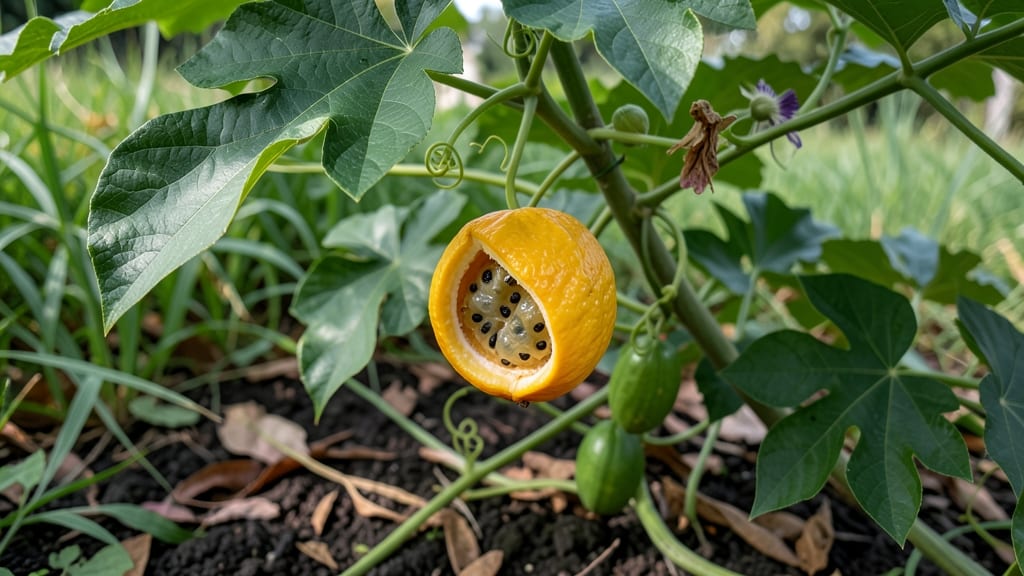
A ripe passion fruit looks like a small, oval-shaped fruit with a wrinkled, leathery skin that turns deep yellow or golden-brown when fully mature, sometimes with slight softness when gently squeezed. The weight feels firm but not rock-hard, and the stem may begin to dry out.
A ripe passion fruit's appearance changes dramatically as it matures. 🌟 The vibrant color shift from green to golden-yellow signals chlorophyll breakdown and carotenoid development, which are natural indicators of ripeness.
When you gently press the fruit, the slight give shows the flesh is juicy and ready to harvest—unlike overripe fruits that feel mushy. The stem drying out is another key clue, as ethylene gas triggers both color change and stem desiccation during ripening.
This fruit's unique texture and color make it easy to spot in markets or on the vine, but timing matters. Harvesting in the morning ensures peak flavor, while storing them at room temperature for a few days can extend freshness.
For gardeners, regular checks for these visual and tactile cues help determine the perfect moment to pick.
💡 In This Article
- Identifying Ripe Passion Fruit by Color and Texture
- Harvesting Tips for Perfectly Ripe Passion Fruit
Identifying ripe passion fruit by color and texture
The color transformation of a passion fruit from green to golden-yellow isn't just visual—it's a botanical process. When ripe, chlorophyll breaks down while carotenoids (like beta-carotene) develop, creating that vibrant hue. These pigments are concentrated in the skin, which also develops a distinctive wrinkled, leathery texture as it matures.
This texture change happens because the fruit's outer layer thickens slightly as it ripens, creating those signature folds that make it look almost like a tiny, wrinkled egg.
The texture shift goes beyond just appearance—it's a tactile indicator of ripeness. A ripe passion fruit should yield slightly when gently squeezed (like pressing a ripe avocado), but not feel mushy.
This firmness comes from the fruit's high water content (about 70-80% of its weight) and the balance of sugars developing inside. The skin's leathery quality also protects the delicate, translucent pulp beneath, which contains those tiny edible seeds.
Ethylene gas plays a crucial role here, triggering both the color change and the softening of the skin as the fruit reaches peak ripeness.
What most people don't realize is how the fruit's weight changes as it ripens. A ripe passion fruit typically weighs between 20-50 grams, feeling substantial in your hand but never heavy.
The weight distribution becomes more balanced—unripe fruits feel lighter and hollow when shaken, while overripe ones may feel heavier due to increased moisture content. This weight shift is a subtle but reliable indicator that the fruit's sugars have fully developed, making it ideal for eating or juicing.
Temperature and sunlight also influence these ripening cues. Passion fruits grown in warmer climates develop their golden color faster, sometimes within 6-8 weeks after flowering, while cooler climates may take 8-10 weeks.
The stem drying out is another key clue—ethylene gas not only triggers ripening but also causes the stem to desiccate, which is why you'll often see it turning brown and brittle.
This happens because the plant redirects nutrients away from the stem as the fruit matures, focusing all its energy on the fruit itself.
Here's what to watch for when examining a passion fruit:
- Color: Even golden-yellow (no green patches) with slight wrinkling
- Texture: Skin gives just slightly when pressed (like a ripe peach)
- Weight: Feels solid but not dense—shakes with a slight rattle (seeds inside)
- Stem: Dry and papery, not green or moist
If you're still unsure, cut one open—ripe passion fruits have bright yellow pulp with a tangy-sweet aroma. The seeds should be embedded in a juicy, almost gel-like membrane. This combination of visual and sensory cues is your best guide to selecting perfectly ripe passion fruits. 💫