
Aphids
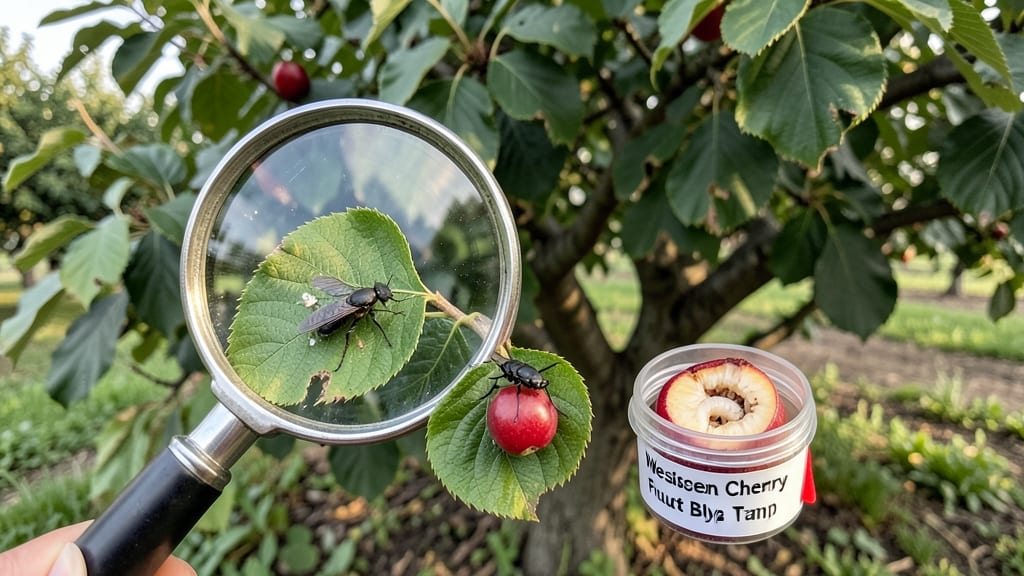
Your cherries are under siege—and you can stop the western cherry fruit fly fast before it ruins your harvest. 🌿 These tiny pests burrow into fruit, turning sweet harvests into rotten messes, but organic traps and smart timing can turn the tide in your favor.
The problem starts when adult flies lay eggs in ripening fruit. Within days, larvae tunnel inside, creating tiny holes and causing fruit to drop prematurely. I learned the hard way: one missed season means no fresh cherries for months.
The good news? Traps and pruning can cut infestations by 90% if you act early. You’ll set up simple, effective traps using red spheres or commercial lures that mimic female flies—flies get confused and get caught.
Combined with removing dropped fruit and pruning infected branches, this method works in Western U.S. and Canadian orchards where these pests thrive. No more wasted harvests. Here’s how to outsmart them before they outsmart you.
How Tiny Invaders Take Over
The western cherry fruit fly (or Rhagoletis indifferens) doesn’t just appear out of nowhere—it’s lured in by a perfect storm of environmental cues, plant chemistry, and human habits.
Understanding these triggers is the first step to stopping its spread. Here’s why these pests become such a nuisance in orchards and home gardens.
Western cherry fruit flies are drawn to ripe, fermenting fruit, especially cherries, plums, and apricots. Their super-sensitive antennae detect volatile organic compounds (VOCs) like ethanol, acetic acid, and esters—chemicals released as fruit softens and sugars break down.
Even a single overripe fruit can signal a feast to nearby flies, triggering a mass migration. 🍒
🔬 Why it matters:
- Early ripening varieties are prime targets because flies time their egg-laying to coincide with fruit softening.
- Damaged or bruised fruit emits stronger fermentation signals, accelerating infestation.
- Wild hosts (like chokecherries or black cherries) act as breeding grounds, increasing local fly populations.
💡 Pro tip: Remove fallen fruit daily during peak fly activity (late summer to early fall) to break the scent trail.
These flies thrive in temperatures between 70–85°F (21–29°C). Warmer climates speed up their life cycle—larvae hatch faster, adults emerge sooner, and multiple generations can develop in a single season. Cool springs delay their arrival, but once summer hits, they explode in numbers. ⏳
🔬 Why it matters:
- Heat waves trigger earlier emergence, extending the infestation window.
- Rainfall after dry spells creates ideal moisture levels for egg-laying.
- Urban heat islands (cities with concrete and pavement) can create microclimates where flies survive longer.
🌡️ Watch for: Peak fly activity typically aligns with cherry harvest season—monitor traps weekly starting in June or July in most regions.
Fruit flies don’t just target wild orchards—they’re opportunistic hitchhikers that exploit human behavior. Poor sanitation, delayed harvesting, and even bird activity (which spreads larvae) create perfect conditions for outbreaks. 🐦
🔬 Why it matters:
- Leaving fruit on trees too long gives flies more time to lay eggs.
- Improper storage (e.g., unwashed harvest bins) can transport larvae to new areas.
- Compost piles or mulch near orchards may harbor overwintering pupae.
- Visitors or wildlife (like raccoons or birds) can spread infestations between properties.
🚫 Avoid these mistakes:
- Never compost infested fruit—it’s a breeding ground.
- Harvest before fruit softens to reduce attractants.
- Wash harvest tools and containers with soapy water to kill eggs.
By disrupting these three key factors—fruit chemistry, weather patterns, and human practices—you can dramatically reduce western cherry fruit fly populations before they become a full-blown crisis. The next step? Learn how organic traps exploit these same triggers to outsmart the flies.
How to Treat Infestations Fast
If you’ve spotted signs of a fruit fly invasion in your orchard or backyard, don’t panic—there are effective, organic solutions to stop them before they ruin your harvest. The key is acting quickly with targeted traps, removal methods, and preventive barriers.
Below, we break down cause-specific fixes so you can tackle the problem head-on, plus pro tips to keep these pests from returning.
---
Cause: Adult flies lay eggs in ripe or overripe fruit, and larvae burrow inside, spreading disease and decay. Fix: - 🍎 Pick and destroy any fruit with holes, punctures, or signs of larvae (wiggling maggots or brown frass). - 🗑️ Do NOT compost infested fruit—seal it in a trash bag and dispose of it far from your garden (flies can still emerge). - 🌡️ For cherries/plums: Check for small exit holes (where larvae pupate). Remove and destroy these immediately.
💡 Pro Tip: Inspect fruit every 2–3 days during peak fly season (late spring to early fall). Early removal = fewer flies!
---
Cause: Adult flies are attracted to fermenting fruit, yeast, or protein baits—you can trick them into traps instead of your trees. Fix: - 🍯 Yeast + Sugar Traps (Best for Adults): - Mix 1 cup sugar + 1 cup water + 1 tbsp active dry yeast in a jar. - Add a few drops of dish soap (breaks surface tension so flies drown). - Hang 3–4 jars per tree (or 1 per 50 sq ft of orchard) 1–2 feet above ground. - 🔄 Replace every 3–5 days (or when liquid stops bubbling). - 🍒 Fruit-Based Traps (For Egg-Laying Lures): - Use overripe cherries, plums, or apples in a fine mesh bag (flies can’t escape). - Hang bags near tree canopies—flies will enter to lay eggs but get trapped. - 🔪 Dispose of bags weekly (burn or deep-bury to kill larvae).
✨ Pro Tip: Place traps downwind of your trees (flies follow scent trails). For large orchards, space traps every 50 feet for maximum coverage.
---
Cause: Flies can’t fly far (up to ½ mile) but land on leaves and fruit to lay eggs. Fix: - 🧵 Fine Mesh Netting: - Cover trees or fruit clusters with 60–80% shade cloth or fruit fly netting (available at garden stores). - Secure edges tightly—even a ¼-inch gap lets flies in! - 📅 Use from first fly sighting until harvest. - 🍃 Reflectant Mulch: - Spread silver or gold reflective mulch around tree bases—flies dislike shiny surfaces and avoid landing. - Works best for young trees or small orchards.
🎯 Pro Tip: Combine netting with sticky traps (yellow or red cards coated in Tanglefoot) to catch adults before they reach fruit.
---
Cause: Fruit flies develop resistance to single methods if overused. Fix: - 📅 Weekly Trap Rotation: - Alternate between yeast traps, fruit traps, and sticky cards every 7–10 days. - 🌱 Beneficial Insects: - Encourage parasitic wasps (like Pachycrepoideus vindemmiae)—they lay eggs inside fruit fly larvae, killing them. - Plant dill, fennel, or carrots nearby to attract natural predators. - 🌡️ Temperature Control: - Cold snaps kill pupae—if possible, prune infested branches in winter and dispose of them.
💡 Pro Tip: Keep a fly activity log—note when traps fill up or fruit shows damage. This helps predict peak seasons and adjust timing.
---
Cause: Even if you eliminate current flies, new adults migrate in from neighboring areas. Fix: - 🍑 Harvest & Clean Up: - Pick all ripe fruit before it falls—flies target windfall fruit first. - Rake and remove leaf litter (larvae pupate in soil). - 🌱 Plant Resistant Varieties: - Some cherry/plum cultivars (like ‘Montmorency’ or ‘Stanley’) are less attractive to flies. - 🚫 Avoid Overwatering: - Soggy soil = more pupation sites. Water deeply but reduce frequency in late summer.
🔥 Final Pro Tip: If you’re in a high-risk area, set up early-season traps in March—first-generation flies emerge early and can wipe out crops before you notice!
--- By combining removal, trapping, and prevention, you can crush infestations fast and protect your fruit—without chemicals. Start with one or two methods, then expand based on what works best for your garden. Your trees (and your sanity) will thank you! 🍒🚫🪰
Frequently asked questions about western cherry fruit flies
What do western cherry fruit fly larvae look like?
Larvae are small, creamy-white maggots about 1/8-inch long with a tapered tail. You’ll spot them wriggling inside punctured fruit or crawling on the tree surface. Look for tiny exit holes (about 1/16-inch wide) where they pupate—these are a dead giveaway!
Can I use store-bought fruit fly traps for western cherry fruit flies?
Yes, but with a twist! Standard traps work, but add cherry or plum juice to the bait for better results. Commercial traps with protein hydrolyzate (like those for Mediterranean fruit flies) are even more effective—just check the label for western cherry fruit fly compatibility.
How long does it take for western cherry fruit fly larvae to mature?
Larvae take 10–14 days to mature inside fruit in warm weather (70–85°F). They then drop to the ground to pupate in soil, emerging as adults in 7–10 days. This means one generation can complete its life cycle in just 3 weeks—fast action is key!
Will bird activity help control western cherry fruit flies?
Birds eat larvae and adults, but they can also spread infestations by carrying larvae to new trees. To balance this, install birdhouses near your orchard (birds prefer nesting over snacking) and remove fallen fruit daily to limit their access to larvae.
Can I reuse last year’s traps if I stored them properly?
No—always use fresh bait each season. Old traps may harbor overwintering pupae or dried residues that attract new flies. Clean containers with soapy water and store empty traps in a freezer for 48 hours to kill any hidden eggs before reuse.