
Succulent
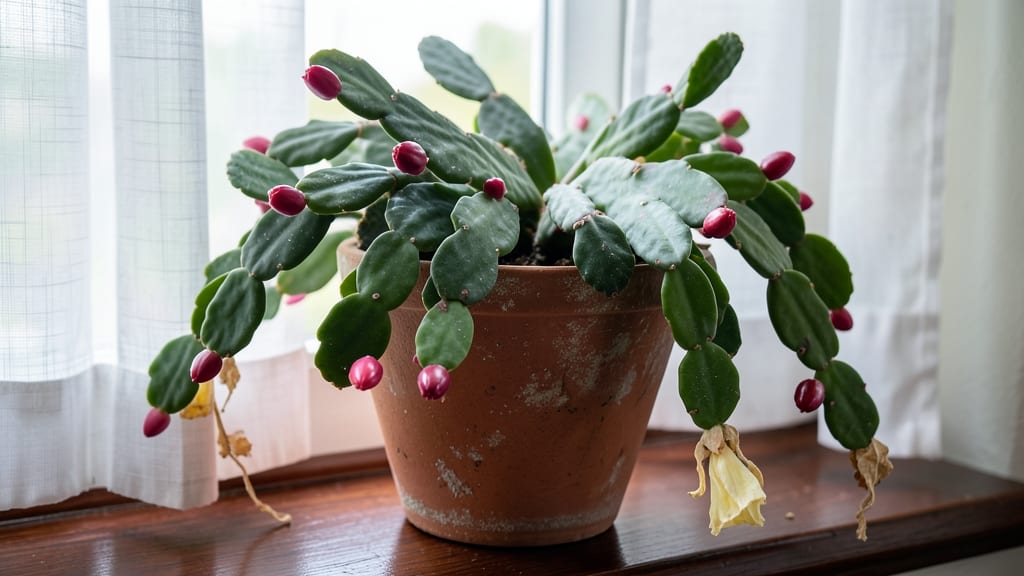
Your Thanksgiving cactus won’t fruit because it’s missing one key ingredient—cool nights. 🌙 These striking holiday plants need a 6-8 week period below 60°F to trigger blooms, but most homes stay too warm year-round. Without this temperature shift, buds form but drop, leaving you with empty stems.
The fix starts in early fall: move your cactus outside (protected from rain) or into a cooler garage where nights dip naturally. If your climate stays mild, simulate cooler temps by placing it near a cold window at night.
Avoid fertilizing during this time—too much nitrogen delays blooming. Once buds appear, keep it consistently moist (not soggy) and away from drafts.
With the right conditions, you’ll see vibrant blooms in 6-8 weeks, followed by edible fruit that tastes like a cross between a berry and a citrus zest.
The harvest is small but festive—perfect for garnishes or jams. Even if your first attempt flops, adjusting light and temperature next year guarantees results.
Pro tip: If your cactus blooms but no fruit forms, hand-pollinate with a soft brush. The fruit itself is non-toxic but tart—best used sparingly in desserts. For repeat fruiting, keep the plant in bright, indirect light and reduce watering slightly in winter.
📚 In This Guide
- What you need
- Instructions
- Tips and common mistakes
- Wrapping up and next steps
What you need
- ● 1 mature Thanksgiving cactus (Schlumbergera truncata) – Choose a healthy plant with vibrant, blooming flowers.
- ● 1 cup fresh fruit of your choice – Think berries (strawberries, raspberries, or blackberries), mango, pineapple, or kiwi for a tropical twist.
- ● ½ cup Greek yogurt or coconut yogurt – For creaminess (dairy or dairy-free).
- ● 2 tbsp honey or agave syrup – Adjust to taste for natural sweetness.
- ● 1 tsp vanilla extract – Enhances flavor without overpowering.
- ● 1 tbsp lemon juice – Brightens the fruit and balances sweetness.
- ○ Optional garnish – Toasted coconut flakes, mint leaves, or a sprinkle of cinnamon for extra flair.
- ● Sharp kitchen shears or a small knife – For harvesting cactus pads (wear gloves if sensitive to spines!).
- ● Mixing bowl – Medium-sized for combining ingredients.
- ● Fork or spoon – For mashing or blending fruit.
- ○ Small saucepan (optional) – If you’re simmering fruit for a compote-style topping.
- ● Serving dish or glasses – For presentation (think rustic wooden boards or elegant dessert bowls).
- ● Plastic wrap or airtight container – To store leftover fruit mixture (if prepping ahead).
Step-by-Step guide to growing Thanksgiving cactus for fruit
Here's how to coax vibrant blooms and fruit from your Thanksgiving cactus—no baking required.
🌱 Step 1: Select and Position Your Thanksgiving Cactus
Choose a healthy Thanksgiving cactus (Schlumbergera truncata), identifiable by its flat, paddle-like segments. Place it in a bright, indirect light spot—think east or west-facing windows. Too much direct sun scorches the pads, while too little light means no blooms. I keep mine near a sheer curtain where it gets morning sun and afternoon shade.
Rotate the pot quarter turn weekly so all segments receive even light. You'll notice new growth leaning toward the light—this is your cue to adjust positioning. Thanksgiving cacti thrive at 65-75°F during the day and slightly cooler at night, mimicking their natural tropical forest habitat.
☀️ Step 2: Simulate Autumn Conditions for Blooming
To trigger blooming, your cactus needs 12-14 hours of darkness daily for 6-8 weeks starting in early fall. Move it to a dark closet or cover with a black plastic bag secured with a rubber band (leave it uncovered during daylight). I use a bathroom with no windows—perfect for creating that long night period.
Watch for buds forming along the segments after about 4 weeks of consistent darkness. These buds are your first sign of success—tiny, tight clusters that will eventually open into vibrant flowers. Keep the soil slightly moist but not soggy during this period, as overwatering stresses the plant and can drop buds prematurely.
💧 Step 3: Care for Blooming and Fruit Development
Once flowers appear, reduce watering slightly—let the top 1 inch of soil dry out between waterings. Overwatering now causes buds to drop or flowers to wilt before opening. I water from the bottom by placing the pot in a tray of water for 10-15 minutes, allowing the roots to absorb moisture without soggy soil.
After blooming, pollinate the flowers by gently brushing them with a soft paintbrush or cotton swab to transfer pollen. You'll know pollination worked when the flowers drop and small, round fruit begin forming along the segments. Keep the cactus in bright, indirect light and maintain 60-70°F temperatures to encourage fruit development.
⏰ Step 4: Harvest and Prepare for Fruit Ripening
Fruit typically ripens 8-12 weeks after pollination, turning from green to bright red or pink. Harvest by gently twisting the fruit from the segment—it should release easily when ripe. I wait until the fruit is fully colored and slightly soft to the touch, as unripe fruit lacks sweetness and has a bitter aftertaste.
Store harvested fruit in the refrigerator for up to 2 weeks to preserve freshness. For immediate use, slice the fruit lengthwise and scoop out the gelatinous interior with a spoon—this is the edible portion used in desserts. The skin is inedible but adds visual appeal to presentations.
🌿 Step 5: Overwinter and Prepare for Next Year's Blooms
After fruiting, reduce watering further—let the soil dry out completely between waterings. Move the cactus to a cool, bright spot (around 55-60°F) for 2-3 months to simulate its natural dry season. This resting period strengthens the plant for next year's blooms.
In early spring, resume regular watering and fertilize lightly with a balanced houseplant fertilizer every 4-6 weeks. You'll notice new growth emerging from the tips of the segments—this is the plant preparing for next autumn's blooming cycle. Prune any leggy or damaged segments with clean scissors to encourage bushier growth.
Tips & tricks for perfect Thanksgiving cactus fruit
Here's what nobody tells you about growing Thanksgiving cactus fruit that'll make all the difference between a few sad berries and a bounty of sweet, vibrant fruit.
Light Strategy: The bright, indirect light requirement is non-negotiable—your cactus won't bloom without it. I've seen people try south-facing windows and end up with scorched pads. Instead, position your plant where it gets morning sun and afternoon shade. If you notice new growth stretching toward the light, it's time to rotate the pot. That quarter turn weekly isn't just for looks—it ensures even growth and prevents lopsided plants that might not bloom as well.
Darkness Timing: Those critical 12-14 hours of darkness must be consistent for the full 6-8 weeks. I learned this the hard way when my cactus got a few extra hours of light during a power outage—it completely disrupted the blooming cycle. Use a black plastic bag secured with a rubber band if you don't have a completely dark space. Just remember to remove it during daylight hours so the plant can photosynthesize.
Watering Wisdom: The subtle shift in watering habits during different stages is where most people go wrong. In Step 3, when flowers appear, you'll want that top inch of soil to dry out between waterings—but don't let it get bone dry. I use the finger test: stick your finger about an inch deep. If it feels dry, it's time to water. And that bottom-watering technique with 10-15 minutes in a tray? It's a game-changer for preventing soggy soil while ensuring roots get enough moisture.
Pollination Hack: You don't need a fancy paintbrush—any soft-bristled brush will do, even an old makeup brush from your bathroom. The key is gentle pressure to transfer pollen without damaging the delicate flowers. I've had success using a cotton swab too, but be careful not to press too hard. Watch for those tiny fruit bumps forming along the segments—they're your reward for successful pollination and the first sign of your harvest to come.
Pro Tips for Thanksgiving Cactus Fruit
- Here's what nobody tells you about growing Thanksgiving cactus fruit that'll make all the difference between a few sa...
- Light Strategy: The bright, indirect light requirement is non-negotiable—your cactus won't bloom without it. I've see...
- Darkness Timing: Those critical 12-14 hours of darkness must be consistent for the full 6-8 weeks. I learned this the...
Frequently asked questions
Got questions about harvesting, prepping, or serving your Thanksgiving cactus fruit? You’re not alone! Here are answers to the most common queries—because even the best desserts deserve a little extra care.
Can I eat Thanksgiving cactus fruit raw?
The fruit is edible raw, but it’s much more flavorful when cooked or baked into desserts. Raw, it’s tart and slightly fibrous—think of it like a cross between a pear and a raspberry. For the best taste, simmer it with sugar or blend it into syrups, jams, or sauces. Our recipe sweeteners it perfectly!
How long does it take for the Thanksgiving cactus to produce fruit?
Patience is key! With proper care (bright, indirect light and cooler temps at night), your cactus may bloom 6–8 weeks after flowering. The fruit itself takes 4–6 weeks to ripen once the flower falls off. Pro tip: Use a toothpick to gently pollinate flowers if you want fruit—this mimics bees and boosts success!
What’s the best way to store Thanksgiving cactus fruit?
Fresh fruit lasts 3–5 days in the fridge, sealed in a container. For longer storage, freeze it whole or pureed—perfect for smoothies or baking later. Avoid washing until ready to use, as moisture speeds up spoilage. Need to preserve it? Try making jam or drying slices!
Can I substitute Thanksgiving cactus fruit in other recipes?
Its tropical-tart flavor works in:
- Cakes/pies: Replace 1 cup of berries with pureed fruit + extra sugar.
- Cocktails: Muddle with rum or tequila for a festive twist.
- Oatmeal: Stir in a spoonful for a zesty breakfast boost.
Why isn’t my Thanksgiving cactus fruiting?
No fruit? Check these fixes:
- Temperature: Needs 50–60°F nights to trigger blooming.
- Light: Move it to bright, indirect light (south-facing window).
- Water: Let soil dry completely between waterings—overwatering stresses the plant.
- Age: Younger plants (under 3 years) may not fruit yet.
Wrapping up and next steps
Your Thanksgiving cactus fruit isn’t just a dessert—it’s a celebration of simplicity, flavor, and holiday cheer! 🎉 With just a few ingredients and zero baking, you’ve unlocked a show-stopping treat that’s perfect for sharing (or keeping all to yourself—no judgment!).
Whether you’re a seasoned chef or a kitchen newbie, this recipe proves that elegant desserts don’t require complexity.
Now that you’re armed with tips, tricks, and answers to common questions, it’s time to get creative!
Try swapping out flavors, experimenting with garnishes, or even turning this into a make-ahead project for your Thanksgiving spread. Grab your cactus fruit, roll up your sleeves, and let the magic happen—your taste buds (and guests) will thank you!