
Diseases
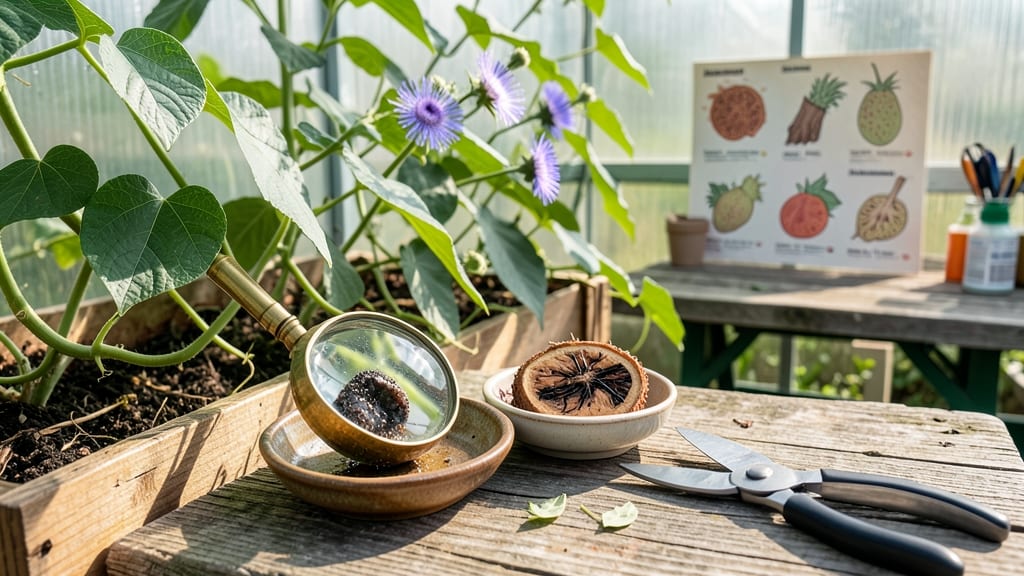
Passion fruit stem diseases turn your vines into a sad, wilted mess if you miss the early signs. 🌱 I've seen healthy plants collapse in weeks from woodiness or bacterial blight—both of which start with tiny, almost invisible symptoms.
The key is catching them before they spread, because once they're deep in the stem, your harvest is at risk.
These diseases thrive when vines are stressed—too much rain, poor airflow, or overcrowded plants create the perfect breeding ground. Woodiness causes stems to harden and crack, while bacterial blight leaves water-soaked spots that ooze when you touch them.
The good news? Organic treatments like copper sprays and proper pruning can stop them in their tracks if you act fast.
With early detection, you'll save your vines and keep your fruit production strong. I've pulled plants back from the brink using simple sanitation (cleaning tools with rubbing alcohol) and targeted pruning to improve airflow.
The difference between a struggling vine and a thriving one often comes down to what you do in those first critical weeks.
This works for both backyard growers and commercial operations—just adjust the scale. The principles stay the same: watch for symptoms, act quickly, and keep your vines healthy year-round. Let's get those passion fruits back on track!
Root Causes of Stem Troubles
Understanding why passion fruit stems fall prey to diseases is the first step toward prevention. These issues rarely arise from a single factor—rather, they’re often the result of a perfect storm of environmental, biological, and cultural conditions.
Below, we break down the key culprits behind stem diseases in passion fruit, so you can identify and address them before they wreak havoc on your crop.
Passion fruit stems are surprisingly resilient, but extreme or fluctuating environmental conditions can weaken their defenses, making them vulnerable to pathogens.
🌧️ Excessive Moisture & Poor Drainage
Stems thrive in well-drained soil, but overwatering or waterlogged conditions create the ideal breeding ground for fungal pathogens like Phytophthora and Fusarium.
Here’s why: - Oxygen deprivation: Roots struggle to absorb nutrients, stressing the plant and lowering its immunity. - Pathogen proliferation: Fungal spores thrive in damp, stagnant environments, clinging to stems and entering through wounds or natural openings. - Soft rot development: Excess moisture softens stem tissue, making it easier for bacteria (e.g., Erwinia) to invade and cause stem rot.
Actionable fix: Ensure your soil has a sandy loam texture with at least 15% organic matter. Elevate beds slightly or install drainage tiles if your area is prone to flooding.
🔥 Extreme Temperature Swings
Passion fruit stems are sensitive to sudden temperature drops (below 50°F/10°C) or heatwaves (above 95°F/35°C).
These shifts: - Weaken cell walls, making stems more susceptible to cracking or splitting—entry points for infections. - Disrupt beneficial microbial activity in the soil, reducing natural disease suppression. - Speed up pathogen growth: Some fungi (like Colletotrichum) multiply faster in warm, humid conditions.
Pro tip: 🌡️ Use shade cloth (30-50%) during peak summer heat and mulch heavily in winter to moderate soil temperature.
🌬️ High Humidity & Stagnant Air
Stagnant, humid air (especially above 80% relative humidity) creates a disease-friendly microclimate around stems.
This is particularly risky for: - Anthracnose (Colletotrichum gloeosporioides): Spores splash from infected leaves onto stems during rain or overhead irrigation. - Powdery mildew: While more common on leaves, it can spread to stems in closed-canopy plantings with poor airflow.
Solution: Prune for open spacing (6–8 feet between vines) and use drip irrigation instead of overhead watering to keep foliage dry.
Not all stem diseases come from the environment—some are sneaky pathogens lying in wait, triggered by the right conditions.
🍄 Fungal Pathogens: The Silent Stem Saboteurs
Fungi are the #1 cause of passion fruit stem diseases, often introduced via contaminated soil, tools, or infected plant material. Key offenders include:
| Disease | Causal Agent | How It Attacks Stems | Tell-Tale Signs |
|---|---|---|---|
| Phytophthora Stem Rot | Phytophthora nicotianae | Invades through root wounds, then girdles the stem, cutting off water/nutrient flow. | Brown, water-soaked lesions; blackened vascular tissue. |
| Fusarium Wilt | Fusarium oxysporum f. sp. passiflorae | Clogs xylem vessels, causing wilting even when soil is moist. | Yellowing leaves, stem discoloration (pink/brown streaks). |
| Anthracnose | Colletotrichum gloeosporioides | Spores land on abraded stem tissue, germinate, and create sunken, dark lesions. | Raised, circular spots with pink centers. |
Critical note: 🔥 Fusarium and Phytophthora can survive in soil for YEARS—rotating crops with non-host plants (like legumes) is essential.
🦠 Bacterial Threats: The Fast-Spreading Menace
Bacteria move rapidly through wounds or natural openings, often introduced via:
- Contaminated pruning tools (e.g., Erwinia bacteria).
- Splashing rainwater carrying Xanthomonas from infected leaves.
- Insect damage (e.g., thrips or borers creating entry points).
Common bacterial stem diseases:
- Bacterial Blight (Xanthomonas axonopodis): Causes watery, oozing lesions that expand and girdle stems.
- Soft Rot (Erwinia carotovora): Breaks down stem pectin, leading to mushy, foul-smelling collapse.
Prevention: 🧼 Sterilize tools with 70% alcohol between cuts and avoid overhead irrigation during wet conditions.
Even the healthiest passion fruit plants can succumb to stem diseases if growing practices create vulnerabilities.
🪓 Poor Pruning & Physical Damage
- Aggressive pruning without proper sterilization can introduce pathogens.
- Mechanical injury (e.g., from vines rubbing against rough surfaces) creates wounds that pathogens exploit.
- Over-pruning weakens the plant, reducing its ability to fight infections.
Best practice: ⏰ Prune during dry weather, use clean, sharp tools, and avoid heavy-handed cuts near the main stem.
🌿 Nutrient Imbalances: Weak Stems Invite Trouble
Deficiencies in potassium (K), calcium (Ca), or boron (B) weaken stem structure and immunity:
- Low potassium: Reduces cell wall strength, making stems more prone to cracking.
- Calcium deficiency: Causes blossom-end rot-like symptoms on stems (brown, sunken lesions).
- Excess nitrogen: Promotes soft, succulent growth that’s more attractive to pests and pathogens.
Fix: 📊 Conduct a soil test and amend with potassium sulfate or lime (for calcium) as needed. Avoid over-fertilizing!
🐛 Pest Pressure: The Unseen Bridge for Pathogens
Insects like mealybugs, scale, and thrips don’t just feed—they injure stems and spread pathogens on their bodies.
For example: - Mealybugs excrete honeydew, which fosters sooty mold (a fungal growth that blocks sunlight and stresses the plant). - Borers (e.g., Conotrachelus spp.) create tunnels that invite fungal infections deeper into the stem.
Solution: 🎯 Monitor for pests weekly and use neem oil or beneficial wasps (e.g., Encarsia) for natural control.
Most stem diseases don’t strike in isolation—they’re the result of multiple risk factors aligning. For example: 1. Heavy rain (moisture) + poor drainage (environmental) → Phytophthora thrives.
- Weakened plant (nutrient deficiency) + wound from pruning (cultural) → Fusarium invades.
- High humidity (environmental) + mealybug infestation (biological) → sooty mold takes hold.
Key takeaway: 💡 Break the chain by addressing one risk factor at a time—start with drainage, then sanitation, then pest control.
Quick Fixes for Stem Woes
Passion fruit stem diseases can be devastating, but early action is your best defense. Below, we’ve mapped out practical solutions for common causes—from fungal infections to environmental stress—so you can restore your plants to health.
Remember: prevention is easier than cure, so we’ve included tips to keep your passion fruit stems strong long-term.
Cause: Overwatering, poor drainage, or contaminated tools/spreaders. Fix It Fast:
- Prune infected stems immediately 🔪—cut 2–3 inches below the lesion to remove the disease source. Sterilize pruners with 70% rubbing alcohol or a 1:10 bleach-water mix between cuts.
- Apply a copper-based fungicide (like Bordeaux mixture or copper sulfate) every 7–10 days for 3–4 weeks. Spray early morning or late evening to avoid sunburn on leaves.
- Improve airflow by spacing plants 4–6 feet apart and removing nearby weeds or dense foliage.
Prevent Relapse: ✅ Water at the base (avoid wetting leaves) and only when the top 2 inches of soil are dry. ✅ Mulch with straw or wood chips (3–4 inches deep) to reduce soil splashing onto stems. ✅ Rotate crops—don’t plant passion fruit in the same spot for 3+ years.
Cause: Contaminated water, wounds from pruning, or infected plant debris. Fix It Fast:
- Remove and destroy infected plants 🚮—do not compost them. Burn or bury them deep (12+ inches) to prevent spread.
- Disinfect tools and hands with bleach solution (1 part bleach to 9 parts water) before and after handling healthy plants.
- Apply a bacterial inhibitor like copper hydroxide or streptomycin (follow label rates) as a preventive spray.
Prevent Future Outbreaks: ✅ Avoid overhead watering—use drip irrigation instead. ✅ Inspect new plants for stem lesions before adding them to your garden. ✅ Sterilize soil in pots using steam or solarization (cover soil with clear plastic for 4–6 weeks in hot sun).
Cause: Extreme heat, drought, or sudden temperature swings. Fix It Fast:
- Shade young or stressed plants with 30–50% shade cloth during peak sun (10 AM–4 PM).
- Mulch heavily (4–6 inches of organic mulch) to retain moisture and regulate soil temperature.
- Water deeply 2–3 times per week (early morning) to encourage deep root growth.
Prevent Damage: ✅ Choose heat-tolerant varieties like ‘Panama Yellow’ or ‘Sweetie’ if you’re in a hot climate. ✅ Avoid pruning during heatwaves—wait for cooler weather to reduce stress. ✅ Use reflective mulch (like aluminum foil sheets) around the base to deflect excess heat.
Cause: Insects weaken stems, making them susceptible to secondary infections. Fix It Fast:
- Handpick large pests (like borers) with a toothpick dipped in soapy water 🐛.
- Spray with neem oil (1 tsp per liter of water + a drop of dish soap) every 5–7 days for 2 weeks.
- Introduce beneficial insects like ladybugs or parasitic wasps to control mealybugs naturally.
Prevent Infestations: ✅ Inspect plants weekly—catch pests before they spread. ✅ Remove fallen leaves/debris where pests hide. ✅ Use yellow sticky traps to monitor and reduce adult fly populations.
If a stem is soft, oozing, or collapsing, act within 24 hours:
- Trim back to healthy green tissue (avoid gray/brown areas).
- Dust the cut with cinnamon powder (natural antifungal) or sulfur-based fungicide.
- Wrap the wound with plastic wrap (temporarily) to protect it from rain/sun while it heals.
Final Reminder: Consistency is key! Check plants weekly, adjust care based on weather, and act at the first sign of trouble. With these steps, your passion fruit vines can bounce back—and thrive—like never before! 🌱💪
Frequently asked questions
What are the first signs of passion fruit stem diseases I should watch for?
Look for water-soaked spots, dark lesions, or unusual discoloration on stems—these are red flags. Early symptoms include yellowing leaves (often a sign of Fusarium wilt) or cracked, hardened stems (indicating woodiness). Check the base of vines after rain, as moisture triggers fungal spores.
Can I save a passion fruit vine if the stem is already rotting?
It depends on how far the rot has spread. If only the outer layer is affected, prune back to healthy tissue and apply cinnamon powder or copper fungicide. For deep rot, the vine may be beyond saving—remove it immediately to prevent spreading pathogens to nearby plants.
How often should I sterilize pruning tools to prevent stem diseases?
Always sterilize tools before and after each use, especially if you're working with multiple plants. Use 70% rubbing alcohol or a 1:10 bleach-water mix—this kills bacteria and fungi that can hitchhike on blades. A quick wipe between cuts can make all the difference in preventing infections.
Are there organic treatments that work against bacterial stem diseases?
Yes! Copper-based sprays (like copper hydroxide) are effective against bacterial blight and soft rot. For prevention, use neem oil (1 tsp per liter of water) or baking soda spray (1 tbsp baking soda + 1 tsp soap per gallon) every 2 weeks during wet seasons.
Why do my passion fruit stems get woody and hard?
Woodiness develops when stems overmature due to stress—common causes include poor airflow, nutrient deficiencies, or lack of pruning. Thin out vines to improve circulation, and fertilize with potassium-rich compost to strengthen stem structure. Avoid over-pruning, as this can accelerate woodiness.