
Planting
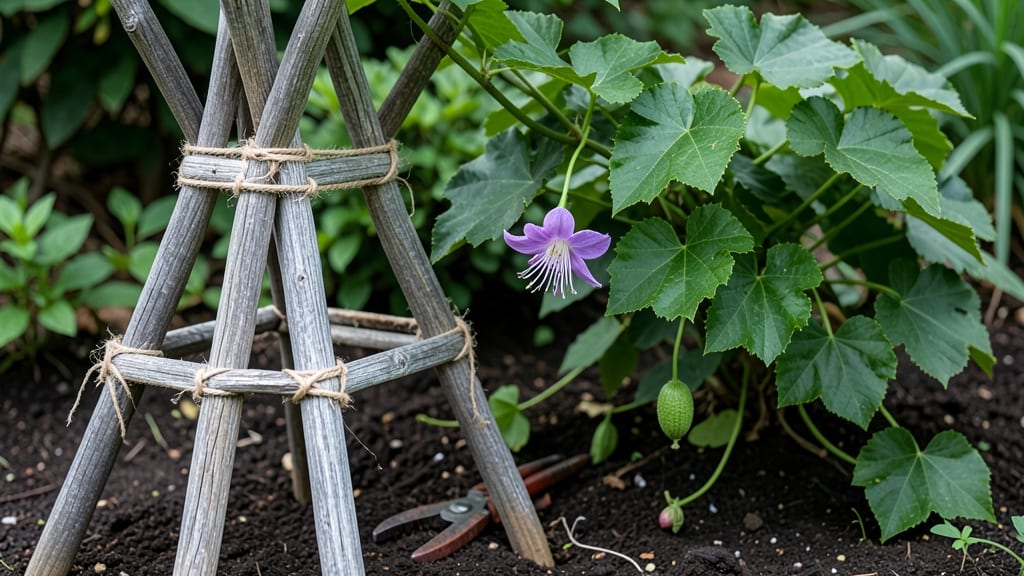
When your passion fruit plant support is sturdy, it transforms sprawling vines into productive, manageable plants that yield fruit you can actually pick without bending over.
I learned this the hard way when my first vine collapsed under the weight of overripe fruit, leaving me with a tangled mess and a harvest on the ground.
The right trellis system isn’t just helpful—it’s essential for heavy fruit production. 🌿 You'll need a strong trellis (wooden lattice or metal cage works best), 10-12 feet of vertical space, and some soft plant ties to guide those whippy vines.
Passion fruit vines grow 10-30 feet long in a single season, so spacing matters—give them 6-8 feet between supports if growing multiple plants. The key is distributing the vine's weight evenly to prevent snapping, especially when fruit swells in late summer.
With proper support, you'll see healthier vines, more uniform fruit ripening, and less disease from crowded, tangled growth. The trellis also makes harvesting easier—no more wrestling with sprawling vines or searching for hidden fruit.
Plus, the structure keeps the plant off the ground, reducing slug damage and improving air circulation for those tropical leaves. Fair warning: passion fruit vines are aggressive climbers, so check their ties weekly during growing season.
In colder climates, you might need to disassemble or protect the trellis during winter, but in warmer zones, the same support can last years with minimal maintenance. Here's how to set it up right from the start.
📚 In This Guide
- What you need
- Instructions
- Tips and common mistakes
- Wrapping up and next steps
What you need
- ● T-posts or metal stakes: 4–6 pieces, 6–8 feet tall (for stability)
- ● Gauge wire (14–16 gauge): 100–150 feet (for horizontal support)
- ● Ziploc ties or plant clips: 20–30 pieces (to secure vines)
- ○ Wooden posts (4x4 or 6x6): 2–4 pieces, 8 feet long (optional for extra strength)
- ● Concrete mix or heavy-duty stakes: For anchoring T-posts (if in windy areas)
- ● Hammer or mallet (for driving stakes)
- ● Wire cutters (for trimming gauge wire)
- ● Measuring tape (to ensure even spacing)
- ● Gloves (for handling wire and stakes)
- ○ Level (optional, for straight alignment)
- ● Sunny location with 6+ hours of sunlight daily
- ● Well-draining soil (amend with compost if needed)
- ● Passion fruit vine (young or mature, ready for training)
- ● Space allowance: 10–15 feet in diameter for full growth
How to build a sturdy trellis for passion fruit vines
Passion fruit vines grow aggressively—here's how to channel that energy into a thriving, supported harvest.
🪴 Step 1: Choose the Right Trellis Design for Your Space
Passion fruit vines need 8-12 feet of vertical support and can weigh 50+ pounds per vine when laden with fruit. A freestanding A-frame trellis or strong wooden arbor works best for most climates. For smaller spaces, a single sturdy post with crossbars at 3-foot intervals will suffice. Avoid flimsy wire or plastic—these bend under the weight of fruit.
I always anchor my trellis into the ground with 4-foot wooden stakes or concrete footings to prevent toppling. The base should be at least 2 feet wide to distribute the vine's weight evenly. If you're in a windy area, add guy wires for extra stability. Measure your space first—passion fruit vines spread 10+ feet wide if unchecked, so plan accordingly.
✂️ Step 2: Assemble the Framework with Heavy-Duty Materials
Use 2x4 lumber for the main frame—it’s strong enough to bear the weight but still lightweight for assembly. Cut two 8-foot vertical posts and three 8-foot horizontal crossbars (one at the top, one in the middle, and one near the base). Secure them with galvanized screws (3 inches long) or stainless steel bolts—rust weakens the structure over time.
For the A-frame design, angle the posts 12-15 degrees outward at the top to create a stable triangle. Reinforce the joints with metal corner braces or additional screws for extra strength. If you're building a freestanding arbor, add diagonal braces between the posts to prevent swaying. Test the frame by gently shaking it—if it wobbles, reinforce it before attaching the vines.
🌿 Step 3: Attach the Vine Support System
Wrap the horizontal crossbars with jute twine or soft garden tape to protect the vines from abrasion. Space the supports 3-4 feet apart along the length of the trellis. For passion fruit, you’ll want two rows of supports: one for the main vine and one for the lateral branches that bear fruit. Use flexible twine or Velcro plant ties to guide the vines upward—never wire, which can damage the bark.
Train the main vine along the center of the trellis, securing it every 12 inches until it reaches the top. Once it hits the apex, let it trail downward naturally—this encourages fruiting. For side branches, weave them through the lower supports to distribute weight evenly. Watch for new growth at the nodes—these are where fruit will form, so keep them well-supported.
💧 Step 4: Secure the Trellis to the Ground
Dig 12-inch-deep holes for the base posts and fill them with concrete mix to anchor the trellis firmly. If you’re using stakes, drive them 18 inches into the ground and attach the trellis frame with heavy-duty straps or brackets. For wind-prone areas, bury the posts at least 2 feet deep and add guy wires anchored to stakes set 4 feet away from the trellis.
Double-check the stability by pulling gently on each corner. If the trellis shifts even slightly, reinforce it before planting. Passion fruit vines grow 20+ feet in a season, so a wobbly trellis will collapse under the weight. Once secured, mulch the base with 3 inches of organic mulch to retain moisture and prevent erosion around the anchors.
☀️ Step 5: Maintain and Adjust as the Vine Grows
Prune lateral branches to 12-18 inches long to prevent overcrowding and improve airflow. Remove any branches growing parallel to the trellis—they’ll never bear fruit and compete with the main vine. Every 2-3 weeks, check the ties and adjust them as the vine thickens. Loosen any that are too tight, as they can strangle the stem over time.
By mid-summer, your passion fruit vine will be heavily laden with fruit, and the trellis will bear its full weight. If you notice the vine sagging between supports, add extra twine or a secondary row of crossbars. Harvest fruit when it’s fully colored and slightly soft to the touch—this ensures maximum sweetness and prevents overloading the trellis.
Tips & tricks for building a sturdy passion fruit trellis
Building a trellis that can handle passion fruit's aggressive growth requires smart planning—and a few key tricks to avoid common pitfalls.
Material Selection Matters: Don't skimp on lumber quality—pressure-treated 2x4s last longer but may contain chemicals harmful to vines. Instead, opt for cedar or redwood, which resist rot and naturally repel pests. The 8-foot vertical posts and three 8-foot crossbars specified create the perfect balance of strength and flexibility. For coastal areas, use marine-grade bolts instead of galvanized screws—they resist salt corrosion better.
Angle Your A-Frame Correctly: The 12-15 degree outward angle at the top isn't just aesthetic—it creates a self-supporting triangle that distributes weight evenly. I learned this the hard way when my first trellis collapsed because the posts were too vertical. Use a carpenter's square to verify the angle before securing joints. This small detail prevents the entire structure from toppling when vines are heavy with fruit.
Vine Training Visual Guide: When training the main vine along the trellis, think of it like threading beads on a string. Secure every 12 inches using soft ties, but leave just enough slack to allow natural growth. The key is to guide, not restrict—the vine needs room to flex in wind. For side branches, weave them through the lower supports in a zigzag pattern. This creates a natural "cradle" that prevents branches from snapping under fruit weight.
Wind Resistance Strategy: If you're in a breezy location, the guy wires mentioned in Step 1 aren't optional—they're essential. Install them at 45-degree angles from the trellis to stakes placed 4 feet away. For extra security, bury the main posts 2 feet deep and use concrete mix instead of just soil. I've seen trellises that looked perfect topple in 40 mph winds because the anchors weren't deep enough—don't make that mistake.
Pro Tips for Passion Fruit Plant Support
- Building a trellis that can handle passion fruit's aggressive growth requires smart planning—and a few key tricks to avoid common pitfalls.
- Material Selection Matters: Don't skimp on lumber quality—pressure-treated 2x4s last longer but may contain chemicals harmful to vines.
- Angle Your A-Frame Correctly: The 12-15 degree outward angle at the top isn't just aesthetic—it creates a self-supporting triangle that distributes weight evenly.
Frequently asked questions
Got questions about keeping your passion fruit vines happy and climbing?
Here are some of the most common concerns—plus quick, practical answers to help you build the perfect support system.
What’s the best height for a passion fruit trellis?
Aim for 8–12 feet tall—this gives vines room to sprawl and produce heavy fruit without sagging. If space is limited, a 6-foot trellis still works, but prune aggressively to control growth. Just ensure the structure is sturdy enough to handle 10+ pounds of fruit per vine!
Can I use a DIY trellis instead of buying one?
PVC pipes, bamboo poles, or even a sturdy wire mesh
work great. For a budget-friendly option, drive 4–6 wooden posts into the ground in a square and weave twine or chicken wire between them. Just ensure the material won’t rot quickly—treat wood with a sealant if needed.
How long does it take for passion fruit vines to climb a trellis?
Vines grow fast—expect them to start climbing within 2–4 weeks if trained properly. With regular pruning and support, they’ll cover the trellis in 3–6 months. Pro tip: Gently tie young vines to the trellis with soft twine to encourage upward growth!
My vines are sagging—what’s the fix?
Sagging usually means the trellis isn’t strong enough or the vines are overloaded. Add cross-bracing to your trellis for extra support, or prune back some fruit to reduce weight. If using a DIY structure, reinforce it with metal brackets or zip ties for stability.
Do passion fruit vines need pruning to stay on the trellis?
Yes! Prune regularly to:
- Remove weak or tangled growth from the base.
- Encourage upward vines toward the trellis.
- Improve airflow to prevent disease.
Wrapping up and next steps
Growing passion fruit with the right support isn’t just practical—it’s a game-changer for healthier vines and sweeter fruit! 🌱 A sturdy trellis system ensures your plants thrive, climbs efficiently, and produces abundantly.
Whether you’re a seasoned gardener or just starting, investing in the right support will pay off in lush, productive vines.
Ready to take the next step? Start by gathering your materials and sketch a simple trellis design tailored to your space. Then, watch your passion fruit plant flourish—one vine at a time! 💪