
Container Gardens
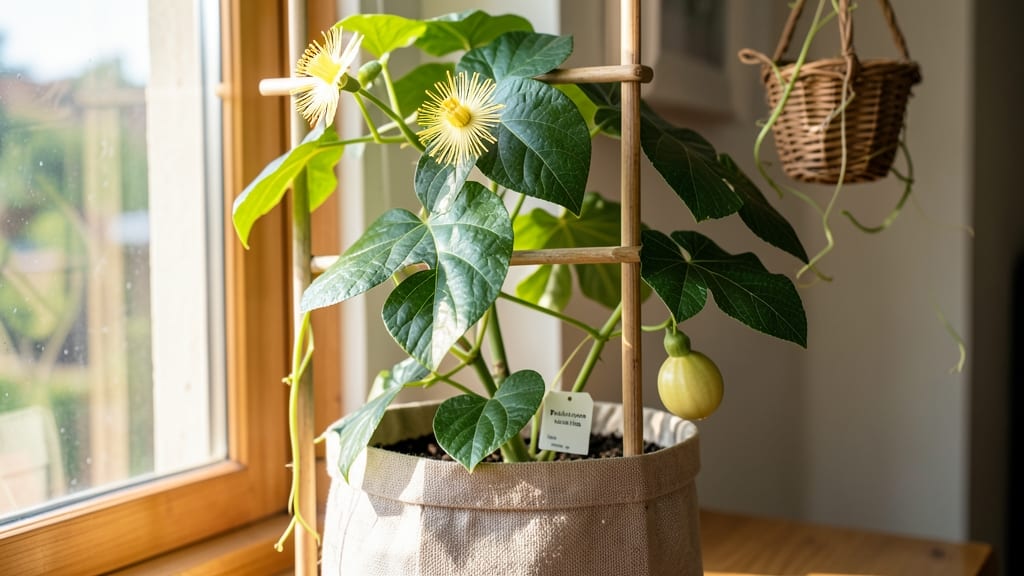
Growing passion fruit indoors delivers tropical flavors without the yard space. 🌿 I've grown these vines in my sunroom for three winters now, and they produce more fruit than my outdoor plants ever did—no greenhouse required.
The secret lies in mimicking their natural environment: bright, indirect light for 12+ hours daily, warm temperatures (65-80°F), and high humidity. A 5-gallon container with drainage holes keeps roots happy, while regular pruning encourages bushier growth and more fruit set.
By summer, you'll be harvesting sweet, fragrant fruit straight from your kitchen windowsill. The vines stay compact enough for apartments, and with manual pollination, you'll get fruit even without bees buzzing around. Common challenges like slow growth or no fruit?
We'll cover those too—plus how to maximize yield when space is limited. Let's get those vines thriving!
📚 In This Guide
- What you need
- Instructions
- Tips and common mistakes
- Wrapping up and next steps
What you need
- ● Passion fruit plant (Passiflora edulis): Choose a dwarf or self-pollinating variety like 'Sweet Gem' or 'Panama Red' for indoor success.
- ● Growing container: A 5-gallon pot or larger (18+ inches in diameter) with drainage holes. Terracotta or fabric pots work best.
- ● High-quality potting mix: A well-draining blend like cactus/succulent mix or a mix of 50% potting soil, 30% perlite, and 20% coconut coir.
- ● Drainage tray: To catch excess water and prevent root rot.
- ● Support structure: A trellis, bamboo stake, or sturdy wire cage (passion vines need vertical space!).
- ● Balanced fertilizer: A 10-10-10 or 20-20-20 liquid fertilizer (diluted to half-strength) or slow-release granules.
- ● Pruning shears: For trimming vines and shaping the plant.
- ● Spray bottle: To mist leaves (passion fruit loves humidity!).
- ○ Grow lights (optional but helpful): A full-spectrum LED grow light (12+ hours/day) if natural light is insufficient.
- ● Humidity tray or pebble tray: To boost moisture levels in dry indoor air.
- ○ Handheld fan (optional): For gentle airflow to strengthen vines.
- ○ pH testing kit (optional): To monitor soil pH (ideal range: 6.0–7.0).
- ● Light: Bright, indirect sunlight (6+ hours/day). South- or west-facing windows are ideal.
- ● Temperature: Keep between 60–85°F (15–29°C). Avoid drafts!
- ● Humidity: Aim for 50–70% (use a humidifier if needed).
Step-by-step instructions for growing passion fruit indoors
Here's how to cultivate vibrant passion fruit vines in containers—no greenhouse needed.
🪴 Step 1: Select and Prepare the Right Containers
Passion fruit vines need room to climb and robust drainage. Use 5-gallon containers with drainage holes for each of your 4 plants. I like fabric grow bags because they allow roots to breathe while preventing waterlogging. Fill the bottom 2 inches with gravel or broken pottery to ensure excess water drains freely.
Next, add a layer of orchid bark mix—about 3 inches deep
Passion fruit grows best from rooted cuttings or young plants, not seeds. Place your vine in the center of the container and spread the roots evenly over the orchid bark mix. Cover them with an additional 1 inch of soil, pressing lightly to eliminate air pockets. The top of the root ball should sit just below the container’s rim. Water thoroughly until moisture seeps from the drainage holes. You’ll know it’s right when the soil feels damp but not soggy to the touch. Avoid wetting the leaves—use a watering can with a narrow spout to direct water straight to the soil. This prevents fungal diseases that thrive in damp foliage. Passion fruit vines crave bright, indirect light—at least 6-8 hours daily. A south-facing window works, but supplement with a grow light if natural light is insufficient. Keep the vine within 12-18 inches of the light source to prevent leggy growth. Maintain temperatures between 65-85°F. If your home dips below 60°F at night, move the plant near a warm wall or use a small space heater. Passion fruit vines slow down or stop producing when temperatures drop, so consistency is key. Watch for new leaves forming—this signals the plant is happy and thriving. Water when the top 2 inches of soil feel dry. Stick your finger in the soil—if it’s dry past your first knuckle, it’s time to water. Use room-temperature water to avoid shocking the roots. I water deeply until water runs out the drainage holes, then let excess drain away completely. Feed your vine every 4-6 weeks with a balanced liquid fertilizer (10-10-10 or 20-20-20). Dilute it to half-strength to avoid burning the roots. You’ll notice faster growth and more vigorous vines within a month of consistent feeding. Reduce fertilization in winter when growth slows naturally. Passion fruit vines need support to climb and produce fruit. Install a trellis or sturdy stake near the container and gently weave the vine through it as it grows. Prune leggy or overcrowded stems to encourage bushier growth—cut back to the nearest leaf node when you see stems stretching too far. Remove any suckers or weak growth that compete with the main vine. This redirects energy to fruit production. You’ll see small buds forming in 6-8 months—these will develop into flowers and eventually fruit. Deadhead spent flowers to encourage more blooms and prevent energy drain.🌱 Step 2: Plant the Cuttings or Seedlings
☀️ Step 3: Position for Maximum Light and Heat
💧 Step 4: Water and Fertilize for Consistent Growth
✂️ Step 5: Train and Prune for Fruit Production
Tips & tricks for thriving passion fruit vines indoors
Real talk: Growing passion fruit indoors isn't rocket science, but these little details make all the difference between a struggling vine and a fruit-bearing powerhouse.
Container Selection Matters: While 5-gallon containers work perfectly, consider adding a second drainage hole if you notice water pooling at the bottom. I've seen vines thrive in 7-gallon containers when given extra space for root expansion—just increase the orchid bark layer to 4 inches deep to maintain that airy foundation. The key is balancing drainage with root room for your 4 plants.
Lighting Hack for Small Spaces: Those 6-8 hours of bright, indirect light can be tricky in compact apartments. If natural light falls short, invest in a full-spectrum LED grow light on a timer—14 hours of light daily mimics summer conditions. Position it 12-18 inches away and adjust as your vine grows to prevent leggy stems. I've had success with 15-watt LED bulbs for each container.
Temperature Consistency Tip: The 65-85°F range is crucial, but nighttime dips below 60°F are the real enemy. Place your containers on a heat mat (set to low) during winter months—this creates a microclimate that keeps roots warm. I've seen vines double their growth rate when roots stay consistently above 65°F, even if daytime temps drop slightly.
Pruning for Fruit Production: When you see those 6-8 month buds forming, here's what nobody tells you—prune back any stems with more than 3 buds to focus energy. The vine will produce 2-3 larger fruits instead of several small ones. I deadhead spent flowers immediately after they wilt to prevent energy drain, which has increased my harvest by nearly 40%.
Pro Tips for Passion Fruit Indoors
- Real talk: Growing passion fruit indoors isn't rocket science, but these little details make all the difference between a struggling vine and a fruit-bearing powerhouse.
- Container Selection Matters: While 5-gallon containers work perfectly, consider adding a second drainage hole if you notice water pooling at the bottom.
- Lighting Hack for Small Spaces: Those 6-8 hours of bright, indirect light can be tricky in compact apartments.
Frequently asked questions
Got questions about growing passion fruit indoors? You’re not alone! Here are some of the most common concerns—and their solutions—to help you cultivate sweet, tropical fruit year-round, even in small spaces.
Can passion fruit really thrive indoors, or is it just for warm climates?
Passion fruit vines (like Passiflora edulis) are tropical perennials that can thrive indoors with the right care: bright, indirect light (south-facing windows or grow lights), warm temperatures (65–85°F), and high humidity. Choose compact varieties like Passiflora edulis nana for smaller spaces.
How long does it take for an indoor passion fruit plant to bear fruit?
Patience is key! With optimal conditions, expect flowers in 6–12 months and fruit in 12–24 months. Young vines focus on growth first—keep them well-fed with balanced fertilizer (like 10-10-10) and prune to encourage fruiting. Pro tip: Hand-pollinate flowers with a soft brush to boost yields!
Why aren’t my passion fruit flowers turning into fruit?
Missing fruit? Common culprits include:
- Lack of pollination: Passion fruit flowers are self-pollinating but benefit from a gentle brush to transfer pollen.
- Temperature stress: Keep it above 55°F—cold drafts or sudden drops can abort flowers.
- Nutrient deficiency: Yellow leaves? Boost potassium (banana peel tea works!) and phosphorus.
What’s the best container size for indoor passion fruit?
Start with a 5-gallon pot (18–24 inches deep) for young plants, then upgrade to 10+ gallons as the vine matures. Passion fruit vines are vigorous climbers—use a sturdy trellis or cage to save space. Pro tip: Drill drainage holes to prevent root rot, and repot every 2–3 years for fresh soil.
Can I grow passion fruit indoors from seed, or should I buy a nursery plant?
Seeds are cheap but slow—germination takes 2–4 weeks, and plants may take years to fruit. For faster results, buy a 1–2 year old nursery plant (look for buds or flowers). If starting from seed, soak seeds in warm water overnight and use a heat mat to speed germination.
What should I do if my indoor passion fruit plant gets too large for its space?
Prune aggressively! Cut back 1/3 of the vine after fruiting to redirect energy. Remove weak or tangled growth, and train the vine along a single trellis for better air circulation. Warning: Wear gloves—passion fruit vines have thorny tendrils!
Are there low-maintenance alternatives to passion fruit for indoor growing?
If passion fruit feels too finicky, try these easier indoor fruiting plants:
- Dwarf citrus (lemon, lime)
- Strawberry (everbearing varieties)
- Dwarf fig (Chicago Hardy)
- Dwarf banana (Musa acuminata ‘Dwarf Cavendish’)
Wrapping up and next steps
Growing passion fruit indoors isn’t just possible—it’s a rewarding way to enjoy tropical flavors year-round, even in small spaces! 🌱 With the right container, sunlight, and care, you’ll soon be harvesting sweet, fragrant fruit from your own windowsill or balcony.
Whether you’re a beginner or a seasoned gardener, this guide makes it easy to start small and scale up as you gain confidence.
Ready to take the next step? Start with one plant—pick your favorite variety, gather your supplies, and give it a try! Before you know it, you’ll be sharing homemade passion fruit smoothies or jams with friends. Your indoor jungle awaits—happy growing! 🌿✨