
Fertilization
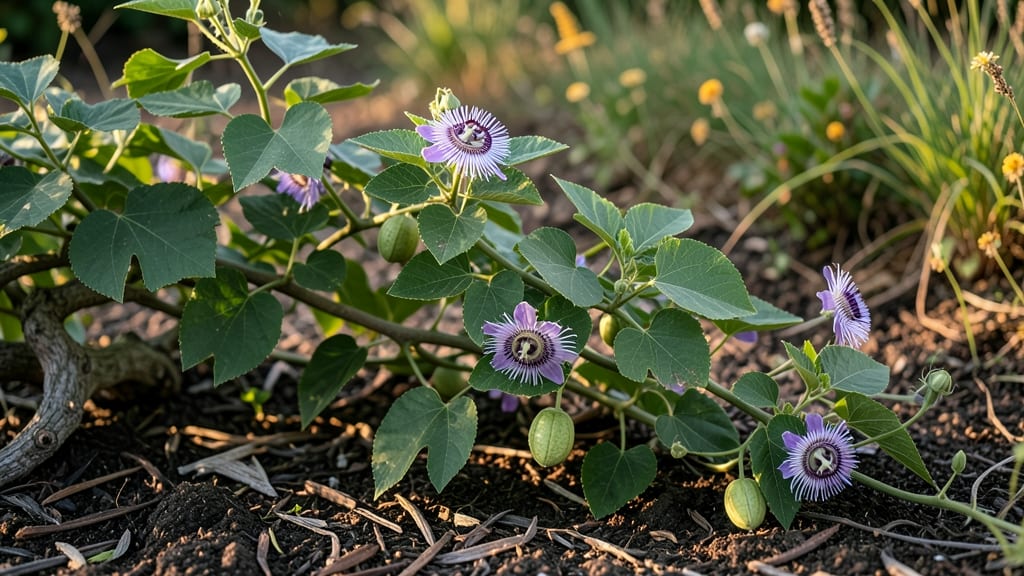
Growing maypop fruit from your Passiflora incarnata vine means waking up to fragrant white blooms and harvesting sweet, custard-like fruit by summer. 🌿 I learned the hard way—my first vine took two years to fruit because I ignored the key conditions it needs: rich, well-draining soil, full sun, and consistent moisture.
The payoff? A vine that produces 50+ fruits in a single season once established.
This vine thrives in USDA zones 5-9, making it perfect for gardeners in the Southeast and Midwest. The secret to fruit production lies in three things: proper pollination (hand-pollinate if bees are scarce), balanced fertilization (too much nitrogen = more leaves, fewer fruits), and strategic pruning to encourage airflow.
My vine now climbs a trellis, producing fruit within 3 months of flowering—and the taste? Like a tropical treat, but native to North America.
Once ripe, the fruit splits open to reveal a sweet, jelly-like pulp that’s perfect for jams, syrups, or fresh eating. The flavor is mild and refreshing, with a texture somewhere between a banana and a mango.
The best part? You’ll attract hummingbirds and butterflies to your garden while you’re at it. Here’s how to set yours up for success.
Whether you’re growing in containers or letting it sprawl across a fence, maypop is one of the most rewarding native plants for fruit lovers. The key is patience—first-year vines focus on roots, but by year two, you’ll have a productive harvest that keeps giving for decades.
Let’s get those fruits growing!
Behind The Scenes Of Maypop Growth
If you’ve ever wondered why Passiflora incarnata (or maypop vine) produces its signature fruit only every few months—or why some plants struggle to bear any at all—there are key biological and environmental triggers at play.
Understanding these causes can help gardeners and farmers optimize conditions for a bountiful harvest. Let’s break down the science behind the timing and challenges of maypop fruit production.
The maypop vine is a short-day plant, meaning it relies on specific light exposure to trigger flowering and fruiting. Unlike plants that bloom year-round, Passiflora incarnata responds to photoperiodism—a natural mechanism where daylight hours signal the plant to shift from vegetative growth to reproductive mode.
- Critical daylight threshold: The vine typically needs 12–14 hours of daylight to remain in vegetative growth. Once daylight shortens (common in late summer or early fall in temperate zones), the plant perceives this as a cue to produce flowers and, eventually, fruit.
- Geographic impact: Plants in southern latitudes (where days are longer year-round) may struggle to fruit unless artificially manipulated with shade cloth or strategic pruning.
- Actionable tip: If your vine isn’t fruiting, try covering it with shade cloth for 6–8 hours daily during peak sunlight months to mimic shorter days. This can trick the plant into blooming earlier.
Maypop vines are warm-season plants, and their fruit production is heavily influenced by temperature—both for growth and pollination. Too much heat or cold can disrupt the process at critical stages.
| Temperature Factor | Effect on Fruiting | Solution |
|---|---|---|
| 🔥 High heat (>90°F/32°C) | Flowers may abort before pollination due to stress, or bees become less active, reducing fertilization rates. | Provide afternoon shade or use drip irrigation to keep soil cool. |
| ❄️ Cold snaps (<50°F/10°C) | New growth or flowers may freeze, halting fruit development. Pollinators (like bees) become inactive. | Mulch heavily in winter or grow in microclimates (e.g., near walls or greenhouses). |
| 🐝 Poor pollinator activity | Even if flowers bloom, lack of bees or hummingbirds means no fruit will form. Maypop relies on cross-pollination. | Plant bee-friendly flowers nearby (e.g., sunflowers, lavender) or hand-pollinate with a brush. |
A maypop vine’s ability to produce fruit hinges on balanced nutrients, particularly during the flowering phase. Deficiencies or excesses in key elements can lead to poor blooming or fruit drop.
- Nitrogen overload: Too much nitrogen (common in fast-release fertilizers) promotes leafy growth at the expense of flowers. Solution: Switch to a low-nitrogen, high-phosphorus fertilizer (e.g., 5-10-10) when buds form.
- Potassium deficiency: Lack of potassium (K) weakens cell walls, causing flowers to drop prematurely or fruit to shrivel. Solution: Apply wood ash or banana peel tea (rich in potassium) during blooming.
- Calcium and boron issues: These micronutrients are critical for fruit development. A deficiency may lead to blossom end rot (blackened fruit tips) or misshapen maypops. Solution: Use calcium nitrate or borax sprays (sparingly) if soil tests confirm a deficit.
Pro tip: Conduct a soil test before fertilizing—maypop vines thrive in well-draining, slightly acidic soil (pH 6.0–7.0). Amending clay or sandy soil with compost can prevent nutrient lockout.
Maypop vines are perennial climbers, and aggressive pruning—or any stress factor—can delay or prevent fruiting. The plant needs a mature canopy to allocate energy to reproduction.
- Hard pruning in spring: Cutting back too aggressively removes next year’s flower buds, which form on old wood. Solution: Prune only after fruiting (late fall/winter) to avoid disrupting the cycle.
- Root disturbance: Transplanting or compacted soil restricts nutrient uptake, weakening the vine’s ability to support fruit. Solution: Plant maypop in permanent locations and mulch to protect roots.
- Pests/diseases: Spider mites, aphids, or fungal issues (like powdery mildew) sap energy. Solution: Use neem oil or horticultural soap to treat infestations early.
Key insight: A healthy maypop vine takes 2–3 years to mature enough for consistent fruiting. Patience and minimal intervention yield the best results!
Practical fixes for maypop vine growth
---
If your Passiflora incarnata—the maypop vine—isn’t producing fruit as expected, don’t worry! With the right adjustments, you can coax your vine into thriving and yielding its sweet, edible harvest.
Below are targeted solutions for common issues, from soil and sunlight to pruning and fertilization. Each fix includes prevention tips to keep your vine healthy long-term.
---
If your vine struggles due to nutrient-deficient soil, it may produce fewer flowers or fruit. Maypop vines thrive in well-draining, slightly acidic soil (pH 6.0–7.0) rich in organic matter.
How to Fix: 🔥 Test Your Soil – Use a home soil test kit or send a sample to a local extension office. If the pH is too high (alkaline), amend with sulfur or peat moss. 🍳 Add Compost – Mix in 2–3 inches of well-aged compost or worm castings into the top 6–12 inches of soil before planting or in early spring. 👨🍳 Use a Balanced Fertilizer – Apply a slow-release, organic fertilizer (like 5-5-5 or 10-10-10) in early spring and mid-summer. Avoid high-nitrogen fertilizers, which promote leafy growth over fruit. 🥘 Mulch Regularly – Spread 2–3 inches of organic mulch (straw, wood chips, or leaves) around the base to retain moisture and improve soil structure.
💡 Prevention Tip: Refresh the mulch annually and avoid over-fertilizing, which can burn roots or lead to excessive foliage with no fruit.
---
Maypop vines need full sun (6–8 hours daily) to flower and fruit. Shady spots lead to weak growth and sparse blooms.
How to Fix: 🔥 Relocate the Vine – If possible, move your vine to a sunnier spot in your garden or container. 🍳 Prune Overhanging Branches – Trim nearby trees or structures blocking sunlight, especially in late winter or early spring. 👨🍳 Use Reflective Surfaces – Place white gravel or a reflective board near the vine to bounce extra light onto its leaves. 🥘 Choose the Right Container – If growing in pots, select a large container (at least 15 gallons) and place it in full sun.
💡 Prevention Tip: Monitor sunlight exposure throughout the growing season—even partial shade can reduce flowering.
---
Aggressive pruning can remove flower buds, while lack of pruning leads to tangled, unproductive vines. Maypop vines benefit from light, strategic trimming.
How to Fix: 🔥 Prune in Late Winter – Cut back dead or weak stems to encourage new growth. Avoid heavy pruning during the growing season. 🍳 Shape the Vine – Train the vine along a trellis or fence, removing crossing or crowded branches to improve airflow. 👨🍳 Preserve Flowering Stems – Leave at least 3–4 feet of healthy growth on fruiting branches, as flowers appear on new wood. 🥘 Deadhead Spent Blooms – Remove faded flowers to redirect energy toward new blooms and fruit development.
💡 Prevention Tip: Prune only when necessary—maypop vines are resilient, and over-trimming can stress the plant.
---
Maypop vines are drought-tolerant but need consistent moisture, especially during flowering and fruiting. Too much or too little water stresses the plant.
How to Fix: 🔥 Water Deeply but Infrequently – Water at the base (not the leaves) to a depth of 6–8 inches, then let the soil dry slightly between waterings. 🍳 Improve Drainage – Amend heavy clay soil with sand or perlite to prevent root rot. 👨🍳 Use Drip Irrigation – A slow, steady watering system reduces runoff and ensures roots get moisture without soggy soil. 🥘 Mulch to Retain Moisture – A 2–3 inch layer of mulch helps regulate soil temperature and reduces evaporation.
💡 Prevention Tip: Check soil moisture with your finger—if the top 1–2 inches are dry, it’s time to water.
---
Common pests like aphids, spider mites, or fungal diseases (e.g., powdery mildew) can weaken your maypop vine, reducing fruit production.
How to Fix: 🔥 Inspect Regularly – Look for chewed leaves, sticky residue (aphids), or white powdery coatings (mildew). 🍳 Use Neem Oil or Insecticidal Soap – Spray affected areas with a natural pesticide to deter pests. Repeat every 7–10 days as needed. 👨🍳 Encourage Beneficial Insects – Plant companion flowers like marigolds or basil to attract ladybugs and bees, which control pests naturally. 🥘 Improve Air Circulation – Prune to reduce crowding and space vines at least 3–4 feet apart to prevent fungal spread.
💡 Prevention Tip: Avoid overhead watering, which can spread diseases. Water early in the day for faster evaporation.
---
With these fixes, your maypop vine should rebound quickly, producing abundant fruit in just a few months. Consistency is key—monitor soil, sunlight, and water needs while keeping pests at bay. Happy growing! 🌿✨
Frequently asked questions
How long does it take for a maypop vine to produce fruit?
Maypop vines typically take 2-3 years to mature enough for consistent fruit production. The first year focuses on root and vine growth, while the second year may produce a few fruits. By year three, a healthy vine can yield 50+ fruits per season once established. Patience is key—don't expect harvests until the vine reaches full maturity.
Can I grow maypop fruit in containers?
Yes! Maypop thrives in containers as long as you use a 15-gallon or larger pot with excellent drainage. Choose a fast-draining potting mix and place the container in full sun (6-8 hours daily). Container-grown vines may fruit slightly later than in-ground plants but can still produce abundantly. Just be prepared to winter-over the pot in cold climates.
What's the best way to pollinate maypop flowers if bees aren't visiting?
Use a small paintbrush to gently transfer pollen from one flower's stamens to another's stigma in the morning when flowers are open. Focus on 3-5 flowers per vine daily during peak bloom. This mimics natural pollination and significantly increases fruit set. For best results, pollinate on dry days when flowers are fully open.
Why are my maypop fruits splitting open prematurely?
Premature splitting usually indicates uneven watering or nutrient imbalances. Keep soil consistently moist but not soggy, and ensure proper potassium levels (apply wood ash or banana peel tea). Avoid heavy nitrogen fertilizers during fruiting. If splitting continues, check for calcium deficiency and apply calcium nitrate. Harvest fruits as soon as they begin splitting to use them.
How do I know when maypop fruit is ripe?
Ripe maypop fruit turns deep purple-black and feels slightly soft when gently squeezed. The skin will naturally split open at maturity, revealing the sweet, jelly-like pulp inside. Harvest fruits just before they split for the best texture. Unripe fruit is hard and greenish, while overripe fruit may be mushy. Taste test a small piece to confirm ripeness!