
Watering
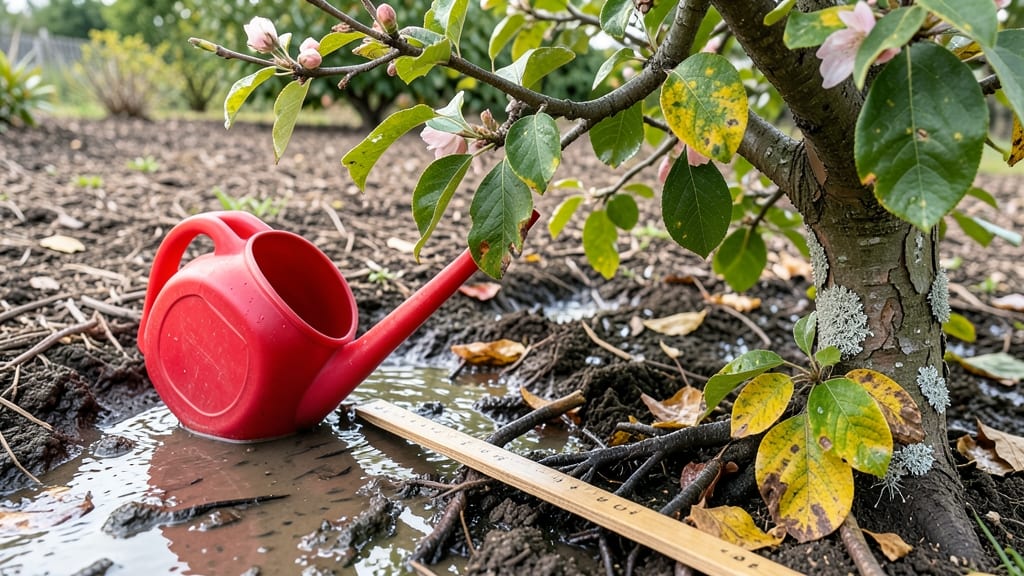
Your overwatered fruit tree’s drooping branches aren’t a death sentence—root rot from overwatering can be fixed. 🌳 I’ve nursed back three trees with these same steps after ignoring the warning signs (yellow leaves, soggy soil) for too long. The key is acting fast before the roots suffocate.
First, stop watering entirely for 7-10 days to let the roots dry out—yes, even if the leaves look crispy. Then, improve drainage by mixing 3 inches of coarse sand or gravel into the top 12 inches of soil, or add a 4-inch layer of wood chips to wick away moisture.
If the trunk feels soft when pressed, root rot has set in and you’ll need to call an arborist.
Once the soil dries, resume watering deeply but only when the top 2-3 inches are bone-dry. Mulch heavily to regulate moisture, and prune any blackened branches—healthy green leaves will return within 2-4 weeks if the roots survive. The hardest part? Breaking the habit of watering on schedule.
Prevention is simpler than rescue: stick your finger in the soil before watering, and remember—fruit trees hate soggy feet. My peach tree, once a sad, wilted mess, now produces bushels of fruit because I learned to let the roots breathe. Here’s how to do it right from now on.
Root Causes Of Overwatering Trees
Fruit trees are resilient, but even they can suffer when given too much love—especially in the form of water. Overwatering disrupts their natural balance, leading to weak roots, fungal infections, and nutrient deficiencies.
Below, we break down the most common reasons why your fruit tree might be drowning in moisture—so you can fix the issue before it’s too late.
If your tree’s roots can’t escape excess water, they’ll suffocate. Compacted or clay-heavy soil acts like a sponge, trapping moisture and cutting off oxygen supply. Without proper aeration, roots rot instead of absorbing nutrients.
- Signs: Yellowing leaves, mushy roots, or a sour smell around the base.
- Why it happens:
- Heavy clay soil retains water like a dam.
- Compacted soil from foot traffic or machinery prevents root expansion.
- Lack of organic matter (like compost) reduces porosity.
- Fix: Amend soil with perlite, sand, or well-rotted compost to improve drainage.
Automatic sprinklers, well-meaning neighbors, or simply not checking the soil can lead to chronic overwatering. Many gardeners assume "more water = better growth," but fruit trees thrive on consistency, not excess.
- Signs: Wilting despite wet soil, leaf drop, or stunted growth.
- Why it happens:
- Ignoring weather—rain + irrigation = double the moisture.
- Watering on a fixed schedule instead of monitoring soil moisture.
- Using shallow watering methods that don’t reach deep roots.
- Fix: Water deeply but infrequently—aim for 1–1.5 inches per week (adjust for rain). Use a moisture meter or the "finger test" (stick your finger 2–3 inches into the soil; if damp, wait).
Young fruit trees or newly transplanted ones have delicate root networks that can’t handle excess water. Their roots need time to establish and spread, but overwatering forces them to compete for oxygen in saturated soil.
- Signs: Slow growth, yellowing lower leaves, or roots that appear black/mushy when checked.
- Why it happens:
- Newly planted trees get watered too soon after transplanting.
- Container-grown trees are watered on the same schedule as mature ones.
- Weak root systems can’t recover from waterlogging.
- Fix:
- For new trees: Water lightly only when the top 1–2 inches of soil are dry.
- Use mulch (2–3 inches) to regulate moisture and protect roots.
- Avoid heavy watering for the first 2–3 weeks post-planting.
Excess moisture creates the perfect breeding ground for root rot and other fungal diseases. Pathogens like Phytophthora or Pythium thrive in waterlogged soil, attacking roots and blocking nutrient uptake.
- Signs: Dark, mushy roots; wilting despite wet soil; or white mold at the base.
- Why it happens:
- Frequent shallow watering keeps the topsoil perpetually damp.
- Poor air circulation (e.g., dense mulch or overcrowded planting).
- Using contaminated water (e.g., from standing puddles or untreated sources).
- Fix:
- Improve airflow by pruning nearby plants or thinning mulch.
- Apply fungicide (copper-based or biological) if infection is suspected.
- Let the soil dry out completely between waterings.
Now that you know why your fruit tree is drowning, the next step is reviving it. The good news? With the right adjustments, most overwatered trees bounce back—especially if you catch the problem early.
Fixing Overwatered Trees in 3 Steps
Now that you know the signs and causes of an overwatered fruit tree, it’s time to take action! The good news? With the right steps, you can revive your tree and prevent future issues. Here’s how to turn things around—quickly and effectively.
Problem: Continuing to water a soggy tree worsens root rot and fungal growth. Fix:
- 🚰 Halt all watering until the soil dries out. Check moisture by sticking your finger 2–3 inches deep—if it’s damp, wait.
- 🪴 Move potted trees to a shaded, sheltered spot to reduce evaporation and prevent further stress.
- ⏳ Give it time: Depending on humidity and soil type, recovery may take 3–7 days. Be patient!
Prevention Tip: 💡 Use a moisture meter to track soil conditions and avoid guesswork.
Problem: Compacted, waterlogged soil suffocates roots and traps excess moisture. Fix:
- 🏗️ Loosen the soil around the base (but avoid damaging roots) with a garden fork or trowel. Aim for 6–12 inches deep.
- 🪨 Add organic matter: Mix in compost, perlite, or coarse sand to improve drainage. For heavy clay soil, amend with pine bark fines or coconut coir.
- 🌿 Mulch properly: Apply a 2–3 inch layer of mulch (wood chips, straw) 3 inches away from the trunk to retain just enough moisture without smothering roots.
Pro Tip: ✨ For severe cases, consider a French drain—a shallow trench filled with gravel to redirect excess water away from the tree’s roots.
Problem: Overwatering weakens the tree, causing droopy or dying branches. Fix:
- ✂️ Prune dead/dying branches using sterilized shears, cutting just above a healthy bud or lateral branch.
- 🌳 Support upright branches with soft ties or stakes if they’re too weak to hold their own.
- 🌞 Increase airflow: Thin out dense foliage to reduce humidity around the tree, which helps prevent fungal diseases.
Warning: ⚠️ Avoid heavy pruning—focus only on removing dead wood to reduce stress.
Once your tree is back on track, keep these habits to avoid future overwatering: - 📅 Water deeply but infrequently: Aim for 1–1.5 inches per week (adjust for rain).
Let the top 2 inches of soil dry out before watering again. - 🌡️ Check soil temperature: Cold, wet soil drains poorly—wait until it warms up in spring before heavy watering. - 🌧️ Install a rain gauge: Track natural rainfall to adjust your watering schedule. - 🔬 Test your soil: A simple pH and drainage test (available at garden centers) helps tailor your care.
Final Thought: With these steps, your fruit tree should bounce back in 2–4 weeks—just give it time and consistent care! 🍎🌳 If the tree remains limp or shows signs of rot after a month, consult a local arborist for deeper issues.
Frequently asked questions
How can I tell if my fruit tree is overwatered vs. underwatered?
Check the soil first! Overwatered trees have soggy, cool soil that stays damp for days, while underwatered trees have dry, crumbly soil. Look for yellowing leaves (overwatered) vs. crispy brown edges (underwatered). Tap the trunk—if it sounds hollow, roots may be rotting from excess water.
What’s the best way to fix compacted soil around my overwatered tree?
Loosen the soil with a garden fork to 6-12 inches deep, then mix in 3 inches of coarse sand or perlite to improve drainage. For heavy clay, add well-rotted compost to break up density. Mulch with wood chips (2-3 inches) 3 inches from the trunk to regulate moisture without suffocating roots.
Can I still save my tree if the trunk feels soft when pressed?
That’s a red flag for root rot—act fast! Stop watering immediately and prune any blackened branches. If the rot is severe, you may need to replace the tree or consult an arborist for professional treatment. For early-stage rot, improve drainage and apply a copper-based fungicide to prevent spread.
How often should I water my fruit tree after fixing overwatering?
Wait until the top 2-3 inches of soil are bone-dry before watering again. Aim for deep but infrequent watering—about 1-1.5 inches per week (adjust for rain). Use a moisture meter or the "finger test" to avoid guesswork. Mulching helps maintain consistent moisture without drowning the roots.
Will my fruit tree ever recover if it’s been overwatered for months?
It depends! If the roots are still alive (check by gently scraping back soil—healthy roots are white/firm), recovery is possible with proper care. Severe cases may take 3-6 months to show improvement. If the tree is completely leafless or the trunk is mushy, it may not survive—but act quickly to give it a fighting chance!