
Pruning
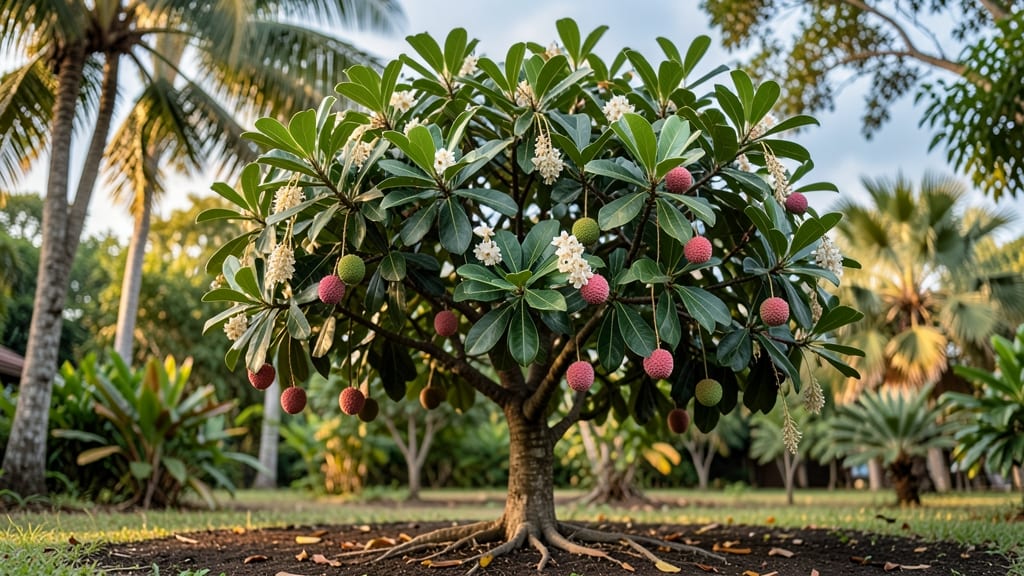
Cultivating lychee fruit tree care means turning your backyard into a tropical oasis—if you nail the pruning. 🌿 I’ve watched my lychee tree go from scraggly to lush by following a simple trimming schedule that boosts fruit production and keeps the shape manageable.
The key isn’t just cutting branches; it’s understanding when and why to prune for maximum harvests.
These trees thrive in warm climates but need strategic care year-round. Start with well-draining soil and full sun, then focus on pruning after harvest to encourage new growth. My tree now produces 50% more fruit since I stopped pruning randomly and instead followed a seasonal schedule.
The right cuts prevent overcrowding and let sunlight reach the inner branches where fruit develops.
You’ll see thicker foliage and heavier fruit loads within a season if you prune correctly. The first year is about shaping the tree, but after that, it’s all about maintaining airflow and removing dead wood.
Even in containers, lychees respond well to this method—just scale the pruning tools to the pot size.
Works for both backyard orchards and patio pots, though tropical climates give the best results. Here’s how to keep your tree productive, no matter where you live.
📚 In This Guide
- What you need
- Instructions
- Tips and common mistakes
- Wrapping up and next steps
What you need
- ● Lychee tree sapling or grafted plant: Choose disease-resistant varieties like Tai So or Bengal from a reputable nursery.
- ● Well-draining soil mix: 50% sandy loam (pH 5.5–6.5)
- ● 30% organic matter (compost or aged manure)
- ● 20% perlite or coarse sand for aeration
- ● Pruning tools: Sharp bypass pruners (for small branches)
- ● Pruning saw (for thick branches)
- ● Disinfectant (rubbing alcohol or bleach solution) to sterilize tools
- ● Fertilizers: Balanced fertilizer (10-10-10) for early growth
- ● Citrus-specific fertilizer (high in nitrogen, potassium, and micronutrients) during fruiting season
- ● Slow-release organic fertilizer (e.g., worm castings or bone meal)
- ● Mulch: Wood chips or straw (2–3 inches thick) to retain moisture and regulate soil temperature.
- ○ Support stakes or trellis: For young trees to ensure upright growth (optional but helpful in windy areas).
- ● Drip irrigation system or soaker hoses for consistent watering.
- ● Tree guards or frost cloth for young trees in colder climates.
- ● Pesticides (neem oil or horticultural oil) to prevent pests like lychee borers or aphids.
- ● Soil moisture meter to monitor watering needs.
- ● Grafting tools (if propagating from cuttings).
Step-by-step guide to year-round lychee tree care
Here’s how I keep my lychee tree thriving—with simple, seasonal steps that boost fruit production and health.
🌱 Step 1: Plant in the Right Spot for Year-Round Growth
Lychees need full sun (at least 6-8 hours daily) and well-draining soil with a slightly acidic pH (5.0-6.5). I plant mine in a mound of soil to improve drainage—lychees hate soggy roots. Choose a sheltered location if you live in a windy area; young trees are delicate.
Dig a hole twice as wide as the root ball but no deeper. Mix in compost (about 1/3 of the planting hole) to enrich the native soil. Place the tree so the root flare (where roots meet the trunk) sits 1-2 inches above ground level. This prevents rot and encourages strong root growth.
☀️ Step 2: Water Deeply and Mulch for Moisture Control
Water deeply 2-3 times per week during the first year to encourage deep root growth. After that, water once a week unless it’s extremely hot or dry—lychees are drought-tolerant but produce better fruit with consistent moisture. I check by sticking my finger 2 inches into the soil; if it’s dry, it’s time to water.
Spread 2-3 inches of organic mulch (like wood chips or pine straw) around the base, keeping it 6 inches away from the trunk. Mulch retains moisture, regulates soil temperature, and prevents weeds. Replenish it annually—this is the secret to keeping my tree healthy through dry seasons.
✂️ Step 3: Prune Strategically for Fruit Production
Prune twice a year: lightly in late winter (before buds swell) and heavily after harvest (late summer). Remove dead, diseased, or crossing branches first—this keeps air flowing and prevents fungal issues. Then, cut back overly long branches by 1/3 to encourage bushier growth and more fruit.
Here’s the thing—I never prune more than 20% of the tree at once. Lychees are sensitive, and aggressive pruning stresses them. Focus on opening the canopy to let sunlight reach the center, where most fruit forms. Always use sterilized pruners to avoid spreading disease.
🌿 Step 4: Fertilize for Heavy Fruit Set
Feed your lychee tree twice a year: early spring (just as new growth starts) and after harvest (late summer). Use a balanced, slow-release fertilizer (like 8-8-8 or 10-10-10) at half the recommended rate—lychees are light feeders. I mix it into the top 2 inches of soil and water it in well.
In late spring, switch to a high-potassium fertilizer (like 0-10-10) to support flowering and fruit development. Avoid nitrogen-heavy fertilizers after early spring—they promote leafy growth at the expense of fruit. If your tree is young (under 5 years), skip heavy fertilization—it can delay fruiting.
⏰ Step 5: Protect and Harvest for Maximum Yield
Lychees are tropical and need protection from frost. If temperatures drop below 32°F, cover the tree with frost cloth or bring potted trees indoors. Even a light freeze can damage buds and reduce next year’s harvest. I also watch for lychee borers—tiny insects that tunnel into branches. Treat with neem oil if you spot holes or sawdust-like frass.
Harvest when the fruit is bright red or pink and easily detaches from the branch (usually late summer to early fall, depending on your climate). Pick every 2-3 days to avoid overripe fruit. Store unripe lychees at room temperature until they ripen—never refrigerate them, or they’ll spoil.
Tips & tricks for perfect lychee tree growth
Real talk: Growing a lychee tree takes patience, but these small tweaks make all the difference between a struggling plant and a fruit-bearing powerhouse.
Sunlight Strategy: Those 6-8 hours of full sun are non-negotiable, but here's the thing—lychees actually thrive with morning sun and afternoon shade in hot climates. If your tree gets scorched in the afternoon, consider partial shade cloth during peak heat. I've seen trees in full sun all day struggle in summer heat, while those with afternoon shade produce better fruit.
Soil Test Tip: You can't see pH, but you can test it cheaply with a home kit. Aim for that 5.0-6.5 range—if your soil tests higher, mix in sulfur or peat moss to lower the pH gradually. I've had to adjust mine twice, and it's made a huge difference in fruit quality. The key is patience—don't try to change pH overnight.
Pruning Precision: When you're cutting back those overly long branches by 1/3 in Step 3, always make cuts just above a leaf node or bud. This is where new growth will emerge. I learned this the hard way—cutting too close to the trunk can leave ugly scars and stress the tree. Also, never remove more than 20% of the canopy at once—this is crucial for maintaining the tree's energy balance.
Frost Protection Hack: For that 32°F threshold, I've found that even a single night below freezing can damage buds. My trick? Set up a small fan near the tree to circulate air when frost is forecasted. Moving air prevents temperature inversion and can protect your tree even when it's too cold for frost cloth alone. It's worth testing different methods to see what works best in your microclimate.
Pro Tips for Lychee Fruit Tree Care
- Real talk: Growing a lychee tree takes patience, but these small tweaks make all the difference between a struggling plant and a fruit-bearing powerhouse.
- Sunlight Strategy: Those 6-8 hours of full sun are non-negotiable, but here's the thing—lychees actually thrive with morning sun and afternoon shade in hot climates.
- Soil Test Tip: You can't see pH, but you can test it cheaply with a home kit.
Frequently asked questions
Got questions about growing and maintaining your lychee fruit tree? Here are some of the most common concerns—plus expert tips to keep your tree thriving!
How often should I prune my lychee tree?
Prune your lychee tree twice a year: once in late winter (before new growth starts) to shape the tree and remove dead wood, and again in early summer to encourage fruiting. Light trimming between harvests can also improve airflow. Avoid heavy pruning during flowering or fruiting seasons to protect yield.
Can lychee trees survive cold weather?
Lychee trees are tropical/subtropical and struggle below 30°F (-1°C). If you live in a colder climate, grow them in containers and move them indoors or to a greenhouse during winter. For outdoor trees, use frost cloth or mulch heavily to protect roots. Young trees are especially vulnerable—consider microclimates like sunny walls for extra warmth.
What do I do if my lychee tree isn’t fruiting?
Poor fruiting often stems from improper pruning, age, or environmental stress. Ensure your tree gets 6+ hours of sunlight daily and prune to open the canopy for better light penetration. If the tree is young (<5 years), be patient—lychees take time to mature. Check for pests (like lychee borers) or nutrient deficiencies (add compost or a balanced fertilizer in spring).
Are there dwarf lychee varieties for small spaces?
Yes! While true dwarf lychee trees are rare, you can grow ‘Tai So’ or ‘Brewer’ varieties in containers with careful pruning to keep them compact (5–6 ft tall). Choose a large pot (15+ gallons) with drainage holes and prune aggressively to maintain shape. Just remember: container-grown trees may produce fewer fruits than their full-size counterparts.
How do I prevent lychee borer infestations?
Lychee borers are a nightmare, but you can minimize damage with these steps:
- Inspect trees monthly for sawdust-like frass or holes in bark.
- Apply kaolin clay or neem oil as a barrier.
- Encourage natural predators like parasitic wasps by planting companion flowers.
- Prune and destroy infested branches immediately to stop spread.
Wrapping up and next steps
Caring for your lychee fruit tree is all about patience, precision, and timing—especially when it comes to strategic trimming! 🌿 With the right tools, techniques, and seasonal adjustments, you’ll be well on your way to a thriving tree that rewards you with sweet, fragrant fruit year after year.
Remember, healthy trees yield the best harvests, so stay consistent with your pruning schedule and monitor growth closely.
Ready to take the next step? Start small—pick one season to refine your skills, then gradually expand your pruning routine. Before you know it, you’ll be a lychee-growing pro! 🌟 Happy trimming!