
Succulent
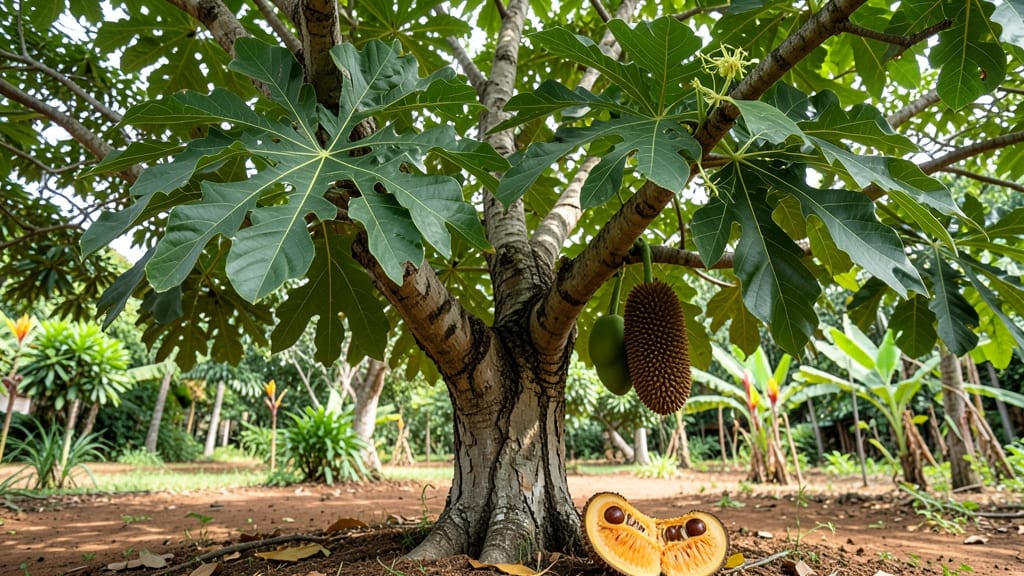
Jackfruit's other names include nangka in Southeast Asia, jak in India and Sri Lanka, and jaca in the Philippines, showcasing its deep cultural roots across tropical regions.
This tropical fruit's name journey reveals fascinating linguistic connections. 🌏 The term nangka traces back to Malay roots, while jak originates from Sanskrit's daksha, showing how ancient trade routes shaped its identity. In Portuguese-speaking regions, jaca reflects colonial influences that spread jackfruit globally.
What's interesting is how these names often reflect local culinary traditions—whether it's kathal for unripe fruit in India or chikoo in Pakistan, each variation tells a story about how communities adapt this versatile fruit into their diets.
For example, in Indonesia, mangka highlights its sweet, ripe form, while kathal in India emphasizes the firmer, unripe version used in savory dishes. These regional distinctions prove jackfruit isn't just a fruit—it's a cultural staple with names as diverse as the cuisines they inspire.
💡 In This Article
- How Jackfruit’s Name Evolves Across Languages and Cultures
- Regional Nicknames for Jackfruit by Culinary Use
How jackfruit’s name evolves across languages and cultures
The jackfruit's name transformation begins with its Sanskrit roots. The ancient term daksha (दक्ष) evolved into jak in Hindi and kathal in Bengali, reflecting its sacred status in Ayurveda.
This linguistic journey mirrors how the fruit traveled from India's forests to Southeast Asia through maritime trade routes, picking up new names along the way. 🌿
In Malay-speaking regions, nangka became the standard term, while Portuguese colonizers adapted it to jaca in Brazil and jaca in the Philippines. What's fascinating is how these names often preserve phonetic similarities—jak to jaca—showing how sounds traveled with the fruit itself.
The Spanish took it further as pan de árbol ("bread of the tree"), highlighting its dense, starchy texture that resembles baked goods.
Colonialism played a crucial role in spreading jackfruit's global monikers. The Portuguese and Spanish introduced it to Latin America, while Dutch traders carried it to Indonesia and Malaysia. Each new culture adapted the name to fit their language while keeping the core phonetic structure.
This linguistic evolution reveals how jackfruit became more than just food—it became a cultural bridge between continents. 🌍
Even the fruit's scientific name, Artocarpus heterophyllus, tells a story. The genus Artocarpus comes from Greek roots meaning "bread fruit," while heterophyllus describes its varied leaf shapes. This botanical naming system reflects how jackfruit's complex structure—from its spiky exterior to its fibrous interior—inspired both scientific and colloquial terminology worldwide.
What makes these name variations so interesting is their connection to local culinary traditions. In Sri Lanka, kohomba emphasizes its use in curries, while in Thailand, phu thao highlights its sweet, ripe form.
These names aren't just labels—they're culinary identities that tell us how each culture prepares and values this versatile fruit. 🍽️
The jackfruit's name evolution also shows how languages borrow and adapt. The term nangka spread across Indonesia, Malaysia, and Singapore, while jak became jakfruit in English—a fusion that reflects the fruit's global journey.
This linguistic diversity proves that jackfruit isn't just a single fruit with multiple names, but a living testament to cultural exchange and culinary innovation.