
Fertilization
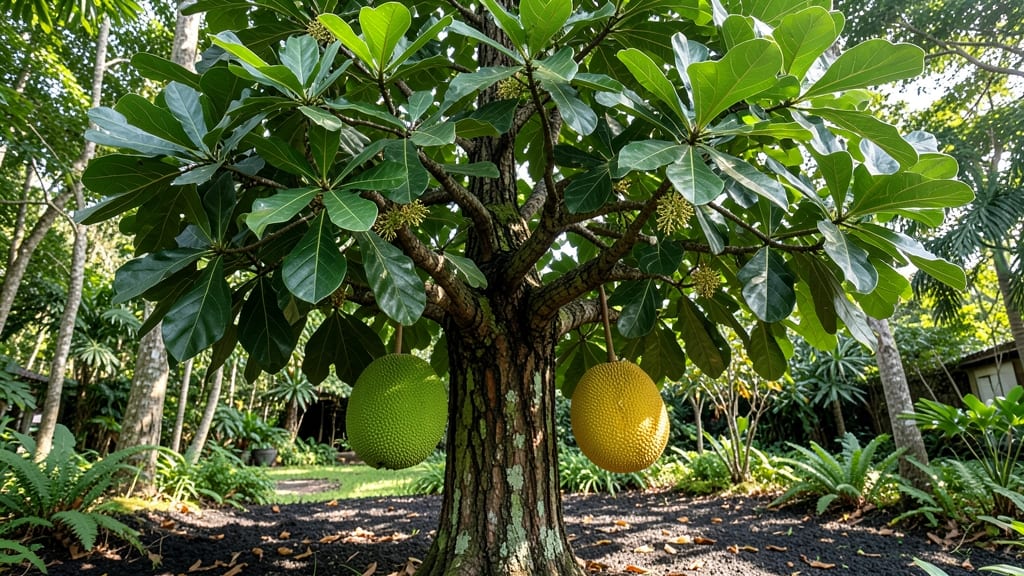
In Spanish, jackfruit is most commonly called jacote or jacá, with regional differences across Latin America. These names vary by country, and jacote is the most widely used term in Central and South America.
Spanish-speaking countries have unique names for jackfruit that reflect local dialects and cultural influences. 🌍 For example, jacote dominates in Colombia and Venezuela, while jacá is more common in Mexico and parts of Central America.
The confusion with fruta de pan (breadfruit) often arises because both fruits share a similar appearance and tropical origin, but they're entirely different plants.
The pronunciation also varies slightly: jacote is typically pronounced "Hah-KOH-teh," while jacá sounds like "Hah-KAH." These differences highlight how language evolves across regions, even for the same fruit. Understanding these variations can help you communicate more effectively when shopping or cooking in Spanish-speaking countries.
💡 In This Article
- Regional Spanish Names for Jackfruit and Their Origins
- How to Pronounce Jackfruit in Spanish Correctly
Regional Spanish names for jackfruit and their origins
The name jacote originates from the Taíno language of the Caribbean, where the fruit was first introduced by Spanish colonizers. This term spread through Central America and became the standard in countries like Costa Rica, Panama, and Nicaragua.
The pronunciation varies slightly—some regions emphasize the second syllable ("jah-KOH-teh"), while others soften it to "jah-KOH-tay," reflecting local Spanish dialects. 🌎
In Mexico and parts of Central America, jacá is the preferred term, likely derived from the Nahuatl word xacatl, meaning "fruit." This name highlights the fruit's deep cultural roots in Mesoamerican cuisine, where jackfruit has been used for centuries in both sweet and savory dishes.
Meanwhile, in Ecuador, you might hear pijuayo, a name that reflects the Quechua influence in the region's language. These variations show how indigenous languages shaped Spanish vocabulary for tropical fruits.
The confusion with fruta de pan (breadfruit) stems from their similar appearance—both are large, spiky fruits with thick, starchy flesh. However, breadfruit belongs to the mulberry family, while jackfruit is part of the fig family.
The mistake is more common in Caribbean regions like Puerto Rico or the Dominican Republic, where both fruits grow. Knowing the botanical differences helps avoid mislabeling in recipes or markets.
Another interesting case is nangka in Filipino Spanish, used in regions with strong Filipino cultural ties. This term shows how jackfruit's name can adapt based on historical trade routes and colonial influences.
The fruit's versatility in both sweet and savory dishes has also led to multiple local names, each carrying its own culinary traditions.
For example, in Colombia, jacote is often paired with terms like fruta del pan (breadfruit) in casual speech, even though they're distinct. This linguistic blending reflects how tropical fruits have become intertwined in regional food cultures.
The key takeaway? Always clarify the context—whether you're talking about the fruit's name, its culinary use, or its botanical classification.
Understanding these regional names isn't just about vocabulary—it's about cultural appreciation. When you order jacote in Colombia or jacá in Mexico, you're engaging with centuries of local food traditions.
This knowledge also helps in recipe translations, where terms like "jackfruit" might need to be replaced with jacote or jacá depending on the audience. 🌱