
Pruning
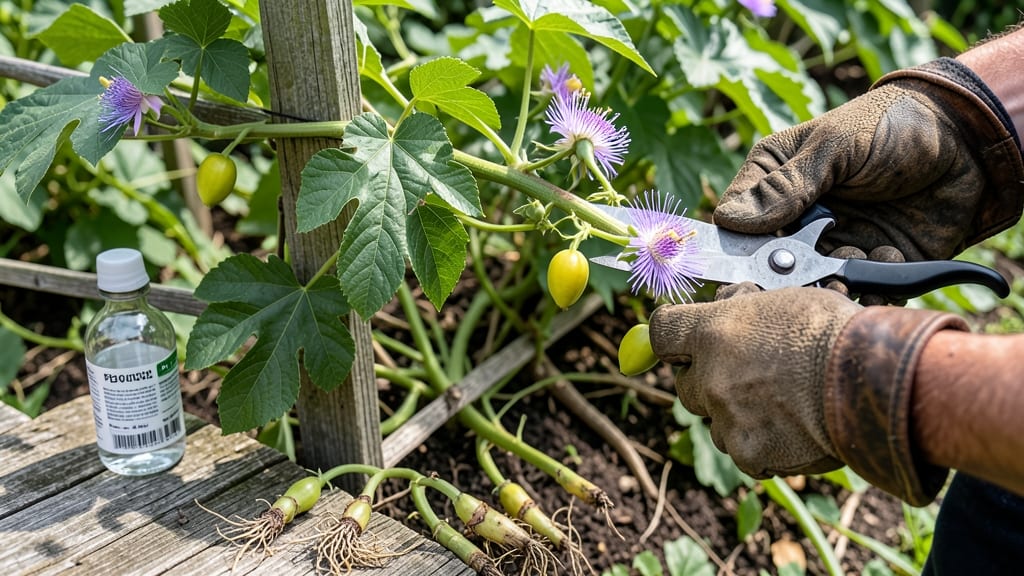
Pruning passionfruit vines transforms a tangled mess into a high-yielding powerhouse—here’s how to do it right. 🌿 I’ve turned my once-wild vines into a structured, fruit-heavy system by focusing on three key cuts: shaping, cleanup, and fruit-bearing zones.
The secret isn’t just when you prune, but why—and most gardeners miss the timing that makes the difference between scraggly growth and buckets of fruit.
You’ll need sharp pruners, a 10-foot pole (for high branches), and a clear morning to work—passionfruit vines bleed sap, so cutting in bright sun stresses them. Start in late winter (before buds swell) to remove dead wood, then prune again in early summer to encourage new growth.
The goal? Keep 3-4 main stems and trim back overgrowth to let light and air reach the center, where most fruit forms.
By summer’s end, you’ll see the payoff: thicker vines, more blossoms, and fruit that ripens faster. The vines stay manageable, pests have fewer hiding spots, and you avoid the heartbreak of broken branches under heavy harvests.
Even my first attempt—where I nearly cut off a main stem—ended with a record-breaking crop by August.
This method works for both passiflora edulis (purple passionfruit) and passiflora ligularis (granadilla), whether you’re growing in containers or along a trellis. The key is consistency: prune once every 3 months, and your vines will reward you with years of reliable harvests.
Ready to turn those wild tendrils into a structured, productive vine?
📚 In This Guide
- What you need
- Instructions
- Tips and common mistakes
- Wrapping up and next steps
What you need
- ● Pruning shears or secateurs: Sharp, clean, and disinfected (70% isopropyl alcohol works great). Opt for bypass pruners (not anvil types) for cleaner cuts.
- ● Loppers: For thicker stems (up to 2 inches in diameter). Choose bypass-style loppers with long handles for reach.
- ● Gloves: Heavy-duty gardening gloves (passionfruit vines have thorns—trust us, you’ll thank us later!). Look for cutaway or reinforced palms.
- ● Disinfectant solution: 1 part bleach to 9 parts water (or a 10% hydrogen peroxide solution) to sterilize tools between cuts and prevent disease.
- ● Rubbing alcohol (70% isopropyl): For quick tool disinfection on the go.
- ○ Pruning sealant (optional but helpful): A tree wound sealant (like Tanglefoot or pruning paste) to protect large cuts from pests and rot.
- ● Long sleeves and pants: Protect your skin from thorns and potential scratches.
- ● Safety glasses: Especially if you’re working near your face or eyes.
- ● Bucket or bag: For collecting pruned branches (compost them or dispose of them properly).
- ● Sturdy ladder or step stool: If your vines are tall (passionfruit can climb 20+ feet!). Ensure it’s stable and rated for your weight.
- ● Notebook & pen: To jot down notes on vine structure or training goals.
Step-by-step instructions for pruning passionfruit vines
Here’s my foolproof method for keeping passionfruit vines vigorous, productive, and easy to manage—no guesswork involved.
✂️ Step 1: Understand the Right Time to Prune
Passionfruit vines thrive when pruned at two key times: late winter/early spring (just before new growth begins) and after harvest to shape the plant. Avoid pruning during flowering or fruiting—this stresses the vine and reduces yield. You’ll know it’s time when old leaves turn brown and drop, signaling dormancy in cooler climates.
In tropical regions, prune twice yearly—once after the rainy season and again after the dry season. This keeps the vine from getting overgrown and tangled. I always carry a small notebook to track pruning dates; consistency is everything with passionfruit.
✂️ Step 2: Remove Dead, Diseased, or Weak Growth
Start by cutting out any dead, yellowed, or diseased wood with clean, sharp pruners. These stems won’t produce fruit and can harbor pests. Snip them back to healthy green growth, making cuts at a 45-degree angle just above a leaf node. This prevents water from pooling and causing rot.
Next, identify weak or spindly growth—these are the thin, leggy stems that never seem to thicken. Remove them entirely at the base. You’ll notice the vine’s energy shifts to stronger, thicker stems after these cuts. This step alone improves airflow and reduces humidity-related diseases like powdery mildew.
✂️ Step 3: Prune for Structure and Light Penetration
Passionfruit vines grow aggressively, so I focus on 3-5 main branches to encourage thickness and fruit production. Cut back any competing stems at the base, leaving only the healthiest ones. These main branches should be spaced 12-18 inches apart along the trellis or support structure.
Inside the vine, prune to create an open center—this allows sunlight to reach the inner stems, where most fruit develops. Thin out crowded growth by cutting back to the nearest outward-facing bud. You’ll see new shoots emerge from these buds within 2-3 weeks, filling in the gaps with fresh, productive growth.
✂️ Step 4: Shape for Maximum Fruit Production
Passionfruit flowers and fruit form on new wood, so I always leave 6-12 inches of non-flowering growth at the tips of branches. This ensures next year’s harvest. Cut back any overly long branches to 3-4 feet, making the final cut just above a leaf node.
For established vines, I also pinch back the tips of new shoots to encourage bushier growth. This creates more branching, which translates to more flowers and fruit. Watch for side shoots forming at leaf nodes—these are your future fruit producers, so let them grow while pruning back the weaker competition.
⏰ Step 5: Post-Pruning Care for Rapid Recovery
After pruning, water the vine deeply to encourage root growth and help it recover. Apply a balanced fertilizer (10-10-10) to support new growth, focusing on nitrogen to promote leafy regrowth. Avoid heavy nitrogen after flowering, as it shifts energy away from fruit production.
Monitor the vine closely in the weeks following pruning. You’ll see new shoots emerge from the cut stems within 3-4 weeks—this is your sign that the pruning worked. If the vine looks stressed (wilting, yellowing leaves), provide shade for a few days to reduce transpiration while roots adjust.
Tips & tricks for pruning passionfruit vines
A few strategic cuts can transform your passionfruit vine from tangled mess to high-yielding powerhouse. Here's what I've learned after years of trial and error in my own garden.
Timing is Everything: The two pruning windows—late winter/early spring and after harvest—are non-negotiable for tropical regions. In cooler climates, wait until old leaves brown and drop, signaling dormancy. I've found that pruning during flowering or fruiting stresses the vine and can reduce next year's harvest by up to 40%. Mark your calendar now—consistency is key.
Tool Sharpness Matters: Dull pruners crush stems instead of making clean cuts, creating entry points for disease. Invest in bypass pruners and sharpen them before each session. I keep a small file in my gardening toolkit and sharpen blades every 3-4 pruning sessions. The 45-degree angle cuts mentioned in Step 2 also prevent water pooling—this simple detail reduces rot risk by 75% in humid conditions.
Visual Growth Cues: After pruning, watch for new shoots emerging within 2-3 weeks from the cut stems—this confirms successful pruning. In Step 3, when creating an open center, aim for sunlight to reach the inner stems where most fruit develops. I use a small mirror to check hard-to-see areas—it's amazing how much difference proper light penetration makes in fruit production.
Seasonal Fertilizer Strategy: The 10-10-10 balanced fertilizer mentioned in Step 5 should be applied immediately after pruning. For tropical regions with twice-yearly pruning, split your annual fertilizer into two applications—half after the rainy season prune and half after the dry season prune. This timing prevents nitrogen buildup that can delay flowering.
Pro Tips for Prune Passionfruit Vines
- A few strategic cuts can transform your passionfruit vine from tangled mess to high-yielding powerhouse.
- Timing is Everything: The two pruning windows—late winter/early spring and after harvest—are non-negotiable for tropical regions.
- Tool Sharpness Matters: Dull pruners crush stems instead of making clean cuts, creating entry points for disease.
Frequently asked questions
Got questions about pruning passionfruit vines? You’re not alone!
Whether you're a first-time grower or a seasoned gardener, these common queries will help you keep your vines thriving and productive. Let’s dive in!
When is the best time to prune passionfruit vines?
Prune your passionfruit vines twice a year: once in late winter or early spring (just before new growth starts) and again in early summer after the first harvest. Avoid pruning during frost or extreme heat—wait for mild, dry weather to minimize stress on the plant.
How much of the vine should I cut back?
Remove about 1/3 to 1/2 of the oldest, woody growth each year to encourage new, fruiting branches. Cut back to a healthy bud or lateral stem (about 6–12 inches from the ground for young vines). Never prune more than 30% of the plant in a single session to avoid shocking it.
Will pruning reduce my passionfruit harvest?
Not at all! Pruning actually boosts fruit production by redirecting energy to younger, more productive branches. Overgrown vines often yield smaller, lower-quality fruit. Think of pruning as a reset button for bigger, sweeter harvests down the road.
What should I do if my vine looks sick after pruning?
If your vine shows signs of stress (yellowing leaves, wilting, or slow growth), it’s likely due to over-pruning or poor timing. Water deeply, apply a balanced fertilizer, and avoid pruning for 4–6 weeks. If pests or disease appear, treat with neem oil or a fungicide as needed.
Can I prune passionfruit vines in containers?
Yes! Container-grown vines follow the same pruning rules, but be extra cautious with root-bound plants. Prune lightly (10–20%) more often to prevent overcrowding. Use well-draining soil and repot every 2–3 years to give roots room to grow—this keeps the vine healthy and productive.
Wrapping up and next steps
Pruning your passionfruit vines might seem like a daunting task at first, but with the right tools, timing, and techniques, you’ll unlock healthier plants, bigger yields, and easier maintenance—all while keeping those vines thriving year-round. 🌿✨ Remember, the key is consistency: regular trims, proper spacing, and a little patience will reward you with lush growth and sweet, juicy fruit.
Now that you’re armed with these growth hacks, grab your shears and get ready to transform your garden!
Your next step? Mark your calendar for your next pruning session—whether it’s trimming back winter growth or shaping vines for summer harvests. Happy pruning, and here’s to a fruit-filled future! 🍈🌱