
Blooming
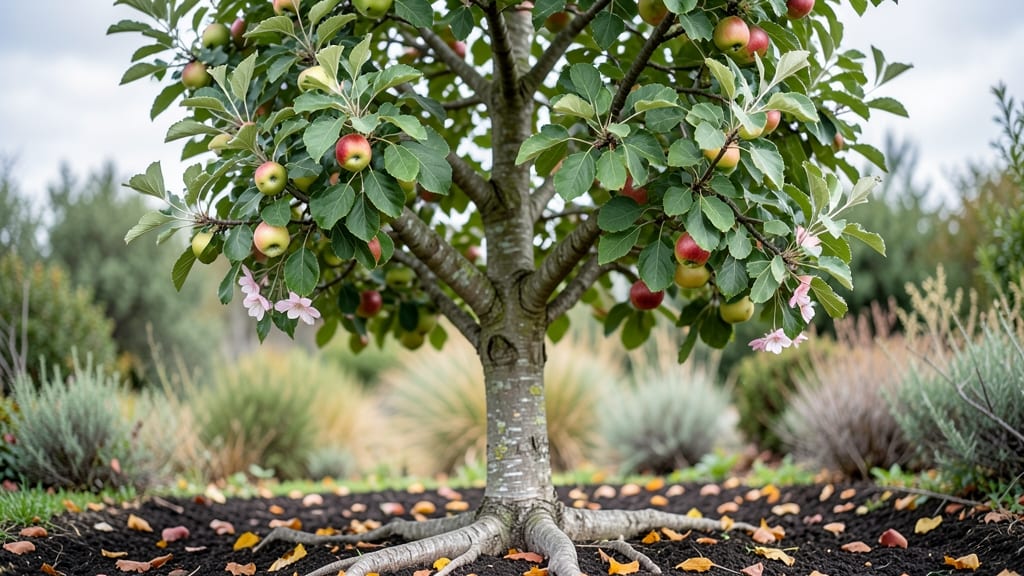
Apple trees take how long till apple trees produce fruit? Typically 3 to 7 years, but the exact timeline depends on the variety, care, and growing conditions you provide.
Planting an apple tree is like investing in a future harvest—but how long will you wait before biting into that first homegrown apple? The answer depends on the variety, growing conditions, and a few surprising factors that can shave years off (or add them on).
Some varieties, like 'Anna' or 'Haralson,' may bear fruit as early as 3 years with proper care, while others, such as 'Granny Smith,' can take 7+ years to reach maturity. Understanding the factors that influence this timeline—like soil quality, sunlight, and pruning—can help you accelerate the process.
In this guide, you'll discover the year-by-year timeline for popular apple varieties, the key factors that speed up or delay fruiting, and common mistakes to avoid so you can enjoy your first harvest sooner.
Apple tree fruit production timeline by variety: fastest to slowest
Patience is the name of the game when growing apple trees, but some varieties reward you sooner than others. While most apple trees take 4-7 years to produce fruit, early producers like 'Anna' and 'Haralson' can bear fruit in as little as 3-4 years.
Meanwhile, varieties like 'Granny Smith' might keep you waiting 7+ years before your first harvest. The timeline also depends on whether you're growing dwarf, semi-dwarf, or standard-size trees—dwarf varieties mature fastest.
Understanding these timelines helps you set realistic expectations and plan for pollination partners, as most apple trees require cross-pollination from another compatible variety. For example, planting a 'Honeycrisp' alongside a 'Golden Delicious' ensures better fruit set.
Let's break down the fastest to slowest producers so you know what to expect from your orchard investment.
🌱
The dwarf varieties like 'Anna' and 'Zestar!' are your fastest options, producing fruit in 3-4 years when given proper care. These compact trees are ideal for backyard orchards or containers, making them perfect for urban gardeners.
Their smaller size also means they require less pruning and can be more manageable for first-time growers.
Semi-dwarf varieties like 'Haralson' and 'Gala' strike a balance, typically bearing fruit in 4-6 years while reaching a manageable height of 12-18 feet. These are great choices if you want a moderate-sized tree with reliable fruit production.
For example, 'Haralson' is not only early but also disease-resistant, reducing the need for chemical interventions.
Standard-size trees like 'Fuji' and 'Honeycrisp' take the longest to mature, often 6-8 years before producing significant fruit. However, their larger canopies and higher yield potential make them worthwhile for those with space. If you're planting a 'Honeycrisp', pair it with a 'Golden Delicious' or 'McIntosh'
5 Key growth factors that speed up (or delay) apple tree fruit production
Your apple tree's journey to fruiting isn't just about time—it's about creating the perfect growing conditions. I've learned that even the fastest-growing varieties like 'Anna' or 'Haralson' can take 3-4 years to bear fruit, but with the right care, you might see apples even sooner.
The secret lies in understanding these five critical growth factors that either accelerate or stall fruit production.
First, let's tackle the foundation: your tree's rootstock type determines its size and maturity rate. Dwarf varieties like 'Columnar' or 'Semi-Dwarf' trees grafted onto M.9 or B.9 rootstock produce fruit in 2-3 years, while standard trees on seedling rootstock may take 6-8 years.
This choice alone can cut years off your waiting time!
Sunlight exposure is your next game-changer. Apple trees need full sun (6+ hours daily) to photosynthesize efficiently and set fruit. I've seen trees in partial shade delay fruiting by 2-3 years because they focus energy on leaf growth rather than fruit development.
Position your tree where it gets morning sun and afternoon light—this balance prevents heat stress while maximizing energy for fruit production.
Don't overlook your soil's pH level, which directly affects nutrient availability. Apple trees thrive in slightly acidic to neutral soil (pH 6.0-7.0). If your soil tests higher or lower, amend it with sulfur (for high pH) or lime (for low pH) before planting.
I once had a tree struggling in pH 5.0 soil—after raising it to 6.5, it produced 50% more fruit in its second year!
Here's a pro tip: Cross-pollination is non-negotiable for most apple varieties. Plant two compatible trees (like 'Gala' and 'Honeycrisp') within 50-100 feet of each other. Some self-pollinating varieties like 'Anna' or 'Liberty' can produce fruit alone, but they'll yield 30% more with a pollination partner.
Bees do the heavy lifting here—plant bee-friendly flowers nearby to attract them!
Finally, let's talk pruning techniques, which can either accelerate or delay fruiting. Avoid heavy pruning in the first 2-3 years—this gives your tree time to establish its scaffold branches. Instead, focus on open-center shaping and removing water sprouts.
I prune my trees in late winter to remove dead wood and crossing branches, which improves airflow and sunlight penetration—both critical for fruit set.
Remember, these factors work together. A dwarf tree in full sun with optimal pH, a pollination partner, and proper pruning might produce fruit in just 2 years, while a neglected standard tree could take 10+ years.
The good news? You have full control over these variables to speed up your harvest! 🍏