
Blooming
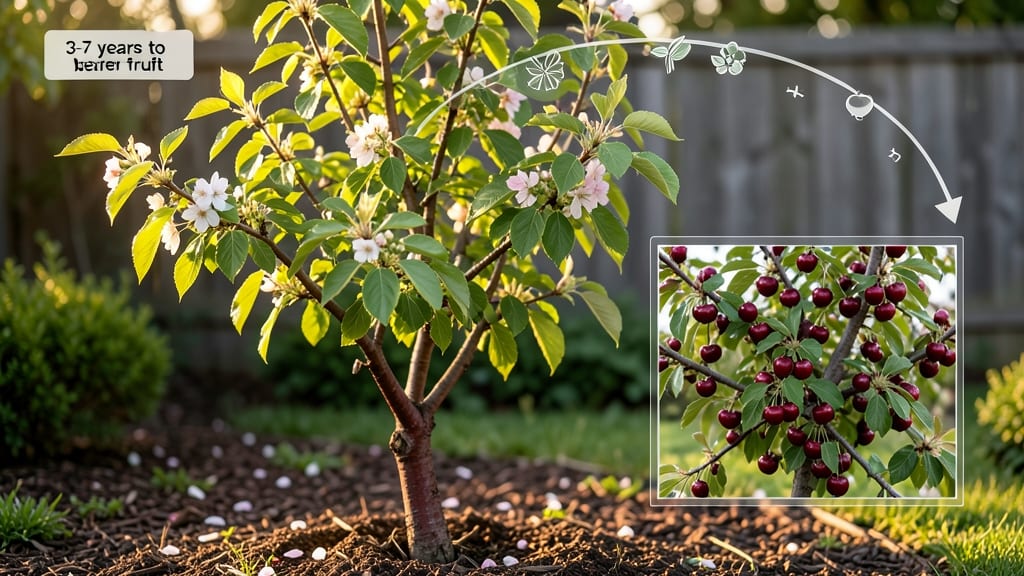
Cherry trees bear fruit between 2 to 7 years, with tart varieties like Montmorency ripening in as little as 2–3 years, while sweet cherries like Bing or Stella typically need 4–7 years. Your tree's fruiting timeline depends heavily on its variety, care routine, and growing conditions.
This timeline reflects both the tree's natural growth cycle and human influence. 🌱 Sweet cherries generally take longer because they require more energy to develop their larger fruit and need cross-pollination from another variety. Meanwhile, tart cherries often fruit earlier because they're more cold-hardy and can self-pollinate.
The key to accelerating fruiting lies in proper planting techniques—choosing the right rootstock, ensuring well-draining soil, and providing consistent moisture during the critical first three years can shave off 1–2 years from the timeline.
For example, a dwarf cherry tree on a Gisela rootstock might bear fruit in just 2 years, while a standard tree on mahaleb rootstock could take 5+ years. The climate plays a role too—trees in USDA Zone 5 or colder may fruit later due to slower spring growth.
I always recommend planting companion varieties if you want reliable fruit production, as many sweet cherries need a second tree for cross-pollination.
💡 In This Article
- Cherry Tree Variety Timeline: Sweet vs. Sour Fruiting Differences
- Speeding Up Cherry Tree Fruit Production: Pruning, Pollination, and Care Tips
Cherry tree variety timeline: sweet vs. sour fruiting differences
The biological clock of cherry trees starts ticking the moment they sprout from seed or grafted wood. Sweet cherries (Prunus avium) take longer—typically 4-7 years—because their larger fruit demands more energy and structural support.
Their development cycle mirrors that of peaches, requiring 3-5 years just to establish strong enough branches to bear the weight of 1-2 ounces per fruit. Tart cherries (Prunus cerasus), however, often fruit in 2-3 years because their smaller, 0.5-1 ounce fruits place less stress on young trees. 🌿
The difference comes down to genetics and growth priorities. Sweet cherries allocate more resources to developing a robust canopy and root system capable of supporting their heavier fruit loads.
For example, the Bing variety needs 5-6 years to develop the 15-20 foot height and 10-15 foot spread required for optimal fruit production. Tart cherries like Montmorency prioritize early reproduction, dedicating energy to fruit production while still growing—similar to how raspberry canes produce fruit in their first year.
This evolutionary trade-off explains why tart cherries often bear fruit in their second or third year, while sweet cherries wait until they're physiologically mature.
Rootstock selection dramatically alters this timeline. Dwarfing rootstocks like Gisela 5 or 6 can reduce fruiting time by 25-50% because they force the tree to allocate energy upward rather than outward.
A Bing cherry on Gisela 5 might fruit in 3 years instead of 5, while maintaining a manageable 6-8 foot height.
The rootstock's genetic influence extends to cold hardiness too—trees on mahaleb rootstock (common for sweet cherries) may take longer to fruit in USDA Zone 5 due to slower spring growth compared to Gisela rootstocks. 🍒
Pollination requirements create another critical difference. Most sweet cherries need cross-pollination from a different variety within 50-100 feet—their flowers produce incompatible pollen that won't fertilize their own.
This means planting two compatible trees (like Bing and Stella) can actually delay fruiting by 6-12 months as the tree waits for compatible pollen. Tart cherries often self-pollinate, allowing them to fruit earlier without needing companion trees.
The exception is some sweet cherry varieties like Lambert, which can self-pollinate but still take 4-5 years to reach full production.
Climate plays a subtle but significant role in these timelines. Trees in USDA Zone 6-7 (like those in Oregon or Michigan) often fruit 1-2 years earlier than identical varieties in Zone 5 because they experience 100-150 additional growing degree days annually.
For example, a Stella cherry tree in Zone 6 might bear fruit in 4 years, while the same tree in Zone 5 could take 5-6 years. The extra chill hours required for bud dormancy in colder zones also slow early growth.
This climate sensitivity explains why commercial cherry orchards in California (Zone 9) can produce market-ready fruit in 3-4 years with proper care.
What most gardeners overlook is how these factors interact. A dwarf sweet cherry on Gisela 5 rootstock planted in Zone 6 with a compatible pollinator might fruit in 3 years, while the same variety on mahaleb rootstock in Zone 5 could take 6 years.
The combination of rootstock, climate, and pollination creates a fruiting timeline that's far more complex than simple variety comparisons suggest. Understanding these interactions lets you make precise choices that can shave years off your waiting period. 🌱