
Blooming
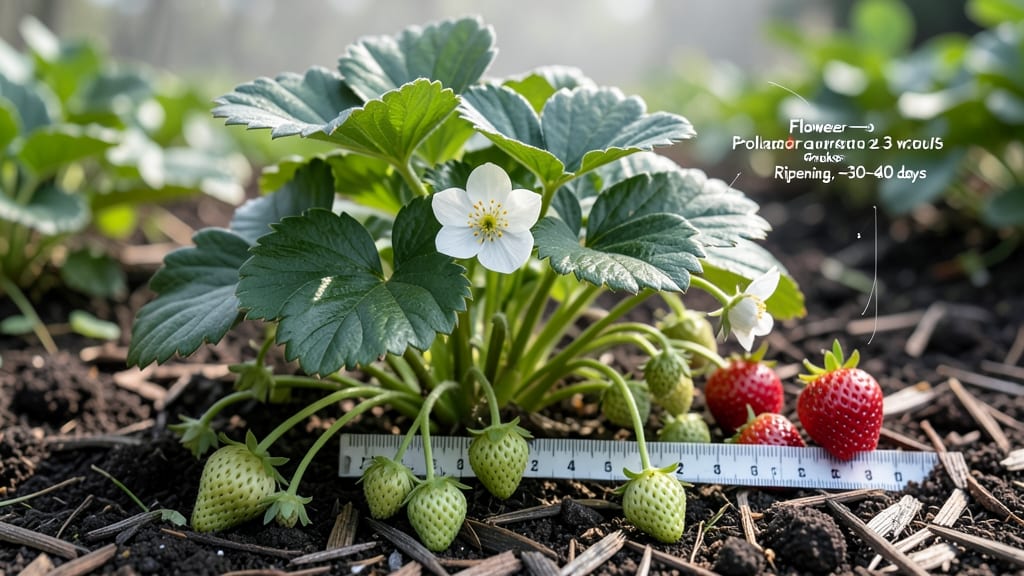
After strawberry flowers appear, fruit typically ripens in 20 to 30 days, though June-bearing types take 35-45 days, while everbearing and day-neutral varieties ripen in 14-28 days depending on growing conditions. Proper pollination and care can significantly shorten this timeline.
Understanding this timeline helps gardeners plan harvests and manage expectations. 🌱 June-bearing varieties, like 'Jewel' or 'Chandler,' need the longest time because they focus all their energy on a single spring harvest, while everbearing types like 'Albion' produce smaller, faster-maturing berries throughout the season.
Day-neutral varieties, such as 'Seascape,' strike a balance—producing fruit continuously but with a slightly shorter ripening window. Temperature plays a huge role: cooler climates slow development, while warm, sunny conditions can speed it up by nearly a week.
For gardeners eager to harvest sooner, hand-pollination with a soft brush can cut ripening time by 3-5 days. 💫 Consistent watering—about 1-1.5 inches per week—and a balanced fertilizer rich in phosphorus and potassium also encourage faster fruit set.
Avoid overwatering, though, as soggy soil can lead to blossom end rot and delay ripening.
💡 In This Article
- Strawberry Flower-to-Fruit Timeline by Variety
- Speeding Up Strawberry Ripening: Pro Tips for Gardeners
Strawberry flower-to-fruit timeline by variety
The flower-to-fruit process in strawberries follows a precise biological sequence: pollination (day 1-3), fruit swelling (days 4-10), and color development (days 11-20). June-bearing varieties like 'Chandler' take the longest—35-45 days—because they allocate all their energy to a single massive harvest in spring.
Their flowers develop larger, more complex fruit structures that require extra time to mature, especially in cooler climates where photosynthesis slows to just 12-15 hours of sunlight per day.
Everbearing types such as 'Albion' and day-neutral varieties like 'Seascape' ripen faster (14-28 days) because they produce smaller, simpler fruit structures designed for continuous production. These varieties prioritize quantity over size, which means their fruit reaches the red, fully sweetened stage in about half the time of June-bearers.
The key difference lies in their genetic programming: everbearing strawberries can produce 3-4 flushes of flowers per season, while June-bearers focus on one perfect bloom cycle.
Temperature acts as a critical accelerator or brake. Strawberries thrive in 60-85°F ranges, where their metabolic processes operate optimally. Below 55°F, fruit development stalls as enzymes responsible for sugar conversion slow down—this is why northern gardeners often see delayed ripening.
Conversely, in 80-85°F conditions, strawberries can ripen 5-7 days faster, but only if they receive 6+ hours of direct sunlight daily. Without sufficient light, chlorophyll production drops, leading to pale, underdeveloped fruit.
Sunlight isn't just about warmth—it's about photosynthesis efficiency. The red pigment in ripe strawberries (lycopene) develops most rapidly when flowers receive full-spectrum sunlight, particularly in the blue (400-500nm) and red (600-700nm) wavelengths.
Shade-loving varieties like 'Ozark Beauty' may take 7-10 extra days to ripen because they've evolved to tolerate lower light conditions, but they'll never match the vibrant color or sweetness of sun-exposed berries.
What most gardeners overlook is the hidden phase between pollination and visible swelling—this 3-5 day lag occurs as the ovary begins cellular division. During this time, the flower's receptacle (which becomes the fruit) must first develop the structural framework before expanding.
Hand-pollinating with a soft paintbrush can cut this phase by 24 hours by ensuring every stigma receives pollen, but even with perfect pollination, June-bearers will always need their full 35-45 day window due to their biological programming.
For visual reference, track your strawberries' progress using these milestones:
- Day 3: Pollen tubes grow down the style (visible under magnification as tiny white strands)
- Day 7: Fruit begins swelling (receptacle turns from green to pale pink)
- Day 14: Color intensifies (red pigment appears in patches)
- Day 21: Full red color and softness indicate peak ripeness
Knowing these stages helps you anticipate harvests and troubleshoot delays. If your strawberries stay green past 28 days, check for pollen availability (bees may be scarce) or nutrient deficiencies (yellow leaves indicate nitrogen issues). The sweetest berries develop when all these factors align—sunlight, warmth, and proper care working in harmony. 🌞