
Container Gardens
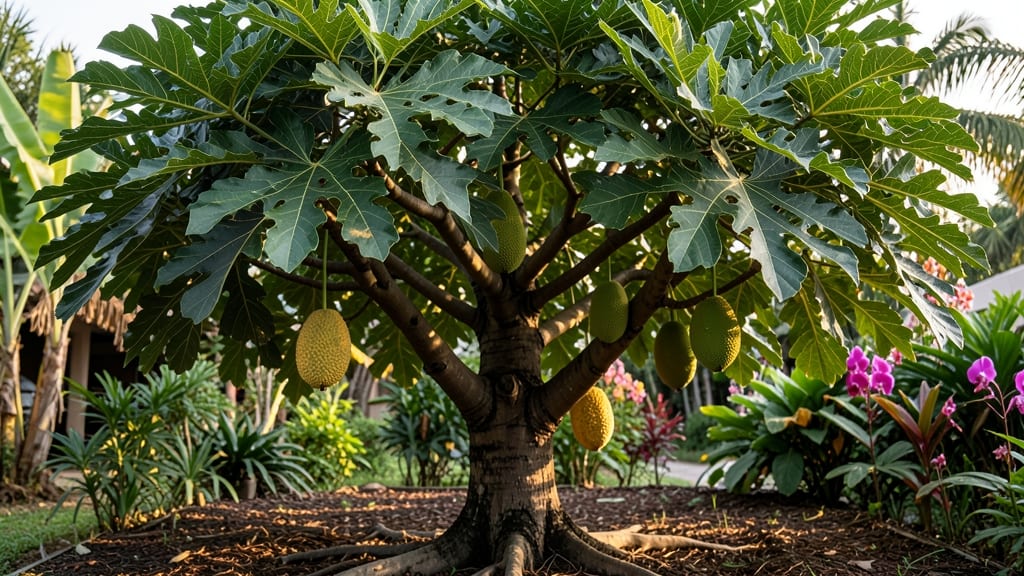
Growing a jackfruit tree in containers lets you enjoy its tropical canopy even on a balcony or patio. 🌿 I’ve grown mine for three years now, and the sweet, syrupy fruit is worth every bit of patience—though it takes time.
The key is mimicking its natural jungle habitat without needing a backyard.
You’ll need a 15-20 gallon pot (or larger), well-draining soil mixed with compost, and a spot that gets full sun for at least 6 hours daily. Jackfruit thrives in zones 10-11, but with container care, you can grow it as far north as zone 9 with winter protection.
Water when the top inch of soil feels dry, but avoid soggy roots—they’re the #1 killer of young trees.
By year three, you’ll see bold, glossy leaves and maybe even your first fruit (though full harvest takes 5-7 years). The tree’s dramatic, fern-like foliage makes it a stunning focal point, even if you never get fruit.
Prune lightly to shape it, and watch for pests like scale—neem oil works wonders for prevention.
This isn’t a quick fix, but the payoff—fresh jackfruit straight from your pot—is unbeatable. Start small, be patient, and soon you’ll have a living piece of the tropics right outside your door. Here’s how to begin without overwhelm.
📚 In This Guide
- What you need
- Instructions
- Tips and common mistakes
- Wrapping up and next steps
What you need
- ● Jackfruit seeds: 1-3 mature, fresh seeds (preferably from an organic, non-hybrid fruit).
- ● Well-draining potting mix: 5-10 gallons of a blend like African violet mix or cactus/succulent soil (add perlite or pumice for aeration).
- ● Container: A 5-gallon pot minimum (10+ gallons for mature trees). Use fabric pots or plastic with drainage holes.
- ● Drainage layer: 1-2 inches of gravel, expanded clay pebbles, or coarse sand at the pot’s base.
- ● Slow-release fertilizer: 1 cup of balanced 10-10-10 or organic compost (like worm castings).
- ● Watering can or hose with a gentle nozzle: For deep, infrequent watering.
- ● Pruning shears: For shaping young trees (sterilize with rubbing alcohol).
- ● Trowel or small shovel: For transplanting seedlings.
- ● pH testing kit: To check soil acidity (jackfruit thrives in pH 5.5–7.0).
- ○ Mulch (optional): Coconut coir or straw to retain moisture (keep 2 inches away from the trunk).
- ● Grow lights (for indoors): A full-spectrum LED to supplement weak sunlight.
- ○ Support stake (optional): For young trees in windy areas (bamboo or metal).
Step-by-step guide to growing a jackfruit tree in containers
Here's how to cultivate a tropical jackfruit tree—even in small spaces—using proven container techniques.
🌱 Step 1: Select and Prepare the Right Container
Choose a 5-gallon or larger container with drainage holes—jackfruit roots need room to expand and hate soggy conditions. I use fabric grow bags because they allow roots to breathe while preventing compaction. The container must be at least 18 inches deep to accommodate the tree's extensive root system.
Line the bottom with 2 inches of gravel or expanded clay pebbles for drainage. This layer prevents root rot by ensuring excess water flows away from the root zone. If your container lacks drainage holes, drill ¼-inch holes along the bottom—jackfruit trees are sensitive to waterlogged soil.
🌿 Step 2: Use a Well-Draining, Nutrient-Rich Soil Mix
Jackfruit thrives in loose, airy soil that mimics its tropical forest habitat. Mix equal parts coconut coir, perlite, and compost for a blend that retains moisture without suffocating roots. Avoid garden soil—it compacts and blocks airflow, leading to root diseases.
Add a slow-release fertilizer (like osmocote) at planting time to provide steady nutrients. I sprinkle 1 tablespoon of balanced 10-10-10 fertilizer into the bottom of the container before adding soil. This ensures the tree has immediate access to nutrients as roots grow into the mix.
☀️ Step 3: Plant the Seedling at the Correct Depth and Position
Dig a hole twice as wide as the root ball but no deeper than the container's original soil line. Gently remove the seedling from its nursery pot and loosen the roots if they're circling. Place it in the hole so the top of the root ball sits level with the soil surface—burying too deep can cause stem rot.
Backfill with soil, pressing lightly to eliminate air pockets. Water deeply until moisture reaches the bottom drainage layer. Position the container in full sun (6+ hours daily)—jackfruit trees need intense light to produce fruit. If growing indoors, supplement with a high-intensity grow light for 12+ hours daily.
💧 Step 4: Water and Fertilize for Healthy Growth
Keep the soil evenly moist but never soggy—jackfruit trees wilt quickly when thirsty but also suffer in waterlogged conditions. Water when the top 2 inches of soil feel dry, which is usually every 3-5 days depending on humidity and temperature. In hot climates, you may need to water daily.
Fertilize every 4-6 weeks with a balanced liquid fertilizer (like 20-20-20) diluted to half strength. During fruiting season, switch to a high-potassium fertilizer (like 10-10-20) to support fruit development. I always fertilize after watering to prevent root burn.
✂️ Step 5: Prune and Support for a Strong Canopy
Prune sparingly—jackfruit trees grow best with minimal interference. Remove only dead, diseased, or crossing branches using sterilized pruners. The best time to prune is late winter or early spring before new growth begins. Avoid heavy pruning, as it stresses the tree and reduces fruiting potential.
Young trees may need staking to support their weight as they grow. Use 3-4 sturdy bamboo stakes tied loosely to the trunk with soft plant ties. This prevents wind damage and encourages a strong, upright structure. Once the tree is established (after 2-3 years), it typically supports itself.
Tips & tricks for growing a thriving jackfruit tree in containers
A few thoughtful adjustments can make all the difference when nurturing a tropical jackfruit tree in limited space.
Container Selection: If you're working with a smaller container than the recommended 5-gallon minimum, consider using a self-watering planter to maintain consistent moisture levels. These containers help prevent both overwatering and drought stress, which are critical concerns for jackfruit trees. I've found that fabric grow bags with built-in drainage work exceptionally well—they allow roots to breathe while preventing compaction that can occur in rigid plastic containers.
Soil Mix Optimization: The equal parts coconut coir, perlite, and compost blend works beautifully, but for even better results, consider adding 10% worm castings to the mix. Worm castings introduce beneficial microbes that enhance nutrient uptake and improve soil structure. This small addition can make a noticeable difference in your tree's early growth vigor, especially in the first 6-12 months when roots are establishing themselves.
Lighting Solutions: When growing indoors, don't settle for just any grow light—opt for a full-spectrum LED grow light with a color temperature of 6500K. These lights mimic natural sunlight more effectively than basic bulbs, providing the full spectrum of light needed for photosynthesis. Position the light 12-18 inches above the plant and adjust the height as the tree grows to maintain consistent light exposure.
Fertilization Strategy: While the instructions recommend fertilizing every 4-6 weeks, I've found that during the first year of growth, you can safely fertilize more frequently—every 3-4 weeks—using half-strength fertilizer. This supports rapid root development without risking nutrient burn. Always flush the soil with plain water after fertilizing to prevent salt buildup, which can occur more quickly in container-grown plants.
Pro Tips for Growing Jackfruit Tree
- A few thoughtful adjustments can make all the difference when nurturing a tropical jackfruit tree in limited space.
- Container Selection: If you're working with a smaller container than the recommended 5-gallon minimum, consider using...
- Soil Mix Optimization: The equal parts coconut coir, perlite, and compost blend works beautifully, but for even bette...
Frequently asked questions
Got questions about growing jackfruit trees in containers?
You’re not alone! Here are answers to the most common concerns—from timing to troubleshooting—so you can cultivate your own tropical treasure with confidence.
How long does it take for a jackfruit tree to bear fruit in a container?
A jackfruit tree grown in containers typically takes 5–10 years to bear fruit, depending on variety, care, and climate. Dwarf varieties like Artocarpus heterophyllus ‘Little King’ may fruit sooner (3–5 years). Patience is key—focus on healthy growth first!
Can jackfruit trees survive cold weather in pots?
Jackfruit trees are tropical and struggle below 40°F (4°C). In containers, move them indoors or to a greenhouse during winter. Use frost cloth for short cold snaps, but avoid freezing temps—roots are especially vulnerable. Pro tip: Mulch the pot with straw for extra insulation!
Why are my jackfruit tree leaves turning yellow?
Yellow leaves often signal overwatering or nutrient deficiency. Check the soil—it should be slightly moist but not soggy. Feed with a balanced fertilizer (10-10-10) every 2–3 months. Yellowing edges? It might be low humidity—mist leaves or use a pebble tray.
What’s the best container size for a young jackfruit tree?
Start with a 5–7 gallon pot for seedlings, then upgrade to 15+ gallons as the tree matures. Jackfruit roots grow deep, so prioritize depth over width. Use containers with drainage holes and a fast-draining mix (cactus soil + perlite). Fun fact: Some growers use fabric grow bags for better airflow!
Can I grow jackfruit from seed, or should I buy a grafted tree?
Seeds are easier to germinate (80% success rate!) but may take 10+ years to fruit. For faster results, buy a grafted dwarf variety—they’re bred for container life and produce sooner. Seeds are great for experimentation, though! Warning: Seeds from store-bought jackfruit may not grow true to type.
What pests should I watch for on container-grown jackfruit trees?
Common pests include mealybugs, scale insects, and aphids. Inspect leaves regularly—use neem oil or insecticidal soap for mild infestations. Spider mites thrive in dry conditions, so keep humidity up. Prevention tip: Introduce ladybugs or praying mantises for natural pest control!
Wrapping up and next steps
Growing a jackfruit tree in containers is totally doable—even with limited space! With the right soil, sunlight, and care, you’ll soon enjoy a lush tropical canopy and delicious fruit. Start small, stay patient, and watch your jackfruit thrive!
Ready to take the next step? Pick your container, gather supplies, and plant that seedling today! 🌱✨