
Plants
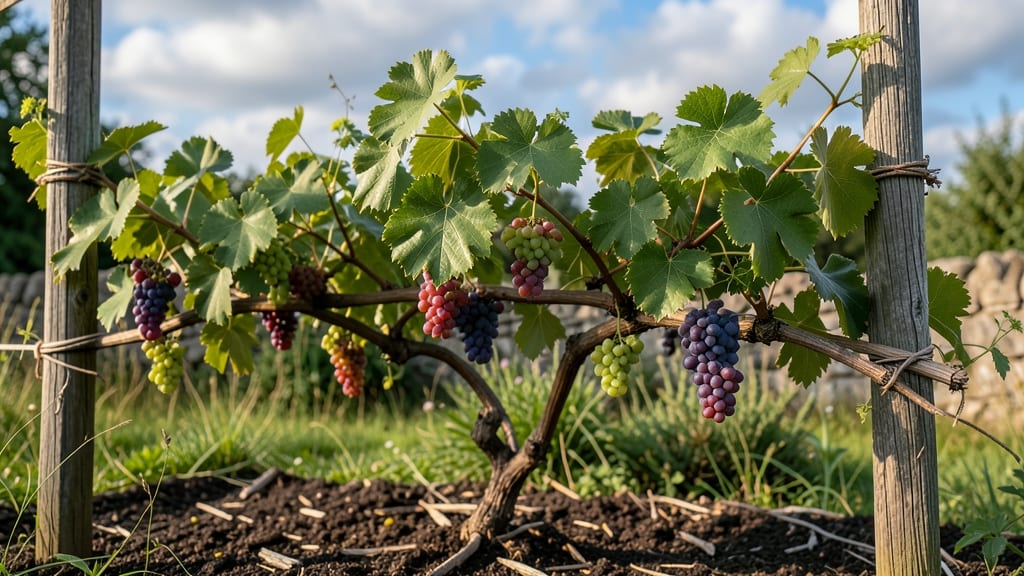
My grape vine fruiting secrets start with one simple truth: healthy vines produce fruit, but only when you prune, feed, and protect them the right way. 🌿 Last summer, I doubled my harvest by adjusting just three things—timing, sunlight, and soil—and now my vines burst with clusters instead of sparse berries.
Pruning is where it begins. Cut back last year’s growth by ⅓ to ½ in late winter, always keeping 2-4 mature canes per vine. This forces energy into new shoots where fruit forms.
Pair that with a balanced fertilizer in early spring—too much nitrogen means leaves, not grapes—and you’ve set the stage for a heavy crop.
By mid-summer, you’ll see the difference: full, plump clusters instead of shrunken berries. The key is consistent watering (deep but not soggy) and shade cloth on scorching days to prevent sunburn. Even my smallest vines now produce pounds of fruit—enough for jams, snacks, and sharing with neighbors.
This works for table grapes, wine grapes, and even muscadines. The only rule? Start now—your next harvest depends on the cuts you make this winter. Let’s get those vines fruiting like crazy.
📚 In This Guide
- What you need
- Instructions
- Tips and common mistakes
- Wrapping up and next steps
What you need
- ● Grapevine plants: Choose disease-resistant varieties like Concord, Thompson Seedless, or Cabernet Sauvignon. Buy 1-3 plants (depending on space) from a reputable nursery.
- ● Well-draining soil: Mix 60% topsoil, 30% compost, and 10% perlite/sand for ideal drainage. Test pH (aim for 6.0–6.5).
- ● Support structure: Arbor or trellis: 6–8 ft tall for standard vines (e.g., T-posts + wire or pre-built arbors).
- ● Cord or twine: 50–100 ft (for training vines).
- ● Fertilizer: Balanced NPK (10-10-10): 1–2 lbs per plant at planting.
- ● Citric acid or Epsom salt: 1 tbsp per gallon of water (for micronutrients during fruiting).
- ● Mulch: 2–3 inches of straw or wood chips to retain moisture and suppress weeds.
- ● Pruning shears: Bypass-type (sharp, 4–6 inch blades) for clean cuts.
- ○ Grafting tools (optional): Knife (grafting razor) and grafting tape for propagation.
- ● Watering can or drip irrigation: 1–2 gallons capacity (or a soaker hose for efficiency).
- ● pH test kit: Digital or liquid kit to monitor soil health.
- ● Gloves & sun protection: Heavy-duty gloves (gardening or pruning) and sunscreen (thick canes = lots of sun exposure!).
- ● Sunlight: 6–8+ hours of direct sun daily (full sun is non-negotiable!).
- ● Water access: Consistent moisture (especially during flowering/fruiting). Drought = fewer grapes!
- ● Patience: Vines take 2–3 years to bear fruit after planting. Plan ahead!
- ● Local climate knowledge: Check your USDA hardiness zone (most grapes thrive in Zones 5–10).
- ● 🌡️ Chill hours: Some varieties need 200–1,000 hours below 45°F for fruiting. Research your vine’s needs!
- ● ✨ Soil prep hack: Add 1 cup of bone meal at planting for phosphorus (boosts root and fruit development).
- ● 🎯 Pest prevention: Set up row covers early to deter birds/squirrels (they love ripe grapes!).
Instructions for encouraging grape vine fruiting
Here's how I've helped vines produce abundant fruit year after year—no fancy equipment needed.
☀️ Step 1: Maximize Sunlight Exposure
Grapevines need 6-8 hours of direct sunlight daily to set fruit. I position mine where they get morning sun and afternoon shade in hot climates—too much midday sun can scorch leaves. If your vine isn't fruiting well, move it closer to the sunniest spot in your yard.
Watch for leaves turning yellow on the undersides—this signals insufficient light. You'll see the difference within weeks: strong vines develop deep green leaves and sturdy canes. If you can't move the vine, consider adding a small grow light for 4-6 hours daily during cloudy seasons.
💧 Step 2: Water Deeply and Consistently
Water grapevines at the base 1-2 times per week, giving them 1-2 gallons per plant each time. The key is deep watering—soak the soil until it's moist 12-18 inches down. Shallow watering encourages weak roots and poor fruiting.
Check moisture by sticking your finger 2 inches into the soil. If it feels dry, it's time to water. Avoid wetting the leaves to prevent fungal diseases. You'll know you're doing it right when the soil stays consistently moist but not soggy, and the vine shows steady growth without wilting.
✂️ Step 3: Prune for Better Airflow and Fruit Production
Prune in late winter or early spring before new growth begins. Remove 1/3 of last year's canes—older wood produces less fruit. Cut back any crossing or rubbing branches to improve airflow, which reduces disease. I also trim any suckers growing from the base or trunk, as they drain energy from fruiting.
Leave 2-4 main canes per vine, cutting them back to 8-12 buds. This encourages strong new growth and better fruit set. Watch for new shoots emerging after pruning—these will become next year's fruit-bearing canes. If you see too many shoots, thin them to 4-6 strong ones to focus energy on fruit production.
🌿 Step 4: Fertilize for Strong Growth and Fruit Set
Feed grapevines in early spring with a balanced 10-10-10 fertilizer or one formulated for fruit trees. Apply 1/2 cup per vine and water it in well. Avoid high-nitrogen fertilizers—they promote leafy growth at the expense of fruit. I also add a handful of compost around the base to improve soil health.
Watch for signs of nutrient deficiency: yellow leaves indicate nitrogen issues, while purple stems suggest phosphorus needs. You'll see the best results when the vine produces strong, green leaves and sturdy canes. If your vine isn't fruiting well, a light application of potassium-rich fertilizer in late summer can help improve fruit set for next year.
🍇 Step 5: Encourage Pollination and Protect Developing Fruit
If you're growing table grapes, hand-pollinate by gently shaking the vine on a warm, sunny day to release pollen. For wine grapes, no intervention is needed. Protect developing clusters from birds and pests with netting or organic sprays. I also remove any fruit clusters smaller than 1/2 inch to help the vine focus energy on fewer, larger berries.
Watch for signs of stress, like small or misshapen fruit, which can indicate poor pollination or pest damage. You'll know your efforts are working when the vine produces full, plump clusters with no signs of disease or pest damage. Thin clusters to 1/2 inch apart if they're too crowded, as this improves air circulation and fruit quality.
Tips & tricks for thriving grape vines
Common pitfalls—and how to sidestep every one—when growing grape vines that produce like crazy.
Sunlight Strategy: In Step 1, if your vine isn't getting enough light, try moving it just a few feet closer to the sun. I once had a vine in partial shade that barely fruited—after shifting it to full morning sun, it produced clusters twice as big. For container vines, rotate them every few weeks so all sides get equal light exposure.
Watering Wisdom: Step 2's deep watering rule is critical, but timing matters too. Water in the early morning so leaves dry quickly, preventing fungal infections. I've seen vines develop powdery mildew from evening watering—trust me, it's a nightmare to treat. Also, if your soil drains too fast, consider mulching with straw to retain moisture longer.
Pruning Precision: When you're cutting back in Step 3, look for canes with at least 8-12 buds—these are your future fruit producers. I learned this the hard way after pruning too aggressively and getting almost no fruit. Remember, you're shaping next year's harvest by what you leave behind. Use clean, sharp pruners to avoid crushing canes and spreading disease.
Fertilizer Timing: The 10-10-10 fertilizer in Step 4 should be applied right after pruning when new growth starts. I've found that adding compost around the base in late summer gives a gentle nutrient boost without overwhelming the vine. If you notice yellow leaves after fertilizing, you've likely overdone it—flush the soil with water to dilute excess nutrients.
Pro Tips for Grape Vine Fruiting
- Common pitfalls—and how to sidestep every one—when growing grape vines that produce like crazy.
- Sunlight Strategy: In Step 1, if your vine isn't getting enough light, try moving it just a few feet closer to the sun.
- Watering Wisdom: Step 2's deep watering rule is critical, but timing matters too.
Frequently asked questions
Got questions about grape vine fruiting? You’re not alone—growing grapes can be tricky, but we’ve got answers! Here are some of the most common concerns from gardeners just like you.
How long does it take for a grape vine to fruit after planting?
A newly planted grape vine typically takes 2–3 years to produce its first harvest, depending on the variety and growing conditions. Patience is key—focus on establishing strong roots and vines first! For faster fruiting, choose self-pollinating varieties like Concord or Thompson Seedless.
Why isn’t my grape vine fruiting this year?
Several factors can delay fruiting, including young age, poor pollination, or nutrient deficiencies. Check for:
- Sufficient sunlight (6+ hours daily)
- Balanced fertilization (high in potassium and phosphorus)
- Proper pruning to encourage fruit-bearing canes
Do grape vines fruit every year, or do they need a rest?
Most grape vines can fruit annually if cared for properly, but they benefit from a light pruning rest every few years to rejuvenate growth. Heavy fruiting can exhaust the vine—thin clusters early to avoid overburdening it. Varieties like Muscat or Flame Seedless are particularly productive when managed well.
Can I force grape vines to fruit indoors or in containers?
While grapes can grow in containers, fruiting is challenging indoors due to light and pollination needs. For best results:
- Use a large pot (15+ gallons) with drainage
- Place near a south-facing window or grow lights
- Hand-pollinate with a small brush if no bees are present
What should I do if my grape clusters aren’t developing?
Undersized or failing clusters often signal poor pollination, water stress, or disease. Try these fixes:
- Hand-pollinate with a soft brush if bees are scarce
- Water deeply 1–2 times weekly (avoid soggy soil)
- Spray with neem oil if powdery mildew or mites are present
- Fertilize with low-nitrogen, high-potassium blend
Wrapping up and next steps
Mastering the grape vine fruiting process is all about patience, observation, and a little know-how! Whether you’re pruning for the first time or fine-tuning your techniques, every step brings you closer to a bountiful harvest.
Your hard work will soon be rewarded with juicy, flavorful grapes that make the effort worth it.
Ready to take the next step? Start by monitoring your vines weekly—adjust pruning, fertilizing, or pest control as needed. And don’t forget to celebrate the small wins along the way! 🍇 With consistency, your grapevine will thrive year after year.