
Companion Plants
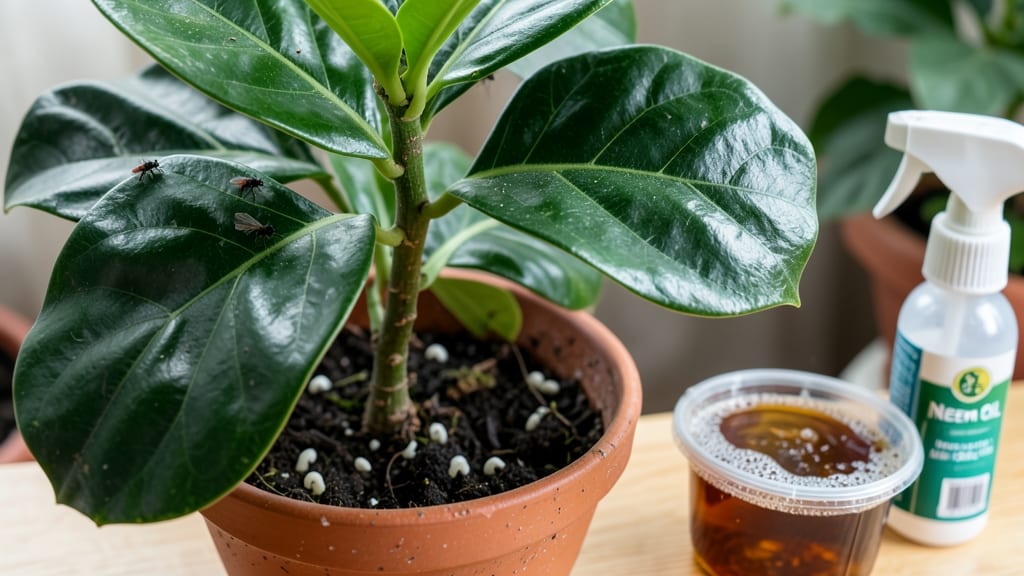
Fruit flies in house plants appear when overripe fruit, rotting plant debris, or excess soil moisture create breeding grounds, but you can safely eliminate them using apple cider vinegar traps, diatomaceous earth, or neem oil sprays.
These tiny pests are drawn to fermentation smells and organic decay, which is why they swarm around wilting leaves or soggy soil. 🌱 The key to stopping them is breaking their life cycle by removing decaying matter and using targeted natural repellents.
Unlike chemical sprays, these methods protect your plants while keeping your home pest-free.
Apple cider vinegar traps work because the flies are attracted to the scent but get trapped in soapy water. For stubborn infestations, diatomaceous earth disrupts their exoskeletons, while neem oil acts as a natural deterrent when sprayed on foliage.
The best approach combines prevention (proper watering, pruning) with these targeted solutions.
💡 In This Article
- Why Fruit Flies Target House Plants
- Natural Fruit Fly Traps and Prevention for Indoor Plants
Why fruit flies target house plants
Fruit flies, scientifically known as Drosophila melanogaster, are drawn to house plants primarily because they're attracted to fermentation odors and organic decay.
These flies have highly sensitive olfactory receptors that detect ethyl acetate and other volatile organic compounds released by rotting fruit, overwatered soil, or wilting leaves. 🌱 When plant matter decays, it releases these same chemical signals that mimic fermenting fruit, creating an irresistible feeding and breeding ground for fruit flies.
The lifecycle of fruit flies accelerates in these conditions. Females lay eggs in moist, decaying organic matter, and larvae hatch within 24-48 hours under ideal conditions. The larvae feed on the decomposing material for about 5-7 days before pupating, emerging as adults ready to reproduce within 3-5 days.
This rapid cycle explains why a single infestation can quickly become overwhelming, especially in warm indoor environments where temperatures often stay between 70-80°F—perfect for fruit fly development.
Healthy plants rarely attract fruit flies because their natural defenses (like waxy leaves or strong aromas) deter pests. However, stressed plants—those with yellowing leaves, soft stems from overwatering, or accumulated dead foliage—become prime targets.
The excess moisture in soggy soil creates anaerobic conditions that produce fermentation byproducts, while decaying leaves provide both food and breeding sites. 🌿 This is why you'll often see fruit flies swarming around the base of potted plants or near fruit bowls placed near windowsills where humidity is higher.
Fruit flies also exploit another plant-related weakness: poor air circulation. Stagnant air traps fermentation odors near the plant surface, making it easier for flies to locate and colonize these areas.
Unlike outdoor pests that face natural predators, indoor fruit flies thrive in the controlled environment of your home, where they face no competition and unlimited access to their preferred food sources. This ecological mismatch is why they become such persistent nuisances around house plants.
Understanding this behavior helps explain why simple fixes—like removing overripe fruit or adjusting watering habits—can dramatically reduce fruit fly populations. The flies aren't randomly choosing your plants; they're following chemical cues that reveal decaying organic matter.
By eliminating these attractants, you're essentially removing the "welcome mat" these pests use to find their way to your indoor garden. 🌿