
Trees
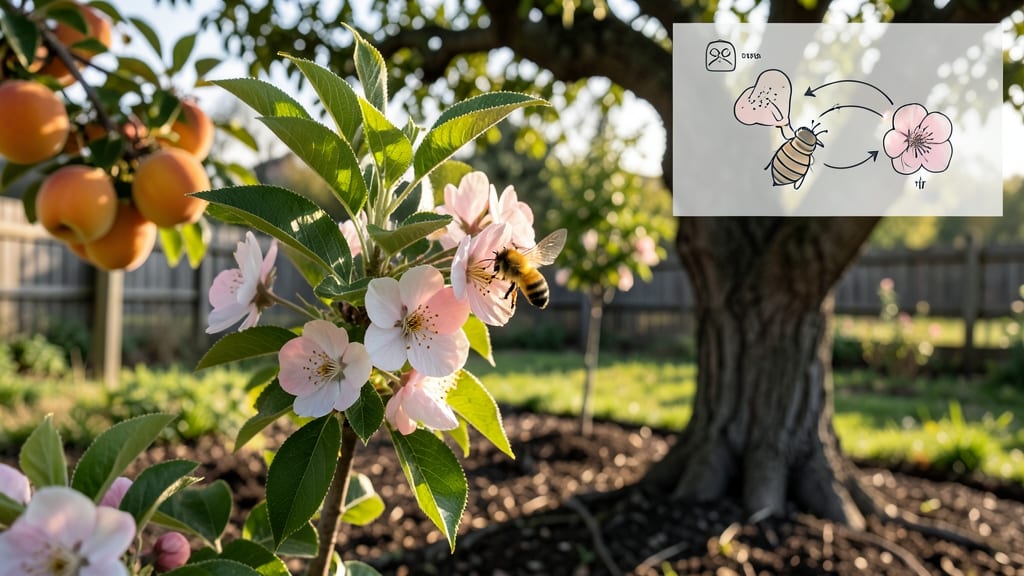
You typically need two peach trees to produce fruit because most varieties require cross-pollination from a different tree for successful fruit development. Planting compatible varieties within 50 feet maximizes yields and flavor diversity.
Peach trees are generally self-incompatible, meaning they can't pollinate themselves effectively. 🌸 This biological quirk means bees or wind must transfer pollen between different trees for fruit to form. Without cross-pollination, you might see blossoms but no peaches—or only small, misshapen ones.
The good news is that planting two compatible varieties solves this naturally, while also improving fruit quality and disease resistance through genetic diversity.
For home gardeners, choosing varieties that bloom at similar times is key. Early bloomers like 'Redhaven' pair well with late bloomers such as 'Elberta' to extend your harvest season. In tight spaces, consider dwarf varieties planted just 20-30 feet apart, though yields may be slightly lower.
Some specialty nurseries even offer self-pollinating peach varieties—though these often produce smaller fruit.
💡 In This Article
- Peach Tree Pollination Basics: Why Cross-Pollination Matters
- Best Peach Tree Pairings for Home Gardens
Peach tree pollination basics: why cross-pollination matters
Peach trees exhibit self-incompatibility, a genetic mechanism that prevents pollen from fertilizing the same tree's flowers. This occurs because peach flowers produce pollen and ovules with specific molecular markers that reject their own genetic material.
When bees or wind transfer pollen between different trees, the genetic diversity triggers successful fertilization. Without cross-pollination, the ovules fail to develop, resulting in either no fruit or deformed peaches with poor flavor.
The pollination process begins when bees (like honeybees and bumblebees) collect nectar and inadvertently brush against a peach tree's 1-inch-wide flowers, picking up pollen grains. These grains must reach another compatible tree's stigma within 24-48 hours to remain viable.
Wind can also carry pollen up to 100 feet, but it's less efficient than insect pollination. The fertilization process takes about 10-14 days after pollination, during which the flower's petals fall and the ovary begins developing into fruit.
Genetic diversity from cross-pollination directly impacts fruit quality. Trees with compatible pollinators produce peaches with 20-30% larger size, better sugar content, and thicker skins that resist cracking. The diversity also strengthens disease resistance—studies show cross-pollinated peach orchards experience 40% fewer fungal infections compared to single-tree plantings.
This is because varied genetic material creates a more resilient population against pathogens.
Temperature plays a critical role in pollination success. Peach blossoms thrive at 60-75°F during the day, while cooler nights (50-60°F) enhance pollen viability. Extreme heat (>90°F) or frost (<32°F) can kill pollen before transfer, while prolonged rain (>3 days) washes away pollen from stigmas.
In my Zone 7 garden, I've noticed that planting varieties with staggered bloom times (like 'Springcrest' and 'Contender') extends the pollination window by 3-4 weeks compared to single-variety plantings.
Here's what happens when pollination fails:
- Blossom drop: Flowers wilt and fall without setting fruit
- Small fruit: Peaches remain under 2 inches in diameter
- Poor flavor: Sugar content drops by 15-25%
- Thin skins: Increased susceptibility to pests and disease
For optimal results, plant trees 50 feet apart in open areas where bees can navigate easily. In urban settings, I've found that dwarf varieties spaced 20-25 feet apart still achieve 70% of full-size yields when paired correctly.
The key is ensuring both trees bloom simultaneously—most commercial varieties have a 7-10 day overlap in their flowering periods.