
Trees
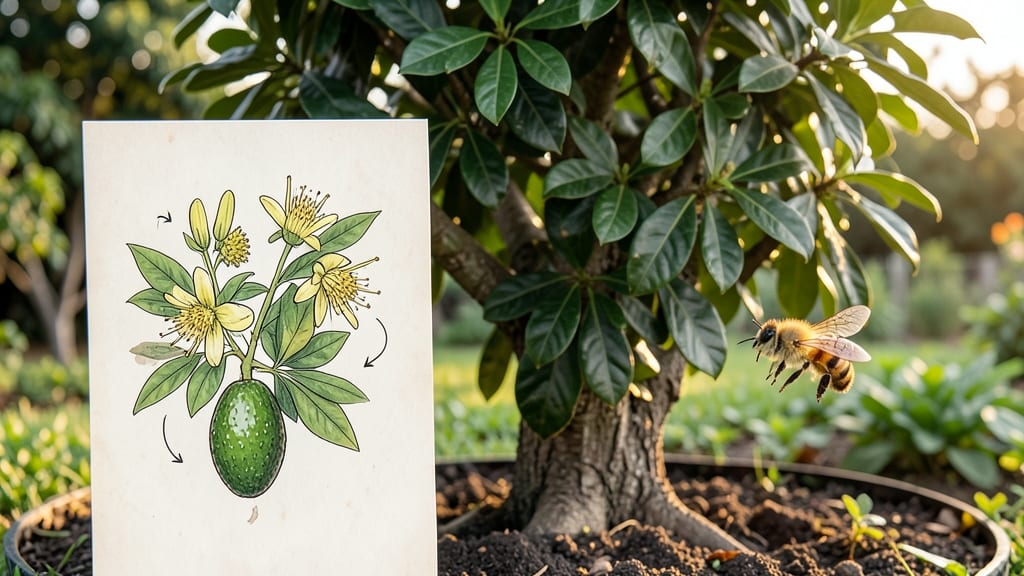
You do need 2 avocado trees to produce fruit because they require cross-pollination between different varieties (A and B types) to bear fruit. Planting a single tree won’t yield edible avocados, though it may flower. Choose complementary types for successful harvests.
Avocado trees have a fascinating pollination system where male and female flower parts mature at different times—a trait called protogyny. 🌿 Type A trees release pollen in the morning but only accept it in the afternoon, while Type B trees do the opposite.
This timing mismatch means a single tree can't pollinate itself, which is why you need at least one A and one B variety within 50 feet of each other. Bees play a crucial role here, transferring pollen between trees during their morning and afternoon foraging trips.
This isn't just a botanical quirk—it's why many gardeners accidentally end up with flowering but fruitless trees. The good news is that once you pair compatible varieties, you'll see fruit within 3-5 years, depending on climate conditions.
Popular pairings like Hass (A type) with Duke (B type) work beautifully in temperate zones, while Fuerte and Bacon thrive in warmer regions.
💡 In This Article
- Why Avocado Trees Need Two Varieties for Fruit Production
- Best Avocado Tree Pairings for Home Gardens
Why avocado trees need two varieties for fruit production
Avocado trees exhibit a fascinating reproductive strategy called protogyny, where male and female flower parts mature at different times within the same flower.
Type A trees release pollen in the morning but only accept it in the afternoon, while Type B trees do the exact opposite—pollen is available in the afternoon but receptive in the morning.
This dichogamy (time-separated flower functions) creates a biological barrier that prevents self-pollination, meaning a single tree can't fertilize itself. 🌿 The result? Beautiful flowers but no fruit development.
Bees become the unsung heroes in this process, acting as the primary pollinators. As they forage for nectar, they transfer pollen between Type A and Type B trees during their morning and afternoon foraging trips.
Studies show that bees visit up to 1,000 flowers per hour, dramatically increasing cross-pollination rates. Without this natural transfer, fruit set drops by 90% or more.
The timing difference isn't just about minutes—it's about creating a window where pollen from one tree type must physically reach the receptive stigmas of another type within a 24-hour period.
Here's what happens when you plant just one tree: the flowers may open and close normally, but without compatible pollen, fertilization fails at the cellular level. The ovules (potential seeds) remain unfertilized, and the fruit never develops beyond a tiny, undeveloped stage.
This explains why you might see abundant blooms but no avocados—your tree is essentially "talking to itself" without a partner. The good news is that once you introduce a compatible variety within 50 feet, you create an optimal pollination zone where bees can efficiently shuttle pollen between trees.
Temperature plays a surprising role too. Avocado flowers are particularly sensitive to below 50°F temperatures, which can disrupt normal flowering cycles. In colder climates, this means you might need to plant trees closer together to ensure bees can still navigate between them during brief warm periods.
The ideal scenario combines proper spacing with complementary flowering times—think of it like a biological dance where each partner has its own rhythm, but together they create harmony. 🌸
What most gardeners don't realize is that even when you have two trees, success depends on proper timing. If both trees are the same type (both A or both B), they'll still fail to produce fruit because their flowering cycles won't complement each other.
This is why botanists recommend planting at least one Type A and one Type B variety. Popular combinations like Hass (A) with Duke (B) work particularly well because their flowering patterns create maximum overlap in the pollination window.
For those in tropical or subtropical climates, this system works beautifully year-round, while temperate zone growers may see seasonal variations in fruit production. The key takeaway is that avocado trees have evolved this complex system to ensure genetic diversity in their offspring—nature's way of preventing inbreeding.
When you plant two compatible varieties, you're essentially creating a mini-ecosystem that mimics their natural habitat, where bees and other pollinators thrive alongside the trees. 🐝