
Trees
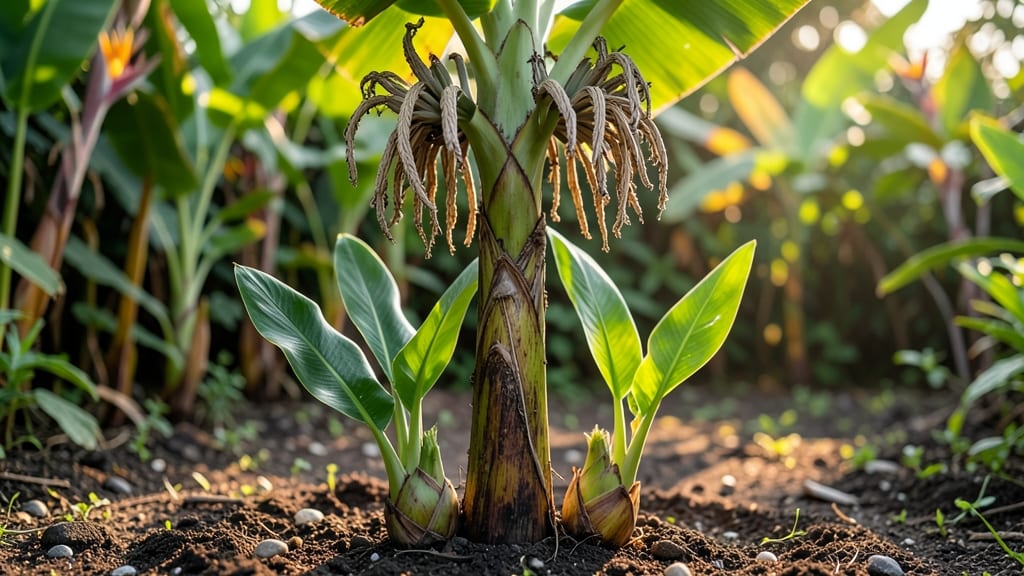
Yes, banana trees die after fruiting because they're monocarpic plants that exhaust their energy producing fruit, but they leave behind new shoots called "pups" that grow from the base to continue the cycle.
This lifecycle is actually quite fascinating—banana plants are technically giant herbaceous plants, not true trees, and their pseudostem (the thick, fibrous trunk) stores energy for fruiting.
Once the mother plant produces its final bunch of bananas, it gradually dies back, but those pups at the base become your next generation. 🌱 I've seen home gardeners harvest 3-5 bunches from a single plant before it finally declines, proving how productive they can be before their natural end.
What's interesting is how this process works: the plant redirects all its resources to fruit production, leaving nothing for maintenance. That's why you'll notice leaves yellowing and dying back after harvest—it's not a disease, just the plant's way of conserving what little energy remains for the pups.
The good news? With proper care, those pups can grow into full-sized plants in just 1-2 years, meaning you'll have a continuous banana supply if you manage the cycle right. I always recommend removing dead leaves from the mother plant to prevent pests while letting the pups establish themselves.
💡 In This Article
- Why Banana Plants Die After Producing Fruit
- How to Care for Banana Trees After Harvesting
Why banana plants die after producing fruit
Banana plants are technically monocarpic, meaning they allocate all their energy to a single massive reproductive event—producing fruit—before dying. This lifecycle is hardwired into their genetics as giant herbaceous plants, not true trees.
The pseudostem, that thick fibrous trunk you see, acts like a biological battery, storing starches and nutrients to fuel fruit production. When the plant flowers and sets fruit, it diverts up to 90% of its energy reserves to develop those bananas, leaving nothing for maintenance or growth.
The death process begins subtly with the mother plant's leaves yellowing and wilting after harvest, a visual cue that energy reserves are depleted. What's fascinating is how the plant's survival strategy kicks in: as the mother plant declines, it triggers the growth of pups (offspring shoots) at the base.
These pups contain the genetic blueprint for future fruiting cycles. 🌱 The mother plant's role is complete—its sole purpose was to produce fruit and propagate the species through these pups. This is why you'll often see multiple bunches on a single plant, each representing a different growth stage.
Here's where it gets botanically clever: the pseudostem contains specialized cells that produce auxin hormones, which suppress pup growth until the mother plant is ready to die. Once fruiting begins, auxin production drops dramatically, allowing the pups to emerge and compete for resources.
This hormonal shift explains why you'll see new shoots appearing right after the first bunch is harvested—it's not coincidence, it's programmed behavior. The dying mother plant is essentially sacrificing itself to ensure the next generation thrives.
What most gardeners don't realize is that this cycle can repeat 3-5 times before the mother plant finally collapses. Each subsequent bunch requires more energy, which is why the fruit size often decreases with each cycle.
The plant's ability to produce multiple harvests makes it incredibly productive, but each cycle accelerates the mother plant's decline. 💫 This is why experienced growers focus on protecting those pups—they represent your future banana harvests.
Consider this comparison: while true trees like oaks grow indefinitely, banana plants follow a different strategy. They're more like annual flowers that produce seeds (in this case, pups) before dying, but on a much larger scale.
The key difference is that banana plants store their energy in the pseudostem rather than in seeds, allowing them to produce multiple fruit cycles before their final demise.
The entire process takes about 12-18 months from flowering to fruit maturity, during which the plant's energy reserves are systematically depleted. What appears to be wasteful is actually a brilliant survival mechanism—by focusing all resources on fruit production, banana plants maximize their reproductive success before the mother plant's inevitable decline.