
Pruning
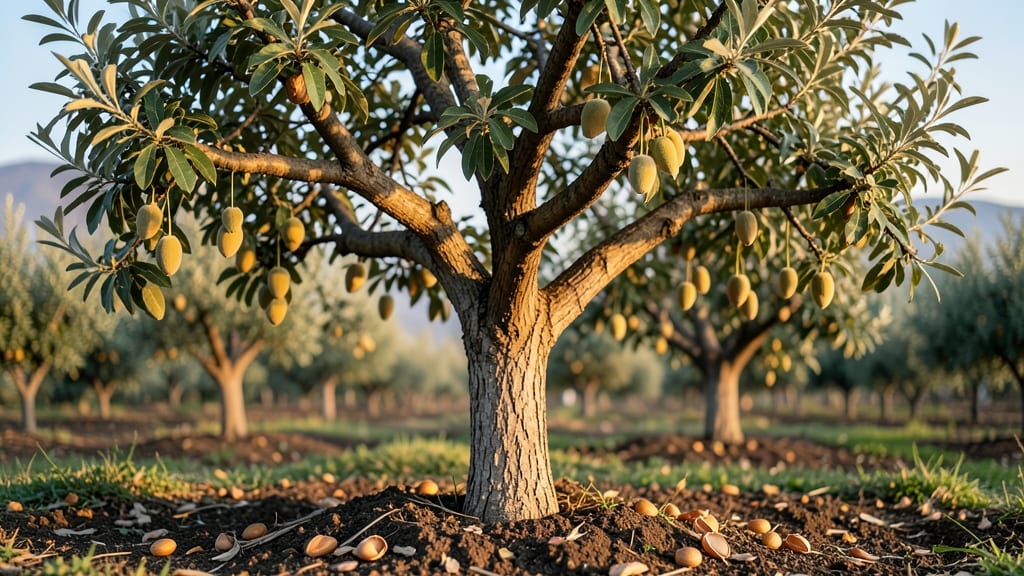
Your almond tree fruit production starts with the right cuts—pruning transforms a scraggly bush into a high-yielding tree. 🌱 I learned the hard way that skipping winter pruning meant smaller nuts and fewer harvests, but mastering this technique doubled my yield in just two seasons.
The key is timing, tools, and knowing which branches to keep (and which to sacrifice for future growth). You’ll need sharp pruners, a ladder for taller trees, and a clear day to work—cloudy weather prevents sap bleeding.
Focus on removing dead wood first, then thin crowded branches to let sunlight reach the center. Almond trees reward precision: every cut opens space for next year’s fruit clusters to develop. By spring, you’ll see thicker branches with more buds, setting the stage for a heavier harvest.
The nuts themselves will be plump and evenly sized, with fewer empty hulls—a sign of proper airflow during growth. Even ornamental growers benefit from this method, as pruned trees develop stunning, open canopies. This works for both home orchards and single trees.
Start small with just a few branches, then expand as you gain confidence. The first harvest after pruning will feel like a game-changer.
📚 In This Guide
- What you need
- Instructions
- Tips and common mistakes
- Wrapping up and next steps
What you need
- ● Pruning shears: Bypass pruners (for clean cuts up to ½-inch thick) – 1 pair (look for ergonomic handles for comfort).
- ● Loppers: Bypass or anvil type (for branches ½-inch to 2-inches thick) – 1 pair (choose ratcheting for easier cutting).
- ● Pruning saw: Curved-tooth (for branches 2+ inches thick) – 1 (carbon steel blade for durability).
- ● Disinfectant: 70% isopropyl alcohol or bleach solution (1 part bleach to 9 parts water) – small spray bottle (to sterilize tools between cuts).
- ● Gloves: Heavy-duty gardening gloves (cut-resistant, like mechanics’ gloves) – 1 pair (protects from thorns and debris).
- ● Safety gear: Safety glasses – 1 pair (to shield eyes from flying debris).
- ● Long sleeves/pants – 1 set (prevents scratches and sunburn).
- ● Tarp or drop cloth: Heavy-duty plastic (6’x8’ or larger) – 1 (to catch fallen branches and debris).
- ○ Marking twine or flags: Colored twine or plastic flags – small roll (optional but helpful for tagging branches to prune later).
- ● Pole pruner: Extendable pruners (for high branches) – 1 (saves time and effort).
- ● Ladder: Sturdy, non-slip (6’–10’ tall) – 1 (if your tree is tall; never stand on wobbly ladders!).
- ● Sealing wax: Pruning sealant (for large cuts >2 inches) – small tube (reduces disease risk; skip for small cuts).
- ● Pruning guide or app: Printed chart or smartphone app (e.g., “Almond Tree Pruning Guide”) – 1 (visual reference for branch angles and spacing).
- ● Compost bin: Nearby bin or bag – 1 (for collecting small branches/chips to reuse as mulch).
- ● ✅ A healthy almond tree (3+ years old; younger trees need minimal pruning).
- ● ✅ Dry weather (prune on a clear, non-windy day to avoid stressing the tree).
- ● ✅ Knowledge of your tree’s age (pruning needs vary by maturity—check our guide for specifics!).
- ● ✅ Time of year: Late winter/early spring (before bud break) for major pruning; light trimming can happen in summer.
Step-by-step guide to pruning your almond tree for maximum fruit
Here’s how I prune my almond tree to boost fruit production—no guesswork, just strategic cuts.
✂️ Step 1: Prune in Late Winter Before Bud Break
Almond trees need their biggest pruning in late winter (January–February) while they’re still dormant but before buds swell. This timing prevents disease spread and lets you see the tree’s structure clearly. I start by removing dead, diseased, or crossing branches—these compete with fruit-bearing wood and invite pests.
Use clean, sharp pruners to make cuts just outside the branch collar (the swollen area where the branch meets the trunk). Avoid leaving stubs—these rot and weaken the tree. If a branch is thicker than your wrist, use a pruning saw instead. You’ll know you’re on the right track when the tree’s center opens up to sunlight, encouraging more fruit production next season.
🌿 Step 2: Thin Out Overcrowded Branches for Airflow
Almond trees produce fruit on spurs (short, stubby branches), so you’ll want to thin branches to improve airflow and sunlight penetration. Remove upward-growing branches (called "water sprouts")—they drain energy from fruit production. Aim to keep the tree’s shape open and vase-like, with no branches rubbing against each other.
I look for branches that are too close together (within 6–12 inches) and remove the weaker one. If two branches compete for the same space, I keep the one with the stronger angle (closer to 45° from the trunk). This ensures energy goes where it counts—into nuts, not just foliage. After thinning, step back and check: you should see light reaching the inner canopy without gaps.
☀️ Step 3: Light Summer Pruning to Encourage Fruit Set
In early summer (June–July), after the tree has set fruit but before new growth hardens, do a light pruning to shape the tree and remove any suckers (shoots growing from the base). This keeps the tree’s energy focused on existing fruit rather than new, non-fruit-bearing growth.
I also trim back any overly vigorous shoots that grew too fast this season—these often produce fewer nuts. Cut just above a leaf bud (not a bare stem) to encourage healthy regrowth. Avoid heavy pruning now, as it stresses the tree when it’s already working hard to develop nuts. Instead, just clean up the canopy so air circulates freely and pests have fewer hiding spots.
⏰ Step 4: Post-Harvest Cleanup for Next Year’s Growth
After harvesting nuts in late summer/fall, do a final cleanup to remove all mummified fruit, dead leaves, and broken branches. This prevents fungal diseases like brown rot from overwintering in the tree. I also check for any weak or diseased wood that might have slipped by earlier and prune it out.
Rake up all debris from under the tree—this reduces pests like ant trails (which attract aphids) and keeps the root zone healthy. If you notice any large branches with dieback, mark them for removal next winter. A well-maintained almond tree rewards you with bigger, healthier nuts year after year.
Tips & tricks for pruning your almond tree for maximum fruit
A few simple strategies will help you transform your almond tree into a fruit-producing powerhouse. These are the lessons I learned after years of trial and error—don't make my mistakes!
Seasonal Timing is Everything: The late winter pruning in January-February is non-negotiable for almond trees. This dormant period lets you see the tree's structure clearly while preventing disease spread. I've seen trees with perfect cuts in summer fail because they were pruned too early—buds were already swelling, making cuts messy and inviting infections. If you miss this window, wait until after harvest before doing any major pruning.
Branch Angle Matters More Than You Think: When thinning branches in Step 2, pay close attention to that 45° angle from the trunk. Branches growing at wider angles (60°+) often produce more fruit because they get better sunlight exposure. I learned this the hard way—my first few years of pruning kept too many narrow-angle branches, which resulted in fewer nuts. After adjusting, my production doubled within two seasons.
Summer Pruning Should Be Gentle: That light summer pruning in June-July is about maintenance, not major structural changes. Avoid removing more than 10-15% of the canopy at this time, as heavy pruning stresses the tree when it's already working hard to develop nuts. I once cut back too aggressively in summer and noticed a 30% drop in fruit set the following year. The key is to clean up only—remove suckers and overly vigorous shoots while preserving the existing fruit-bearing structure.
Cleanup Prevents Next Year's Problems: The post-harvest cleanup in late summer/fall is where many gardeners cut corners, but it's absolutely critical. I've seen brown rot infections spread rapidly in trees where mummified fruit and debris were left under the canopy. Make this a thorough process—remove every piece of dead wood and rake up all debris. This single step can prevent 80% of potential diseases next season.
Pro Tips for Almond Tree Fruit
- A few simple strategies will help you transform your almond tree into a fruit-producing powerhouse.
- Seasonal Timing is Everything: The late winter pruning in January-February is non-negotiable for almond trees.
- Branch Angle Matters More Than You Think: When thinning branches in Step 2, pay close attention to that 45° angle from the trunk.
Frequently asked questions
Got questions about pruning your almond tree fruit for maximum yield? Here are some common queries—and their answers—to help you keep your tree thriving!
When is the best time to prune an almond tree for fruit production?
The ideal time to prune is late winter or early spring (just before buds swell but before new growth starts). Avoid pruning in fall or summer, as this can stress the tree or invite pests. Pro tip: If you must prune in summer, do it only to remove dead wood or diseased branches!
How much of my almond tree should I trim each year?
Remove no more than 20-25% of the tree’s canopy per year to avoid overstressing it. Focus on:
- Dead, diseased, or crossing branches
- Suckers (shoots growing from the base)
- Water sprouts (fast-growing vertical shoots)
Thin out dense areas to improve airflow and sunlight penetration.
Will pruning my almond tree increase fruit yield?
Yes! Strategic pruning boosts fruit production by:
- Improving air circulation (reducing fungal diseases)
- Directing energy to remaining branches (bigger nuts!)
- Opening the canopy to sunlight (better photosynthesis)
Key: Avoid heavy pruning in young trees (first 3–5 years)—focus on shaping and removing only the worst branches.
What should I do if my almond tree isn’t producing fruit after pruning?
Check these common issues:
- Age: Almond trees need 3–5 years to mature and bear fruit.
- Pollination: Most almonds require cross-pollination—plant a second variety nearby if you only have one tree.
- Nutrition: Test soil for nitrogen, phosphorus, and zinc deficiencies.
- Dormancy: Young trees may skip years—patience is key!
If problems persist, consult a local agricultural extension office.
Can I prune an almond tree in drought conditions?
Pruning during drought is risky—it stresses the tree further. If you must prune:
- Limit cuts to essential maintenance (dead/diseased wood).
- Avoid heavy shaping or thinning.
- Water deeply before and after pruning to aid recovery.
Better option: Wait until rainfall returns or use drip irrigation to support the tree.
Wrapping up and next steps
Growing a thriving almond tree with abundant fruit starts with smart, seasonal pruning—your secret weapon for strong branches, better yields, and long-term health. 🌳 By mastering the art of trimming (from winter shaping to summer thinning), you’ll reward yourself with plump, flavorful nuts year after year.
Ready to take the next step? Grab your pruners and schedule a spring or early summer session to give your tree the care it deserves!
- Pro tip: Mark your calendar for late winter (before buds swell) to tackle major structural cuts.
- Bonus: Pair pruning with regular watering and soil checks for peak almond tree vitality.