
Plants
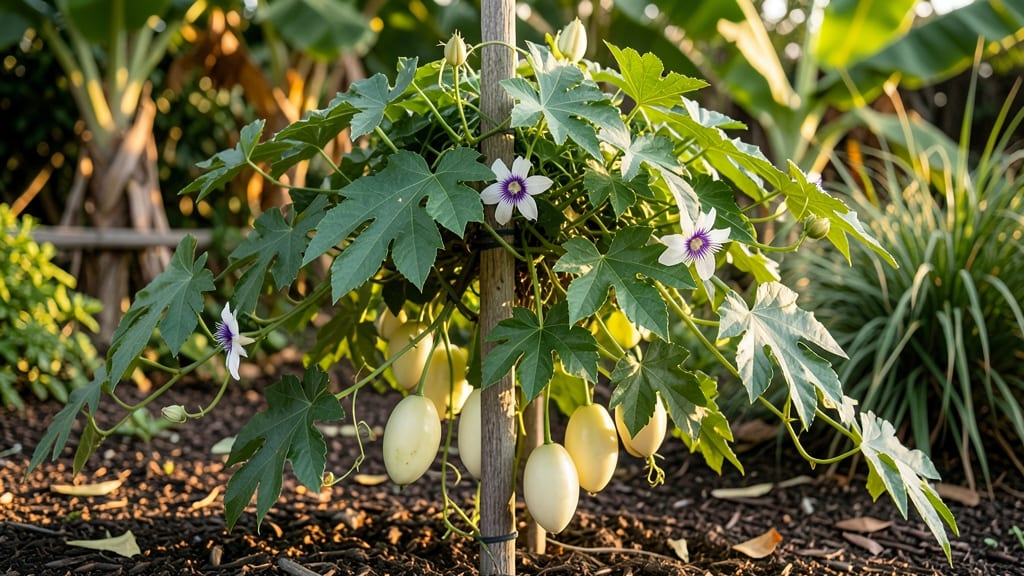
Growing white passion fruit transforms your garden into a tropical oasis with fragrant, creamy-fleshed fruit year-round. 🌿 I learned the hard way that these vines demand full sun and warm soil to thrive—skimp on either, and you’ll end up with weak growth and bitter fruit.
The payoff? A vine that produces fruit continuously if you give it the right conditions and a little patience.
Start with a 6-foot-tall trellis or sturdy fence to support the vigorous vines, and plant in well-draining soil amended with compost. White passion fruit loves heat—zones 10-12 are ideal, but container-growing extends it to cooler climates.
Water deeply 2-3 times a week once established, but avoid soggy roots. Prune aggressively in late winter to encourage new growth and keep the plant manageable.
📚 In This Guide
- What you need
- Instructions
- Tips and common mistakes
- Wrapping up and next steps
What you need
- ● White Passion Fruit Vines (Passiflora edulis f. flavicarpa) – Purchase 3–5 healthy, disease-free vines from a reputable nursery (ensure they’re labeled as white-fruited varieties).
- ● Well-draining soil mix – A blend of 50% garden soil, 30% compost, and 20% perlite or coarse sand (pH 6.0–7.0).
- ● Container or planting area: Containers: 15–20 gallon pots with drainage holes (1 vine per container).
- ● In-ground: Full sun spot (6+ hours/day) with space for vines to spread (10–15 ft per vine).
- ● Fertilizer – Balanced organic fertilizer (10-10-10 or 5-5-5) or compost tea for slow-release nutrients.
- ● Support structure – Trellis, arbor, or sturdy fence (vines can grow 20+ feet!).
- ● Pruning shears – Sharp, sterilized shears for trimming and training vines.
- ● Drip irrigation or watering can – Consistent moisture is key (avoid soggy roots!).
- ● Mulch – Straw or wood chips to retain moisture and suppress weeds.
- ● Soil moisture meter – To monitor watering needs (white passion fruit hates drought or waterlogging!).
- ● Pest control (neem oil, insecticidal soap) – For aphids or spider mites (common in tropical climates).
- ● Frost cloth – If you live in cooler zones (white passion fruit is tender to frost!).
- ● Pollination aid – A small brush or hand pollination tool (if bees are scarce).
Step-by-Step instructions for cultivating white passion fruit vines
Here's how to coax these delicate vines into thriving, fruit-bearing plants with minimal fuss.
🌱 Step 1: Select and Prepare Planting Site
White passion fruit (Passiflora edulis f. flavicarpa) thrives in full sun—choose a location receiving 6+ hours of direct sunlight daily. The vines need sturdy support like a 10-foot trellis or arbor, as they can sprawl aggressively. I always plant mine near a fence or pergola to contain their growth while maximizing vertical space.
Amend the soil with 2-3 inches of compost to improve drainage, as white passion fruit hates soggy roots. Test your soil's pH—these vines prefer a slightly acidic range of 6.0-7.0. If your soil is heavy clay, mix in sand or perlite to create a looser medium. The ideal planting spot should also be sheltered from strong winds, which can damage the delicate vines.
🌿 Step 2: Plant Cuttings or Young Vines
Start with 4-6 inch cuttings taken from healthy, disease-free vines in late winter or early spring. Dip the cut end in rooting hormone to encourage faster establishment. Plant the cutting at a 45-degree angle, burying about half its length in the prepared soil. This angled approach helps stabilize the vine and encourages root growth along the buried stem.
If using young potted plants, dig a hole twice as wide as the root ball but no deeper. Gently remove the plant from its container, loosen any circling roots, and place it in the hole so the top of the root ball sits 1 inch below soil level. Backfill with native soil mixed with compost, pressing lightly to eliminate air pockets. Water deeply to settle the soil and eliminate gaps.
☀️ Step 3: Establish Watering and Fertilizing Routine
Keep the soil evenly moist but never waterlogged during the first 6-8 weeks after planting. Water deeply 2-3 times per week, aiming for 1-2 gallons per plant each time. You'll know you're doing it right when the top 2 inches of soil feel damp but not soggy. Overwatering leads to root rot, which is fatal for these tropical vines.
Begin fertilizing 4-6 weeks after planting with a balanced, water-soluble fertilizer (10-10-10 or 20-20-20) diluted to half strength. Apply every 4-6 weeks during the growing season. White passion fruit responds well to potassium-rich fertilizers in late summer to encourage flowering and fruiting. I switch to a 5-10-10 formula at this stage to boost fruit development.
✂️ Step 4: Train and Prune for Optimal Growth
Guide the main vine along its support structure, tying it gently with soft plant ties every 12-18 inches as it grows. The goal is to encourage one strong central leader rather than multiple weak shoots. Prune any side shoots that emerge below the first 3 feet of the main vine—these compete for energy and reduce fruit production.
In late winter or early spring, perform a renewal pruning to remove any dead, diseased, or crossing branches. Cut back one-third of the oldest wood to stimulate new growth. This rejuvenation pruning also improves airflow, reducing the risk of fungal diseases that thrive in dense foliage. Wear gloves—passion fruit vines have sawtooth leaves that can draw blood if handled carelessly.
🍈 Step 5: Support Flowering and Fruit Development
White passion fruit flowers are self-pollinating, but you'll see better fruit set if you gently shake the vines on warm, still mornings when bees are active. The flowers open in the morning and close by afternoon, so timing matters. If your area has few pollinators, hand-pollinate using a small paintbrush to transfer pollen from male to female flowers.
As fruits begin to form, reduce watering slightly to 1-2 times per week to prevent splitting. Harvest when the fruit reaches full size but before it softens completely—typically 8-10 weeks after flowering. The skin should be smooth and slightly leathery, not wrinkled. Cut fruits from the vine using clean pruners, leaving a ¼ inch stem attachment to extend shelf life.
Tips & tricks for cultivating thriving white passion fruit vines
These sun-loving vines reward patience with bountiful harvests—here's how to maximize their potential without common pitfalls.
Site Selection Wisdom: White passion fruit vines need that full sun, but don't overlook wind protection. I've seen vines thriving near fences or trellises where they're shielded from afternoon breezes—those delicate leaves can tear easily. For extra insurance, plant on the north side of structures in hot climates to prevent leaf scorch during peak sun hours. The 6+ hours of sunlight requirement is non-negotiable, but positioning matters just as much.
Rooting Hormone Hack: When planting those 4-6 inch cuttings, I've found the rooting hormone makes all the difference in establishment success. Use a gel or powder formulation rather than liquid—it adheres better to the cut ends. For stubborn cuttings, I make a small vertical slit in the lower stem before applying hormone to increase surface area for root formation. This angled planting technique (Step 2) isn't just about aesthetics—it creates more contact points with moist soil, which is crucial for root development.
Soil Science: That 6.0-7.0 pH range is ideal, but don't stress if your soil tests slightly outside it. White passion fruit is surprisingly adaptable. I've had success with pH as low as 5.8 when I mixed in extra lime (calcium carbonate) at planting. For heavy clay soils, the sand or perlite amendment (Step 1) is essential—these vines will literally suffocate in compacted soil. I always test drainage by digging a hole and filling it with water; if it doesn't drain within 2 hours, I know I need to amend further.
Pruning Precision: When performing renewal pruning (Step 4), cut back to just above a leaf node where new growth will emerge. I use sterilized pruners to make clean cuts at a 45-degree angle to prevent disease entry. The one-third reduction rule is flexible—if your vine looks particularly vigorous, you can remove up to half the oldest wood. Just remember, more aggressive pruning means more new growth, which requires additional nutrients and water during the growing season.
Pro Tips for White Passion Fruit
- These sun-loving vines reward patience with bountiful harvests—here's how to maximize their potential without common ...
- Site Selection Wisdom: White passion fruit vines need that full sun, but don't overlook wind protection. I've seen vi...
- Rooting Hormone Hack: When planting those 4-6 inch cuttings, I've found the rooting hormone makes all the difference ...
Frequently asked questions
Got questions about growing white passion fruit?
Here are some of the most common ones—plus quick, practical answers to help you cultivate these sun-loving vines with confidence!
How long does it take for white passion fruit to bear fruit?
White passion fruit vines typically take 18–24 months to produce fruit from seed, but grafted plants can bear fruit in as little as 12 months. Patience is key—focus on providing strong support, regular watering, and plenty of sunlight to speed up the process. Once established, a healthy vine can yield fruit year-round in warm climates!
Can I grow white passion fruit in containers, or do I need a garden bed?
White passion fruit thrives in large containers (15+ gallons) with drainage holes, making it perfect for patios or balconies. Just ensure the pot has support for the vines (like a trellis) and use a well-draining potting mix. Containers dry out faster, so monitor soil moisture closely—especially in hot weather.
How do I protect white passion fruit from frost or cold weather?
White passion fruit is tropical and can’t tolerate frost—temperatures below 32°F (0°C) will damage or kill the plant. If you live in a cooler climate, grow it in containers and move them indoors during winter, or plant it near a sunny wall for extra warmth. Alternatively, cover young plants with frost cloth on chilly nights.
What pests or diseases should I watch out for, and how do I treat them?
Common issues include aphids, mealybugs, and passion vine hoppers, which can weaken vines. Treat infestations with neem oil or insecticidal soap. For fungal diseases like powdery mildew, improve airflow, avoid overhead watering, and apply copper fungicide if needed. Regular pruning also helps keep plants healthy and pest-free!
How do I know when white passion fruit is ripe and ready to pick?
Ripe white passion fruit turns a creamy white or pale yellow color and feels slightly soft when gently squeezed. The skin may also wrinkle slightly near the stem. If picked too early, the fruit will be hard and underripe; wait until it releases easily from the vine. Harvest in the morning for the best flavor and sweetness!
Wrapping up and next steps
Growing white passion fruit is a rewarding adventure that brings vibrant, tropical flavors to your table year-round! With the right sun, soil, and support, these sun-loving vines thrive even in cooler climates, offering a unique harvest that’s sweeter and creamier than its purple cousin.
Whether you’re a seasoned gardener or a curious beginner, this guide has given you the tools to cultivate success—so get your gloves on and let nature do the rest! 🌱
Ready to take the next step? Start by planting your first vine this season, and soon you’ll be savoring homemade juices, jams, or even cocktails made from your own homegrown bounty. Happy growing! 🍈✨