
Propagation
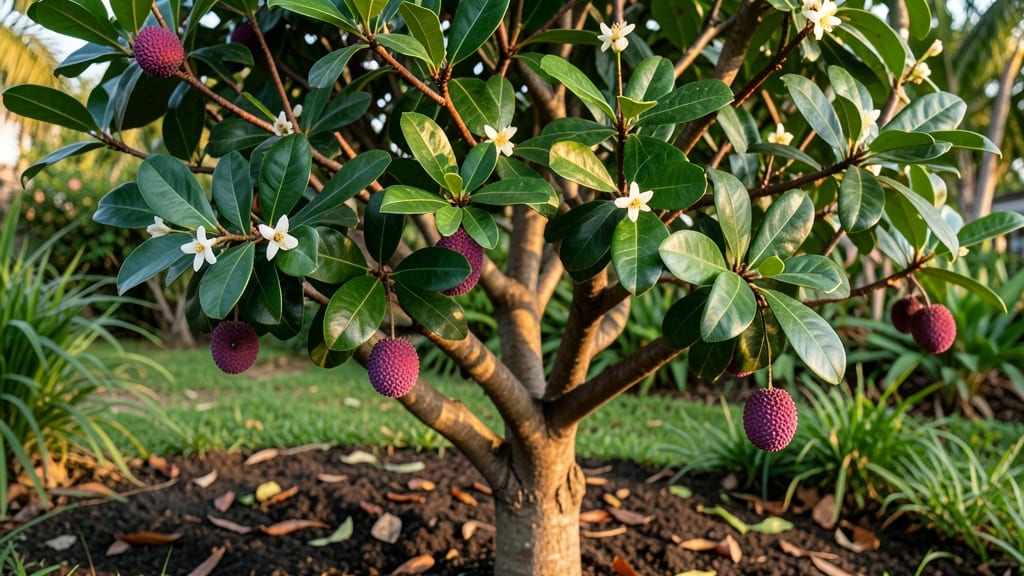
Lychee fruit comes from southern China, specifically the Guangdong and Fujian provinces, where native varieties grew wild for centuries before becoming widely cultivated across Asia and tropical climates.
Lychee trees originally thrived in China's subtropical forests, where the warm, humid climate and well-drained volcanic soil created ideal growing conditions. 🌿 These wild ancestors developed into the sweet, fragrant fruit we know today, with cultivation spreading through trade routes to Southeast Asia and beyond.
The fruit's delicate nature meant it needed careful transport, which limited early expansion but allowed careful selection of hardier varieties in new regions.
Modern lychee cultivation now extends to countries like Thailand and Vietnam, where tropical conditions mirror its native habitat. Israel and California have also become key producers, adapting growing techniques to their specific climates.
What's fascinating is how these different regions have developed their own lychee varieties, each with unique flavor profiles and growing seasons.
💡 In This Article
- Lychee Fruit’s Native Habitat and Historical Origins
- Top Lychee-Growing Regions Around the World Today
Lychee fruit’s native habitat and historical origins
The lychee's journey begins in China's subtropical forests, where wild trees grew along riverbanks and hillsides in Guangdong and Fujian provinces. These regions provided the perfect climate—warm temperatures (20-35°C/68-95°F), high humidity, and distinct wet/dry seasons—that allowed lychee trees (Litchi chinensis) to thrive.
Archaeological evidence suggests lychees were cultivated as early as 2,000 years ago, with records from the Tang Dynasty (618-907 AD) describing them as a prized fruit for emperors.
Wild lychees likely evolved from ancestors in these forests, where they developed thick, leathery skins to protect against tropical pests and drought. The fruit's sweet aroma—thanks to volatile compounds like linalool—attracted animals that helped seed dispersal.
Early farmers selected sweeter varieties, gradually refining cultivation techniques like pruning and irrigation that we still use today. 🌱 The soil, often volcanic and well-drained, provided essential minerals like potassium and phosphorus that boosted fruit quality.
Lychee trees are evergreen, meaning they maintain their leaves year-round, which helps them photosynthesize efficiently in the subtropical climate. Their deep root systems tap into water tables, while their canopy provides shade that regulates soil temperature—a perfect adaptation to the region's hot summers and mild winters.
This natural resilience made lychees ideal candidates for later global expansion, as they could withstand slight climate variations when introduced to new regions.
What's particularly interesting is how lychee cultivation spread through trade routes. By the 14th century, Buddhist monks and merchants carried lychee seeds to Southeast Asia, where the tropical climate proved even more favorable.
The fruit's delicate nature meant it couldn't survive long voyages, so early expansion relied on careful seed transport and local adaptation. This slow, deliberate spread allowed lychees to become deeply integrated into cultures across Asia before reaching farther shores.
Today, we can trace modern lychee varieties back to these ancient Chinese cultivars. The 'Brewster' and 'Mauritius' varieties, for example, descend from seeds brought to Hawaii and the Caribbean, where they adapted to new growing conditions.
The fruit's ability to thrive in USDA Hardiness Zones 10-11 (and with protection in Zone 9) shows how its origins shaped its global adaptability.
The lychee's journey from wild forest fruit to global delicacy is a testament to its hardiness and the ingenuity of early farmers. What started as a local treasure in China's subtropical forests became a symbol of tropical agriculture worldwide—all thanks to careful selection and adaptation over centuries. 🌍