
Fertilization
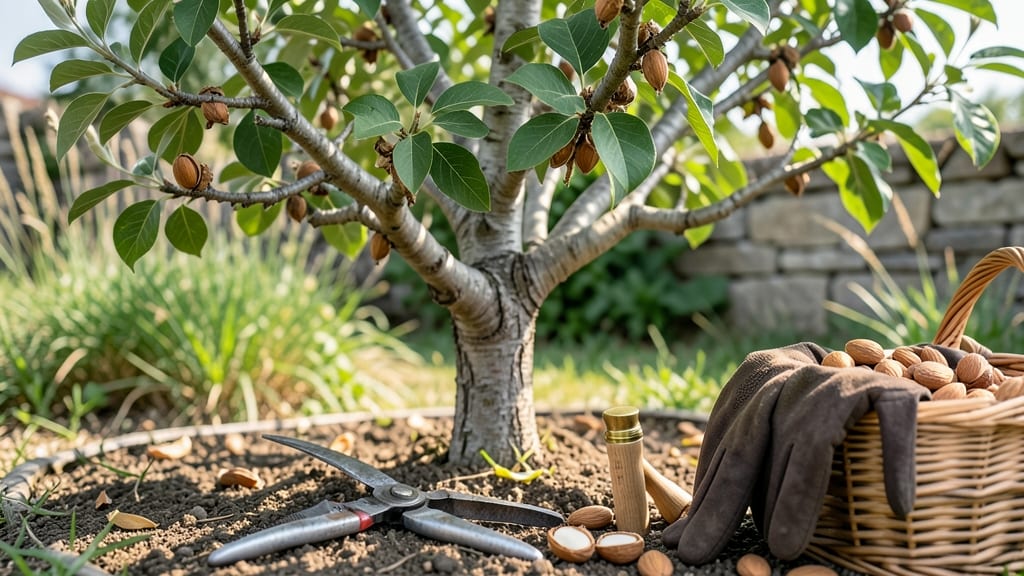
Ripe almond fruit appears as a green, woody husk with a smooth, slightly leathery texture that splits open naturally when mature, revealing the hard shell inside. The hull turns from vibrant green to a duller shade as ripeness progresses, and the nut inside rattles when shaken gently.
When almond trees produce ripe fruit, the outer shell transforms from a bright, glossy green to a more muted, almost brownish hue—this color shift is your first clue. 🌿 The hull itself becomes noticeably softer, almost papery, and will often crack open on its own, exposing the prized nut inside.
I always check for this natural splitting, as it signals peak ripeness and makes harvesting easier. What's fascinating is how the nut inside rattles when you gently shake the fruit—this sound confirms the shell has fully developed and is ready for collection.
Timing matters too. In most climates, almonds reach maturity between late August and early October, but this can shift based on your region's weather patterns. For home gardeners, I recommend checking fruit every 7-10 days once the hull starts changing color.
A simple tap test with your knuckles can help determine if the nut is ready—if it sounds hollow, it's time to harvest!
💡 In This Article
- Key Visual and Physical Signs of Ripe Almond Fruit
- Optimal Harvest Timing for Almond Fruit in Home Gardens
Key visual and physical signs of ripe almond fruit
The most reliable visual cue for ripe almond fruit is the dramatic color transformation of the outer hull. When fully mature, the vibrant lime-green color fades to a duller, yellow-green or brownish tint, almost resembling weathered parchment.
This shift occurs because chlorophyll breaks down as the fruit matures, revealing underlying pigments. In my experience, almonds from Mediterranean climates develop this muted hue slightly earlier than those in cooler regions, often by 2-3 weeks.
Texture plays a critical role too. A ripe almond's hull becomes smooth yet slightly leathery, almost like a well-worn leather glove—unripe fruit feels firmer and glossier, while overripe fruit turns dry and papery. The most telling sign?
The hull naturally splits open along its seam, exposing the hard shell inside.
This splitting happens because the inner shell expands as it dries, creating pressure that forces the hull apart—a process called dehiscence. 🌱 If you shake a ripe almond gently, you'll hear the nut rattle inside, confirming the shell has fully hardened.
Comparing ripe almonds to their unripe counterparts reveals striking differences. Unripe fruit remains closed and tightly sealed, with a bright green hull that feels slimy when wet—a sign of high moisture content. Overripe fruit, on the other hand, may disintegrate when handled, with a hollow sound when tapped.
The key is catching that 3-5 day window when the hull splits naturally but the nut inside is still firm to the touch.
Another lesser-known indicator is the leaf drop pattern. As almonds ripen, the tree begins shedding leaves near the fruit clusters first—a natural cue that harvest time is near. This happens because the tree redirects nutrients from the foliage to the developing nuts.
In commercial orchards, workers often use a harvesting stick to gently tap branches and listen for the characteristic rattle of ripe nuts inside the hull.
For home growers, I recommend checking fruit at weekly intervals during peak season. A simple test is to press your thumbnail into the hull—if it leaves a slight indentation without breaking, the fruit is likely ripe.
The nut inside should also feel dry and firm, not soft or moist, which would indicate premature harvesting.
One common mistake is confusing hull rot with ripeness. Overripe or damaged fruit may develop dark spots or mold, especially in humid conditions. Always harvest on dry, sunny days to minimize this risk.
The perfect ripe almond should look like a sun-bleached husk with a clean split, ready to reveal the nut inside.