
Companion Plants
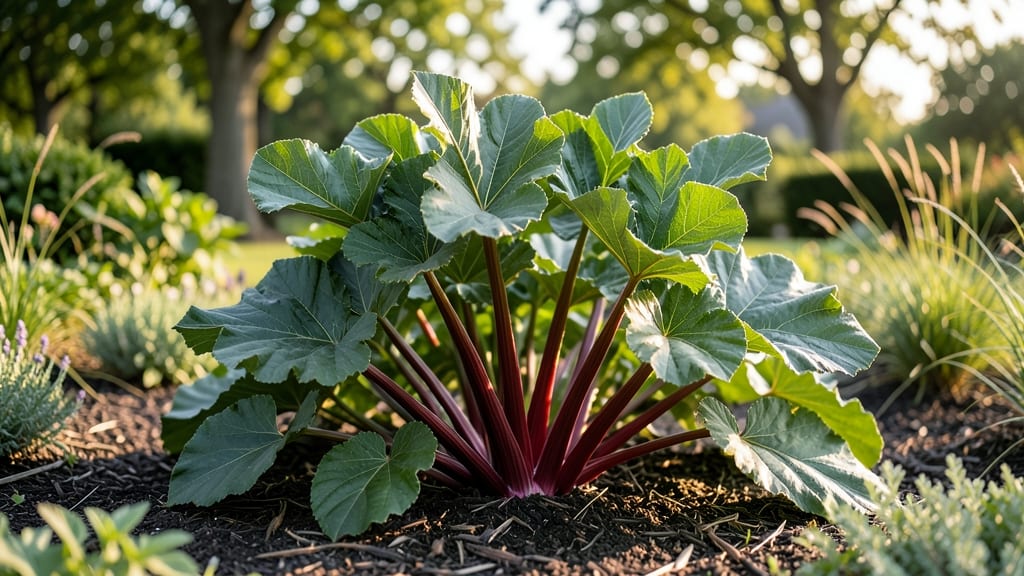
Rhubarb plants are technically a vegetable—but botanically, they’re a fruit you’ll never eat raw. 🌱 The confusion comes from its culinary use: tart stalks star in pies and compotes, while the leafy tops (poisonous) stay out of the kitchen.
This perennial powerhouse thrives in cool climates, producing edible stalks for years with minimal fuss.
The secret to great rhubarb? Patience and chill. Plants take 2-3 years to establish before yielding harvestable stalks, but once mature, they reward you with bold, ruby-red growth that’s sweeter after frost.
Harvest by gently twisting stalks—never cutting—to avoid damaging the crown. Over-picking weakens the plant, so leave at least a third of the stalks each year.
In the garden, rhubarb’s deep roots make it drought-tolerant once established, and its broad leaves provide shade for nearby perennials. Pair it with strawberries for a classic combo: the strawberries love the rhubarb’s shade, while the rhubarb benefits from the berries’ shallow roots.
Just keep those leaves out of reach—they’re toxic to humans and pets.
Here’s the kicker: rhubarb’s versatility extends beyond desserts. Use it in savory dishes (yes, really), ferment it for vinegar, or dry stalks for winter use. The plant’s hardy nature and long lifespan make it a low-maintenance staple for any garden—just don’t expect fruit in the traditional sense.
📚 In This Guide
- What you need
- Instructions
- Tips and common mistakes
- Wrapping up and next steps
What you need
- ● Rhubarb Crowns: 1–3 healthy, disease-free crowns (choose varieties like 'Victoria' or 'Strawberry' for beginners).
- ● Well-draining Soil: 3–4 cubic yards (for a small garden bed) with a pH of 6.0–6.8. Mix in compost (1–2 bags) for nutrients.
- ● Sunlight: A full-sun spot (6+ hours/day) or partial shade (4–6 hours) in hot climates.
- ● Watering Supplies: Garden hose with adjustable nozzle (for deep watering).
- ○ Drip irrigation kit (optional but highly recommended for consistent moisture).
- ● Mulch: 2–3 inches of straw or wood chips (to retain moisture and suppress weeds).
- ● Fertilizer: Balanced 10-10-10 or organic options like fish emulsion (apply in early spring).
- ● Garden Trowel or Spade: For digging planting holes (12–18 inches deep).
- ● Pruning Shears: Sharp, sterilized shears (to trim leaves and harvest stalks cleanly).
- ● Gloves: Heavy-duty gardening gloves (rhubarb leaves contain oxalic acid—wear them!).
- ● Measuring Tape: To space plants 2–3 feet apart (rhubarb loves room to grow!).
- ○ Pest Control (Optional):strong> Neem oil spray (for aphids or Japanese beetles).
- ● Row covers (to deter pests early in the season).
- ● Patience: Rhubarb takes 2–3 years to establish and produce edible stalks.
- ● Cold Hardiness: Thrives in USDA Zones 3–9 (perfect for most U.S. gardens!).
- ● Leaf Warning: Never eat rhubarb leaves—they’re toxic! Only harvest the stalks.
- ● Companion Plants: Pair with lettuce, beans, or strawberries (they love the shade rhubarb provides!).
Botanical truth and garden uses: how to identify and grow rhubarb correctly
Rhubarb's classification often confuses gardeners—but its growth habits reveal the truth.
🌱 Step 1: Understand Rhubarb's Botanical Classification
Rhubarb is technically a vegetable because we eat its stems, not its fruit. Botanically, it's classified as a perennial vegetable from the Polygonaceae family, related to buckwheat and sorrel. The leaves contain high levels of oxalic acid and are toxic, so they're never consumed.
Here's the key detail: the edible stalks are the swollen petioles (leaf stems), not the fruit. The small, red flowers that appear in spring are the actual fruit—but they're bitter and inedible. This distinction matters when planning your garden layout and harvest timing.
🌿 Step 2: Identify Rhubarb's Growth Habits and Edible Parts
Rhubarb grows from a thick, fleshy root crown that produces large, triangular leaves on long, thick stalks. The first-year stalks are too fibrous and should be discarded—they're not yet mature enough for eating. You'll know they're ready when they reach 8-12 inches tall and develop a vibrant red or green color.
The stalks you harvest should be tender and crisp, not woody. Cut them at the base with a sharp knife, leaving at least 1 inch of stalk attached to the crown to prevent damaging the plant. Never pull stalks—they'll tear and leave the plant vulnerable to rot.
☀️ Step 3: Grow Rhubarb Correctly for Maximum Yield
Rhubarb thrives in full sun to partial shade, with at least 6 hours of direct sunlight daily. It prefers well-draining soil with a pH between 6.0 and 7.0. Amend heavy clay soil with compost or aged manure to improve drainage and fertility.
Plant crowns in early spring or fall, 2-3 inches deep with the buds facing upward. Space plants 3-4 feet apart to allow for their large leaf spread. Mulch heavily with straw or wood chips to retain moisture and regulate soil temperature—rhubarb roots are sensitive to extreme cold.
✂️ Step 4: Harvest and Use Rhubarb Properly
Wait until the second year to harvest rhubarb, as first-year plants need all their energy to establish roots. Cut stalks at a 45-degree angle to prevent water from pooling on the cut surface. Harvest no more than one-third of the stalks in the first year to avoid stressing the plant.
Use rhubarb stalks in sweet dishes like pies and compotes, as they're naturally tart. The fruit (those tiny red flowers) can be used to make jelly or syrup, but they require significantly more sugar to balance their bitterness. Store harvested stalks in the refrigerator for up to 2 weeks.
🌱 Step 5: Maintain Rhubarb for Long-Term Productivity
Rhubarb is extremely hardy and can live for 20+ years with proper care. Fertilize lightly in early spring with a balanced, low-nitrogen fertilizer (like 5-10-10) to encourage strong stalk growth without excessive foliage.
Divide mature plants every 4-5 years to rejuvenate growth. Dig up the crown, separate it into sections with at least 1-2 buds per section, and replant immediately. This prevents the center from becoming woody and unproductive—a common issue in older plants.
Tips & tricks for perfect rhubarb cultivation
Growing rhubarb right comes down to understanding its quirks—here's what I've learned after years of garden experiments.
Botanical Insight: The confusion between rhubarb as fruit or vegetable stems from its botanical structure. While the tiny red flowers are technically the fruit (and can be used for jelly), the edible stalks we harvest are actually swollen petioles—the leaf stems. This distinction explains why rhubarb behaves differently in the garden compared to true fruits or vegetables.
First-Year Plant Care: Those first-year stalks might look promising, but they're too fibrous and tough to eat. Let them grow to 8-12 inches to develop proper structure, but don't harvest them—the plant needs all its energy to establish strong roots. I've seen gardeners get frustrated when their first-year harvest tasted disappointing, only to realize they'd tried to eat immature stalks.
Harvesting Technique: Cutting at a 45-degree angle isn't just about presentation—it prevents water from pooling on the cut surface, which could lead to rot. Leave at least 1 inch of stalk attached to the crown to maintain the plant's health. I learned this the hard way when I pulled stalks and ended up with a messy, damaged plant that struggled to recover.
Long-Term Maintenance: The 4-5 year division schedule is crucial for preventing the center of mature plants from becoming woody. When dividing, ensure each section has at least 1-2 buds—this guarantees strong regrowth. I've seen neglected plants become unproductive because their centers had turned to wood, making them nearly useless for harvest.
Pro Tips for Rhubarb Plants Fruit Or Vegetable
- Growing rhubarb right comes down to understanding its quirks—here's what I've learned after years of garden experiments.
- Botanical Insight: The confusion between rhubarb as fruit or vegetable stems from its botanical structure.
- First-Year Plant Care: Those first-year stalks might look promising, but they're too fibrous and tough to eat.
Frequently asked questions
Got questions about rhubarb? You’re not alone! Whether you’re curious about its botanical quirks or how to grow it like a pro, here are some of the most common queries—and their answers.
Is rhubarb a fruit or vegetable?
Botanically, rhubarb is a fruit because it develops from the flower and contains seeds. However, it’s treated as a vegetable in cooking due to its tart, savory stalks. This makes it one of nature’s sneaky multitaskers!
How long does it take for rhubarb plants to produce edible stalks?
Patience is key! Rhubarb plants typically take 1–2 years to establish before yielding harvestable stalks. Once mature, they’ll reward you with a bountiful crop for decades—some varieties even thrive for 50+ years with minimal care.
Can you eat rhubarb leaves? Are they safe?
No, never eat the leaves!
While the stalks are delicious, the leaves contain oxalic acid, a compound that can cause nausea or kidney issues if consumed. Stick to the vibrant red, pink, or green stalks for safe, tasty eating.
What’s the best way to harvest rhubarb without killing the plant?
Harvest stalks by twisting gently at the base (don’t cut!) and leave the plant with at least 3–4 stalks to keep growing. Avoid taking more than ⅓ of the stalks at once—this ensures a healthy plant for future harvests. Early spring is prime time!
What can I do with rhubarb if I have too much?
Rhubarb’s versatility saves the day! Try freezing stalks (trimmed and chopped) for later pies, or swap it into sauces, chutneys, or even cocktails. For a quick fix, blend it into smoothies with strawberries (the sweetness balances the tartness perfectly!).
Why are my rhubarb stalks turning slimy or mushy?
Slimy stalks usually signal rot or bacterial soft rot, often caused by overwatering or poor drainage. Fix it fast: Remove affected stalks immediately, improve soil drainage, and avoid watering the leaves. For prevention, space plants 3 feet apart to boost airflow.
Wrapping up and next steps
So, is rhubarb a fruit or a vegetable? The answer is clear—it’s a fruit by botanical definition, but it’s treated like a vegetable in the kitchen!
Whether you’re growing it for its tangy stalks or pairing it with companion plants, rhubarb adds a unique twist to your garden and meals. 🌱
Now that you’re armed with the facts, why not plant some rhubarb this season? Start small with a few crowns, experiment with companion plants like strawberries or lettuce, and soon you’ll be harvesting your own vibrant, zesty stalks. Happy gardening! 🌟