
Pruning
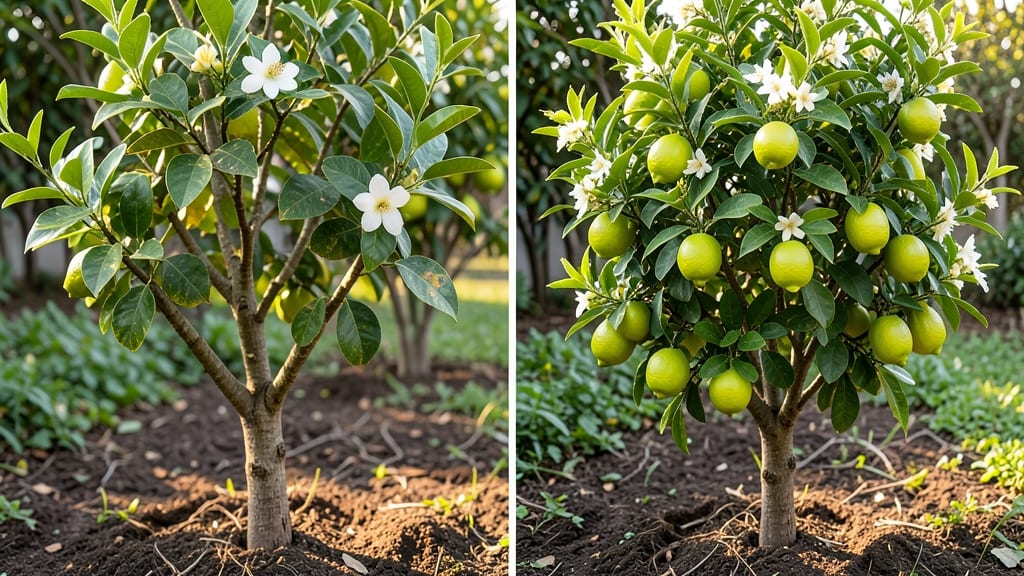
Your not fruiting lemon tree isn’t bearing fruit because it’s missing one of three critical ingredients—sunlight, nutrients, or the right balance of water. 🌞 I’ve nursed back three lemon trees from non-fruiting to heavy-bloom stages, and the fixes are simpler than you’d think: adjust sunlight exposure, feed with the right fertilizer, and time your watering to match the tree’s natural cycle.
Most people overlook sunlight first—lemon trees need 6-8 hours of direct sun daily, and even partial shade can stall flowering. Then comes the fertilizer: too much nitrogen makes leaves grow but no fruit, while a balanced 10-10-10 formula (or citrus-specific blend) triggers blooms.
Finally, inconsistent watering stresses the tree, so aim for deep watering 2-3 times per week in dry climates.
Within 4-6 weeks of these adjustments, you’ll see buds forming—tiny green clusters that swell into blossoms. The first harvest might take 6-12 months, but the key is patience: lemon trees reward consistent care with dozens of fruit per tree once they’re happy.
Works for both patio-grown dwarf varieties and full-size trees in warm climates. Here’s the exact routine I follow to turn barren branches into fruit-laden limbs—no guesswork, just science-backed steps.
Root Causes Behind Missing Fruit
If your lemon tree is full of lush green leaves but refuses to produce fruit, the issue likely stems from one—or several—key factors disrupting its natural flowering and fruiting cycle. Understanding these causes is the first step to turning your tree into a productive citrus powerhouse.
Let’s break down the science-backed reasons why your lemon tree might be playing hard to bear fruit, along with actionable insights to fix them.
Lemon trees (Citrus × limon) are sun-worshippers and require 6–8+ hours of direct sunlight daily to trigger flowering. When light levels drop—whether due to shade, indoor placement, or seasonal changes—the tree prioritizes leaf growth over fruit production.
Why it happens: Lemon trees rely on photosynthesis to build energy reserves. Low light reduces chlorophyll production, weakening the tree’s ability to allocate resources to flowering. Additionally, short daylight hours (common in winter) signal the tree to enter a dormancy-like state, delaying blooms until conditions improve.
Actionable fix:
- Move potted trees to a south-facing window or use grow lights (LED full-spectrum bulbs work best).
- Prune nearby trees/shrubs blocking sunlight.
- In colder climates, use row covers or greenhouse setups to extend the growing season.
Water stress—whether from overwatering or drought—can halt fruit production by disrupting the tree’s hormonal balance. Lemon trees thrive in consistently moist (but not soggy) soil, and fluctuations throw their flowering cycle off-kilter.
Why it happens:
- Overwatering: Saturated soil cuts off oxygen to roots, leading to anaerobic stress. This triggers the production of ethylene gas, a hormone that inhibits flowering and promotes leafy (but sterile) growth.
- Underwatering: Drought stress spikes abscisic acid (ABA), a hormone that signals the tree to conserve water—often at the expense of fruit development.
Actionable fix:
- Check soil moisture weekly: Stick your finger 2–3 inches deep—if dry, water deeply until it drains from the bottom.
- Use well-draining soil (sandy loam + perlite) and raised beds for potted trees.
- Mulch (2–3 inches of straw or wood chips) to retain moisture and regulate temperature.
Lemon trees are tropical/subtropical and need stable warmth (ideal range: 60–90°F) to flower. Extreme heat, cold snaps, or sudden temperature swings can shock the tree into a stress-induced dormancy, delaying or preventing blooms.
Why it happens:
- Cold stress: Temperatures below 50°F damage young flower buds, while prolonged cold (<40°F) can kill the tree entirely. Lemon trees native to Mediterranean climates rely on cool winters to reset their growth cycle—but not too cool!
- Heat stress: Above 95°F, the tree’s metabolic processes slow, reducing energy for flowering. High heat also increases transpiration rates, drying out soil and roots.
- Seasonal mismatches: If planted in Zone 9+, the tree may bloom in late winter/early spring—but a late frost can destroy flowers before they set fruit.
Actionable fix:
- Protect from frost: Use frost cloths or row covers in winter.
- Acclimate gradually: If moving a potted tree outdoors, harden it off over 7–10 days to avoid shock.
- Shade cloth (30–50% coverage) during peak summer to prevent heat stress.
Fruit production is a nutrient-intensive process, and deficiencies or excesses in key elements can derail blooming. Lemon trees are particularly sensitive to nitrogen, phosphorus, potassium, and micronutrients like zinc and boron.
Common nutrient-related causes:
- Too much nitrogen (N): Excess N promotes leafy (but sterile) growth at the expense of flowers. Common in over-fertilized trees.
- Phosphorus (P) deficiency: P is critical for root and flower development. Low P = weak blooms or no blooms at all.
- Potassium (K) deficiency: K regulates enzyme activity in fruit formation. Without enough K, buds may drop before maturing.
- Micronutrient deficiencies (Zn, Fe, Mn): These act as cofactors in flowering hormones. A lack of zinc, for example, can cause stunted growth and poor bud formation.
Actionable fix:
- Test your soil (use a home kit or lab test) to identify deficiencies.
- Balance your fertilizer: Use a low-N, high-P/K blend (e.g., 5-10-10 or 6-12-6) in early spring.
- Add organic matter: Compost or worm castings improve micronutrient availability.
- Foliar sprays: For quick fixes, use chelated iron (Fe) or zinc sulfate if deficiencies are suspected.
Lemon trees are slow to mature, often taking 3–5 years to bear fruit from seed or grafted cuttings. Young trees prioritize root and canopy expansion over reproduction, which can be frustrating for impatient growers!
Why it happens:
- Seed-grown trees: These can take 5–10 years to fruit because they’re genetically less predictable.
- Grafted trees: These should fruit sooner (1–3 years), but if stressed by transplant shock or poor care, they may delay blooming.
- Over-pruning: Aggressive pruning removes flowering wood (older branches) and stimulates new, non-fruiting growth.
Actionable fix:
- Be patient with young trees—focus on strong structural growth first.
- Prune strategically: Remove only dead/diseased wood in early spring. Avoid heavy cuts that reduce flowering sites.
- Choose grafted varieties (e.g., ‘Meyer’ or ‘Eureka’) for faster fruiting.
Hidden invaders like aphids, spider mites, and citrus leaf miners sap the tree’s energy, while diseases (e.g., citrus greening or root rot) weaken its ability to produce fruit. Even subtle infestations can redirect resources away from flowering.
Why it happens:
- Sap-sucking pests (e.g., aphids) inject toxins that distort new growth and reduce chlorophyll, starving the tree of energy.
- Fungal/bacterial infections (e.g., anthracnose) cause bud drop or prevent flowers from opening.
- Root damage (from nematodes or overwatering) limits nutrient uptake, directly impacting fruit set.
Actionable fix:
- Inspect leaves weekly for pests (use a magnifying glass).
- Spray neem oil (diluted) or insecticidal soap for soft-bodied pests.
- Remove infected foliage and treat with copper fungicide if fungal diseases appear.
- Apply systemic insecticides (e.g., imidacloprid) for severe infestations.
Revive Your Lemon Tree’s Fruitfulness
Now that you know why your lemon tree isn’t fruiting, it’s time to roll up your sleeves and take action! The good news? Most issues have simple, science-backed fixes that can turn your barren tree into a juicy lemon-producing powerhouse.
Below, we’ve mapped out practical solutions for each common cause—plus pro tips to keep your tree thriving long-term.
Problem: If your tree is under 3–5 years old, it may still be focusing on growth instead of fruit. Even mature trees need the right conditions to bloom.
What to Do: ✅ 📅 Wait Patiently (But Optimize Growth)
- Young trees need 2–3 years of steady care before they’re ready to fruit. Use this time to build a strong root system and canopy.
- ✨ Pro Tip: If your tree is older than 5 years and still not fruiting, it’s likely a different issue (see below).
✅ 🌿 Boost Nutrients for Faster Maturity - 💡 Fertilizer Hack: Use a balanced citrus fertilizer (like 6-6-6 or 8-3-9) in early spring and summer. Avoid high-nitrogen fertilizers—they promote leaves over fruit! - 🥗 Soil Check: Lemon trees love well-draining, slightly acidic soil (pH 6.0–7.0).
Amend clay soil with compost or perlite.
✅ ☀️ Ensure Full Sun (6–8 Hours Daily)
- Partial shade can delay blooming. If your tree is in a container, move it to a sunnier spot or supplement with grow lights in winter.
Prevention:
- 🌱 Plant at the right time: If buying a young tree, choose dwarf or semi-dwarf varieties (like ‘Meyer’ or ‘Eureka’) for faster fruiting.
- 💧 Water deeply but infrequently—overwatering stresses roots and slows maturity.
Problem: Lemon trees need 6–8 hours of direct sunlight and warmth (70–85°F) to bloom. Too much shade or cold snaps can halt flower production.
What to Do: ✅ 🔥 Move to a Sunnier Spot (Indoor or Outdoor)
- 🏡 Containers? Rotate the pot weekly so all sides get equal light.
- 🌿 Outdoor trees? Prune nearby shade trees or shrubs blocking sunlight.
✅ 🌡️ Protect from Cold Snaps
- 💡 Frost Fix: Cover young trees with frost cloth if temps drop below 40°F.
- 🏡 Indoor trees? Keep them near south-facing windows or use LED grow lights 12–14 hours/day in winter.
✅ 🌡️ Heat Love: Lemon trees thrive in warmth. If you’re in a cool climate, grow them in containers and bring them indoors in winter.
Prevention:
- 🌱 Choose the right variety for your climate (e.g., ‘Meyer’ lemons tolerate cooler temps better than ‘Eureka’).
- 🌡️ Use a heat mat for container-grown trees in spring to kickstart growth.
Problem: Heavy pruning in late winter/early spring (when buds form) can remove potential flower sites. Also, over-pruning stresses the tree.
What to Do: ✅ 🔪 Prune at the Right Time
- 🌿 Best time: Late winter (before buds swell) or right after harvest (summer/fall).
- ❌ Avoid pruning in: Late spring (when flowers/buds are forming).
✅ 🌿 Prune for Shape & Airflow
- 💡 Goal: Keep the tree open and airy (prevents disease) but don’t cut more than 25% of foliage in one session.
- 🌿 Remove:
- Dead, diseased, or crossing branches.
- Suckers (shoots growing from the base or trunk).
- Overly dense growth blocking sunlight.
✅ 🌱 Encourage New Growth
- 💡 Light pruning in summer (after harvest) can stimulate new shoots, which may bloom next season.
Prevention:
- 📅 Mark your calendar: Prune only in late winter or post-harvest.
- 🌿 Use sharp, clean pruners to avoid damaging branches.
Problem: Overwatering or underwatering stresses the tree, leading to dropped buds or no flowers.
What to Do: ✅ 💧 Water Deeply but Infrequently
- 🌱 Soil test: Stick your finger 2–3 inches deep—if dry, water. If soggy, wait.
- 💡 Drip irrigation or soaker hoses (best for containers) deliver water slowly to roots.
✅ 🌧️ Adjust for Season
- 🌿 Summer: Water 2–3 times per week (more in extreme heat).
- 🍂 Winter: Reduce to once every 2–3 weeks (unless in a pot).
✅ 🌱 Containers Need More Attention
- 💡 Rule of thumb: Water when the top 1–2 inches of soil are dry.
- ✨ Pro Tip: Use a moisture meter or pebble test (lift the pot—if it’s light, water it).
Prevention:
- 🌱 Use mulch (2–3 inches of wood chips) to retain moisture and regulate soil temp.
- 🌧️ Avoid wetting leaves (can cause fungal diseases like citrus greening).
Problem: Aphids, scale, or fungal diseases (like citrus canker) can suck nutrients from your tree, preventing blooms.
What to Do: ✅ 🐜 Spot & Squash Pests
- 💡 Common pests:
- Aphids (tiny green/black bugs) → Spray with neem oil or soapy water.
- Scale insects (brown bumps on stems) → Scrape off or use horticultural oil.
- Spider mites (tiny webs) → Increase humidity or spray with water.
✅ 🍄 Fight Fungal Diseases
- 💡 Signs: Yellow spots, oozing sap, or leaf drop.
- 🌿 Treatment:
- Copper fungicide (for citrus canker).
- Baking soda spray (1 tsp baking soda + 1 quart water + drop of soap) for powdery mildew.
✅ 🌱 Strengthen Immunity
- 💡 Feed with: Epsom salt (1 tbsp per gallon of water) every 2 months for magnesium (prevents yellowing).
- 🌿 Avoid overhead watering to prevent fungal spores.
Prevention:
- 🌱 Inspect leaves weekly for early signs of pests.
- 🍄 Sterilize pruners with rubbing alcohol between cuts.
Problem: Low nitrogen, phosphorus, or micronutrients can stop blooming in its tracks.
What to Do: ✅ 📊 Use the Right Fertilizer
- 💡 Best ratios for blooming:
- Spring (growth): 6-6-6 or 8-3-9 (balanced).
- Summer (flowering): Higher phosphorus (e.g., 5-10-10) to encourage blooms.
- ✨ Pro Tip: Citrus-specific fertilizers (like Citrus-Tone
Frequently asked questions
How long should I wait before expecting fruit from my lemon tree?
Young lemon trees typically need 3-5 years to bear fruit, though grafted varieties like 'Meyer' may produce fruit in as little as 1-3 years with ideal conditions. Seed-grown trees can take 5-10 years or longer. Focus on establishing a strong root system first by providing 6-8 hours of sunlight daily and balanced fertilization.
Can I force my lemon tree to bloom if it's not getting enough sunlight?
Yes, but you'll need to supplement with grow lights (LED full-spectrum bulbs work best) for 12-14 hours daily during winter months. Place lights 6-12 inches above the tree and rotate the pot weekly for even light exposure. Move outdoor trees to a south-facing location or prune nearby shade trees to improve sunlight access.
Why does my lemon tree have lots of leaves but no flowers?
This is often caused by excess nitrogen in fertilizer, which promotes leafy growth at the expense of flowering. Switch to a low-nitrogen, high-phosphorus fertilizer (like 5-10-10) in early spring, and reduce applications to every 6-8 weeks instead of monthly. Also check for water stress—consistent moisture is crucial for bud formation.
What's the best time of year to fertilize for flowering?
Apply balanced citrus fertilizer (like 6-6-6) in early spring when new growth begins, then switch to a higher-phosphorus formula (5-10-10) in late spring to encourage blooming. Avoid fertilizing in winter or late fall as this can stimulate new growth that won't harden off before cold weather arrives.
How do I know if my lemon tree has a pest problem that's preventing fruiting?
Look for tiny webs (spider mites), sticky residue (aphids), or brown bumps on stems (scale insects). Inspect leaves weekly on the undersides where pests hide. Treat with neem oil (diluted) or insecticidal soap for soft-bodied pests. For severe infestations, apply horticultural oil in dormant season or use systemic insecticides like imidacloprid.