
Plants
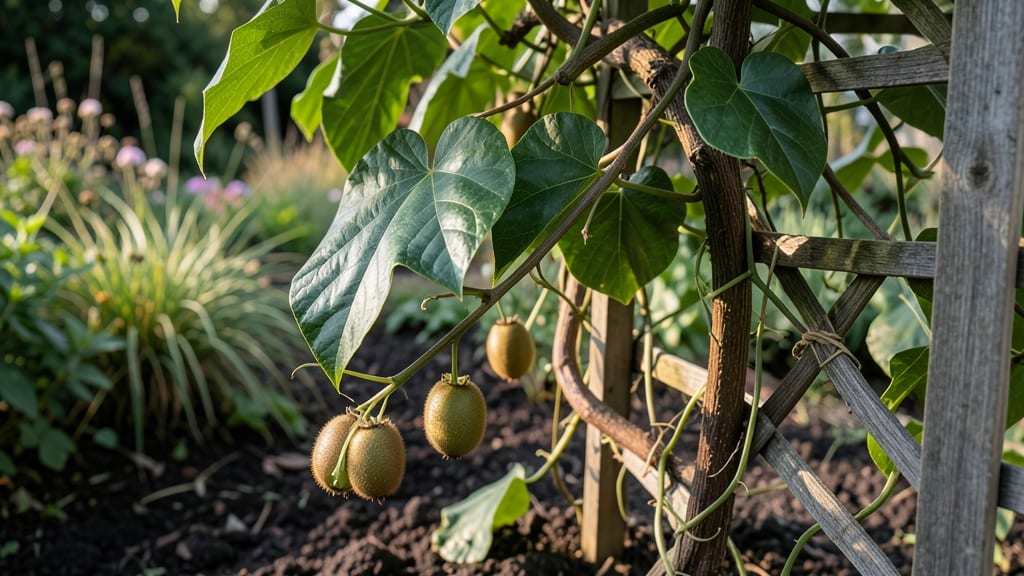
Fruits like kiwi deliver that same zesty-sweet balance with vibrant textures, such as feijoa's tropical citrus tang, passionfruit's intense tartness, and soursop's creamy, pineapple-infused sweetness. These tropical varieties thrive in warm climates and mirror kiwi's refreshing acidity.
If you love kiwi's unique blend of sweet and tart flavors, these tropical alternatives offer similar sensory experiences while bringing their own distinct twists. 🌿 Feijoa, often called the "pineapple guava," combines kiwi's acidity with a floral citrus aroma that pairs beautifully with desserts or savory dishes.
Passionfruit delivers an even more intense tang, perfect for cocktails or yogurt toppings, while soursop's creamy texture makes it a standout in smoothies. What's fascinating is how their growing conditions—like high humidity and nutrient-rich soil—directly shape their flavor profiles, often making them even more vibrant than kiwi.
These fruits aren't just flavorful—they're also packed with nutrients. For example, passionfruit is rich in vitamin C and fiber, while feijoa contains antioxidants that support immune health. Soursop, though less common, offers a unique combination of vitamins and minerals that make it a powerhouse in tropical diets.
The key to enjoying them is knowing where to find them, as many require warm climates to grow well, though some varieties can thrive in containers for home gardeners.
💡 In This Article
- Tropical Fruits with Kiwi’s Tangy-Sweet Profile
- How to Grow Kiwi-Like Fruits at Home
Tropical fruits with kiwi’s tangy-sweet profile
The flavor chemistry of kiwi-like fruits revolves around a delicate balance of acidity (pH 3.0-3.5) and natural sugars (10-15% soluble solids), creating that signature tangy-sweetness.
Feijoa, for instance, contains quinic acid—a compound that amplifies its citrusy notes while maintaining a crisp texture similar to kiwi’s. Its skin even has a faint peppery aroma, adding complexity.
Passionfruit, on the other hand, packs 10-15% citric acid by volume, making it nearly twice as tart as kiwi, with a pulp that’s 80% moisture for that juicy burst.
Growing conditions dramatically shape these flavors. Feijoa thrives in humid subtropical climates (like Brazil or New Zealand) where daytime temps hit 75-85°F and nights dip to 55-60°F. The high humidity prevents sugar crystallization, keeping its flesh firm yet juicy.
Passionfruit vines need well-draining soil with pH 6.0-7.5—too acidic, and the fruit becomes bland; too alkaline, and the tartness fades. Soursop, meanwhile, requires rich, slightly acidic soil (pH 5.5-6.5) to develop its creamy, pineapple-like sweetness with hints of strawberry.
Nutritional benefits vary too. Feijoa’s skin contains 10x more vitamin C than kiwi, while passionfruit’s seeds are rich in melatonin (aiding sleep). Soursop’s leaves have been studied for their acetogenins, compounds with potential anti-cancer properties.
The key difference? Kiwi’s actinidin enzyme (which tenderizes meat) is absent in these fruits, making them safer for digestion in large quantities.
Texture plays a surprising role in flavor perception. Feijoa’s flesh has a granular, almost crunchy bite due to its 12% fiber content, while soursop’s pulp is silky-smooth with 0.5% natural pectin, creating that custard-like mouthfeel.
Passionfruit’s arils, meanwhile, are gelatinous thanks to soluble dietary fiber that traps moisture. This texture contrast is why they satisfy the same cravings as kiwi but with distinct sensory experiences.
Consider these growing factors when choosing alternatives:
- Climate: Feijoa needs frost-free winters; passionfruit tolerates light frosts (down to 28°F)
- Soil: Soursop prefers sandy loam; feijoa thrives in clay-heavy soils
- Sunlight: All require 6+ hours of direct sun, but passionfruit vines can tolerate partial shade
The science behind their acidity is fascinating too. Kiwi’s malic acid gives it a clean tartness, while passionfruit’s citric acid creates a sharper, almost electric punch.
This chemical difference is why passionfruit works better in cocktails (like caipirinhas) where you want bold acidity, while feijoa shines in desserts where its subtle floral notes complement sweets.
For home gardeners, the easiest kiwi-like fruit to grow is passionfruit—its vines can climb 15-20 feet but thrive in 5-gallon containers. Feijoa, though slower to fruit (3-5 years), produces 50-100 fruits per tree once established.
Soursop, while the most challenging, rewards patience with its 20-inch-long fruits that yield 1-2 cups of pulp per fruit.