
Vegetables
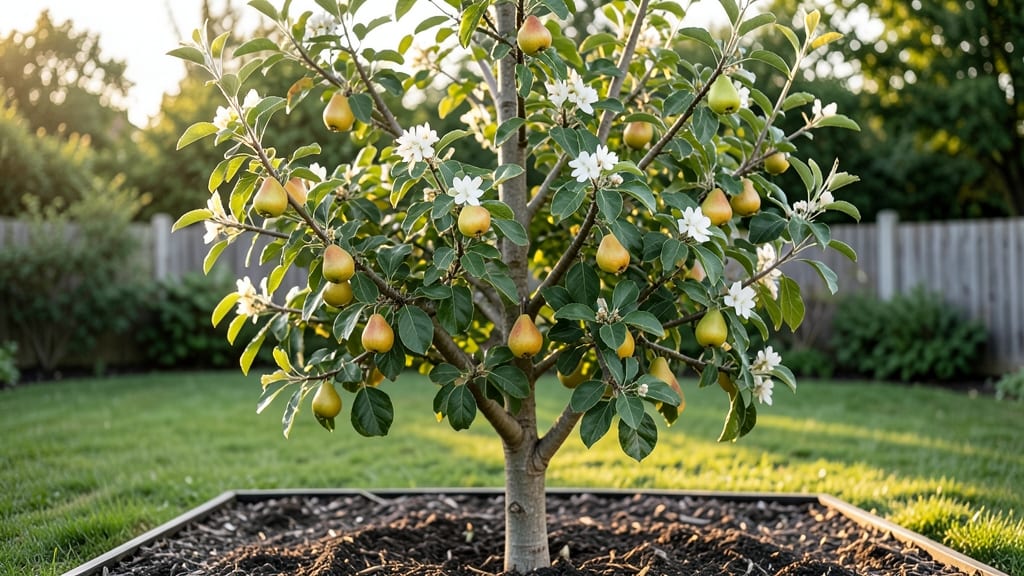
The Chanticleer pear fruit is a rare heirloom variety known for its round shape, golden-yellow skin, and honeyed-sweet flavor with delicate floral undertones. Unlike most pears, it ripens slowly and reaches peak buttery texture when fully mature.
The Chanticleer pear's delayed ripening makes it a gardener's favorite, as it resists early softening thanks to its thick skin and ethylene sensitivity. 🌱 Unlike common varieties, it maintains firmness longer but transforms into a velvety texture when perfectly ripe—test by gently pressing near the stem.
This heirloom's unique balance of sweetness and floral notes sets it apart from Bartlett's juiciness or Anjou's mildness, making it ideal for both fresh eating and baking when at its peak.
Gardeners particularly value Chanticleer pears for their disease resistance and late-season harvest, which extends storage life. The flavor profile—sweeter than Bosc but less cloying than Bartlett—lends itself beautifully to both savory and sweet dishes, though purists often enjoy them fresh when fully ripe.
This variety's versatility and distinctive taste make it a standout choice for orchards and home gardens alike.
💡 In This Article
- Chanticleer Pear Ripening Process and Storage Tips
- Comparing Chanticleer Pear Flavor to Common Varieties
Chanticleer pear ripening process and storage tips
Chanticleer pears resist ripening longer than most varieties because their thick, golden-yellow skin acts as a natural barrier against ethylene gas—the plant hormone that triggers softening.
Unlike Bartlett pears, which ripen quickly and become mealy if overripe, Chanticleer's flesh stays firm for weeks due to higher cellulose content in the cell walls.
This delayed ripening is why gardeners often harvest them in late fall and store them for months at 32-36°F with 90-95% humidity, mimicking winter dormancy conditions.
The ideal indoor ripening method involves placing Chanticleers in a paper bag with a banana or apple (ethylene producers) for 3-5 days at room temperature. 🌱 The skin will develop a faint blush, and the stem will separate easily from the fruit—a key indicator of ripeness.
Unlike Anjou pears, which soften uniformly, Chanticleer's texture transforms from crisp to velvety only near the core, while the outer flesh remains slightly firm. A ripe Chanticleer should yield gently when pressed near the stem but resist at the edges.
Storage life extends up to 6 months in a cool, dark place, but temperature fluctuations are the enemy—exposing them to warmth above 50°F accelerates spoilage. The secret to preserving their honeyed-sweetness lies in their low acidity (pH 4.5-5.0), which prevents bacterial growth.
Unlike Bosc pears, which develop a slightly grainy texture when overripe, Chanticleers become mushy and lose their floral aroma if left too long.
Gardeners often use Chanticleers' delayed ripening to their advantage by harvesting them before they soften naturally. This allows for controlled ripening at home, ensuring peak flavor when ready to eat. The variety's thick skin also makes it more resistant to bruising during transport, a trait prized by commercial growers.
For best results, store them away from ethylene-sensitive fruits like tomatoes, which can prematurely trigger ripening.
When testing for perfect ripeness, focus on three sensory cues: the stem should separate cleanly with slight resistance, the skin will feel slightly softer near the stem, and a ripe Chanticleer emits a subtle floral aroma similar to honeydew melon.
The flesh should offer just enough resistance to require gentle pressure when cutting—like biting into a perfectly ripe avocado. This balance of firmness and sweetness is what makes Chanticleer pears unique in both orchards and kitchens.
For those storing Chanticleers long-term, consider wrapping individual fruits in newspaper before placing them in cardboard boxes. This extra layer protects against moisture loss and physical damage, preserving their quality for up to 4-5 months in a standard refrigerator.
Unlike Anjou pears, which can be stored at slightly higher humidity, Chanticleers thrive in more controlled environments to maintain their distinctive texture and flavor profile.